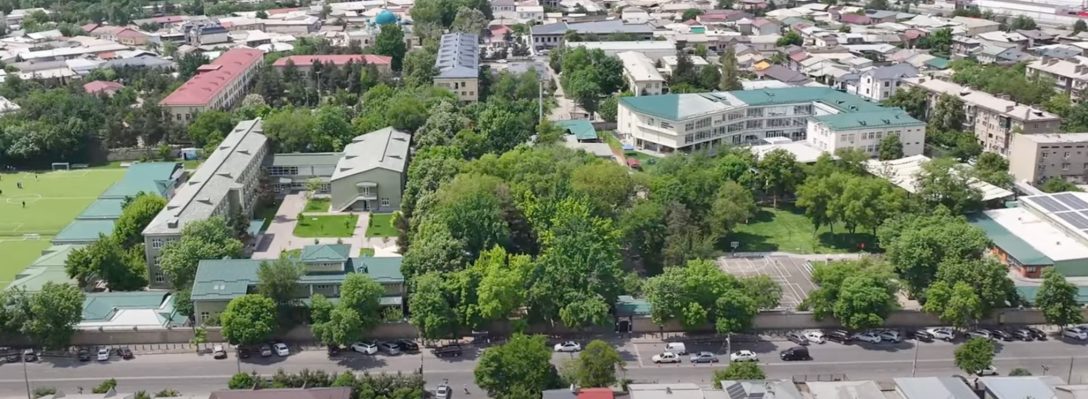

I am taking the course “Rethinking Global Citizenship Education (GCE) and Service Learning (SL) Using a Critical Lens” along with several of my colleagues at the school. Tashkent International School was founded by service organizations (United Nations and Diplomatic Missions). The course aims to improve our students’ community outreach and service learning. For many years, TIS needed to be careful because the first president of Uzbekistan, Islam Karimov, led a government that was suspicious of foreigners and international organizations. The school needed to keep a low profile. With the new president and the opening of the economy, TIS is now in a position to develop relationships with local groups and contribute to the development of the country. More importantly, to instill a mindset in our students that service to others should be a priority in their lives.
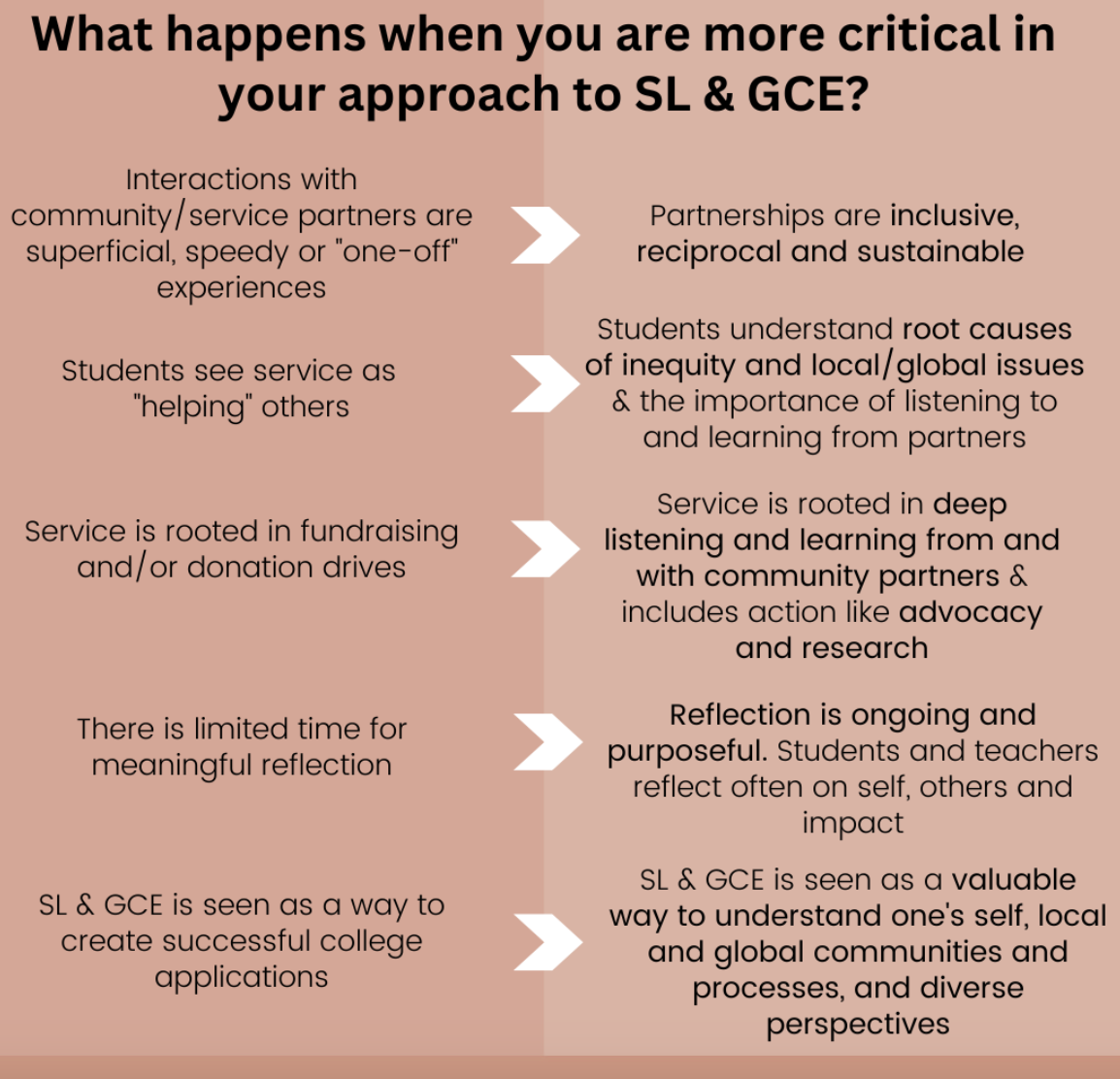
The graphic above presented in the first module sums up the goals of the course. The big idea I am taking away from the first module is to get students thinking about the root causes of inequities in our societies. Moving away from thinking of service learning as something students do to or for, but instead with and by the school’s partner organizations. One challenge facing international schools is our schedules are jam-packed with activities and initiatives. Both faculty and students do not often have the time to slow down and really think and reflect on our service projects.

The assigned reading for Module 1, “Soft Versus Critical Global Citizenship Education” by Vanessa Andreotti was thought-provoking. She refers to Open University Professor Andrew Dobson’s view that global trade creates inequities and by being from the West, by not doing anything, we are active in keeping the developing world poor. 47% of the world is considered poor by the World Bank with incomes under $6.85 per day. He thinks “justice” should be our governing factor instead of ideas of “making a difference” and “being charitable”. Along with other thinkers, he believes that only rich nations and citizens can be global, as most people can only think and act locally because they are too poor to have other options. The G7 countries say they are acting globally, but they act in their own self-interest. Andreotti pushes back and says that Dobson’s view is a bit too simplistic. He also thinks the individual responsibility is more important than organizational change.
She presents the work of Columbia University professor Gayatri Spivak. Professor Spivak believes that “Western” values are projected as universal and we should not forget that colonialism created global inequalities. The “elite global professional class” (me) often reproduces these problematic power dynamics.
Claude.ai summarized the article with the following take:
“The main takeaway is that effective global citizenship education requires moving beyond simple charity-based approaches to develop deeper understanding of global relationships, power structures, and responsibilities. As a school leader, you’re uniquely positioned to implement this more nuanced approach while respecting local contexts and perspectives.”

 TIS Director's Blog
Published by