


Launched in the 2023-2024 academic year, the Tashkent International School Adventure Program was created with a bold vision: to inspire students to exchange screen time for extraordinary real-world experiences within Uzbekistan’s breathtaking landscapes. In today’s digital world, many young people lack opportunities to develop crucial risk assessment skills and physical resilience. Our program addresses this gap by immersing students in transformative outdoor experiences—from scaling majestic mountains and navigating pristine waterways to skiing down exhilarating slopes and mastering essential wilderness skills. Beyond physical challenges, the Adventure Program creates a social environment where meaningful connections flourish without digital distractions. Students develop confidence, leadership abilities, and lasting bonds with peers and mentors while discovering the natural wonders of Uzbekistan. Each expedition becomes more than an adventure—it’s a journey of personal growth, environmental appreciation, and community building that equips students with invaluable life skills impossible to develop behind a screen.
With the program growing, I am focusing on keeping our students and faculty safe. Viristar is a company that provides expert services to outdoor, adventure, and experiential programs. In April, I completed the company’s 40-hour course, Risk Management for Outdoor Programs. The course is framing my thinking around risk management. My big takeaways from the course are as follows:
- A great definition of Risk Management is a systematic, intentional, and ongoing process of maintaining risk at a socially acceptable level.”
- Incidents or near misses are caused by complex reasons, and it is not by blaming one person or occurrence. The course introduced me to the idea of Risk Domains (diagram above). Risk Management takes into account many factors and embeds a safety culture in the program.
- I have two goals inspired by the course #1- Develop an Adventure Program Specific Risk Management Plan #2 Obtain accreditation from the Association of Experiential Education
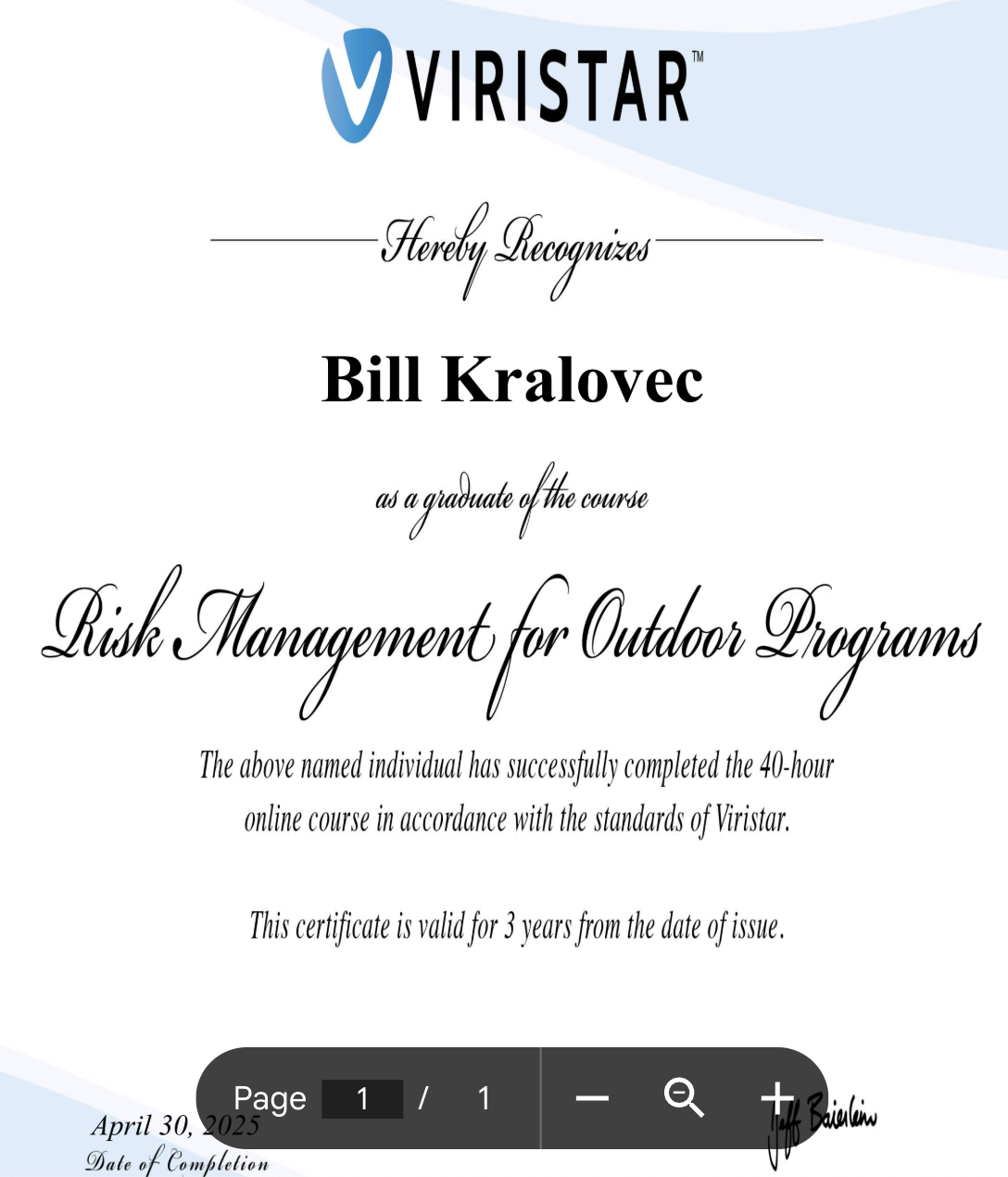
I also learned a lot from my classmates. Experiential Education teachers from the Singapore American School and the International School of Kuala Lumpur among others were also taking the course. Outdoor Adventure Programs are popular offerings in South East Asia international schools and many use outside providers to organize and lead trips.
TIS is different in that we do not rely on providers and do all the trips ourselves.We also consistently through the school year, take students out into nature on weekends, breaks, and some school days. Therefore I think it is important that we are doing everything we can to continue to offer these experiences safely and the accreditation process is crucial.
I like to thank Jeff Burlein and my classmates for helping me grow my Risk Management skills.

 TIS Director's Blog
Published by