

The Association for the Advancement of International Education (AAIE) “Friday’s Five Ideas for the Future” is always thought-provoking. This week, they shared six articles about BANI (Brittle, Anxious, Non-Linear, Incomprehensible). This is a tool or framework that leadership consultants and strategists use to help leaders manage and lead their organizations. Jamais Cascio, author/futurist/speaker from the tech management world of San Francisco, came up with this framework after COVID revealed these truths to us about the world. I liked Jeroen Kraaijenbrink’s article in Forbes because he stated how I feel about the framework. The world has always been like this. The Earth and its inhabitants are too complex to entirely understand. Systems breakdown, there are unforeseen consequences of actions, new technologies are always coming, individuals cannot control everything that happens to them, etc. The articles go on to say that BANI has replaced VUCA (Volatile, Uncertain, Complex, Ambiguous) in leadership consultanting.
I view it as a way for leaders to understand the human response to complexity and unpredictability. It is the psychological state that school leaders find ourselves in when we are confronted with challenges. BANI identifies the internal and emotional reality of when systems fail (Brittle), the anxiety some people feel when facing uncertainty (Anxious), the struggle to comprehend unforeseen consequences, and not being able to understand all aspects of an issue when a decision needs to be made. Forbes’s Kevin Kruse gives good advice for leaders:
- BRITTLE – Do not only optimize for efficiency, but I also need to prepare redundancies to deal with breakdowns.
- ANXIOUS – I communicate and lead with honesty, empathy, and direction.
- NON-LINEAR – I won’t have all the data before taking actions or making a decision. I need to take actions and be ready to modify and adapt as we are going through it.
- INCOMPREHENSIBLE – I need to take calculated risks and lean on my intuition when “the full picture is impossible to see”.
It helps me to think of BANI not as a strategic planning tool, but rather as a tool for acknowledging and working with the human dimension of leading through complexity.
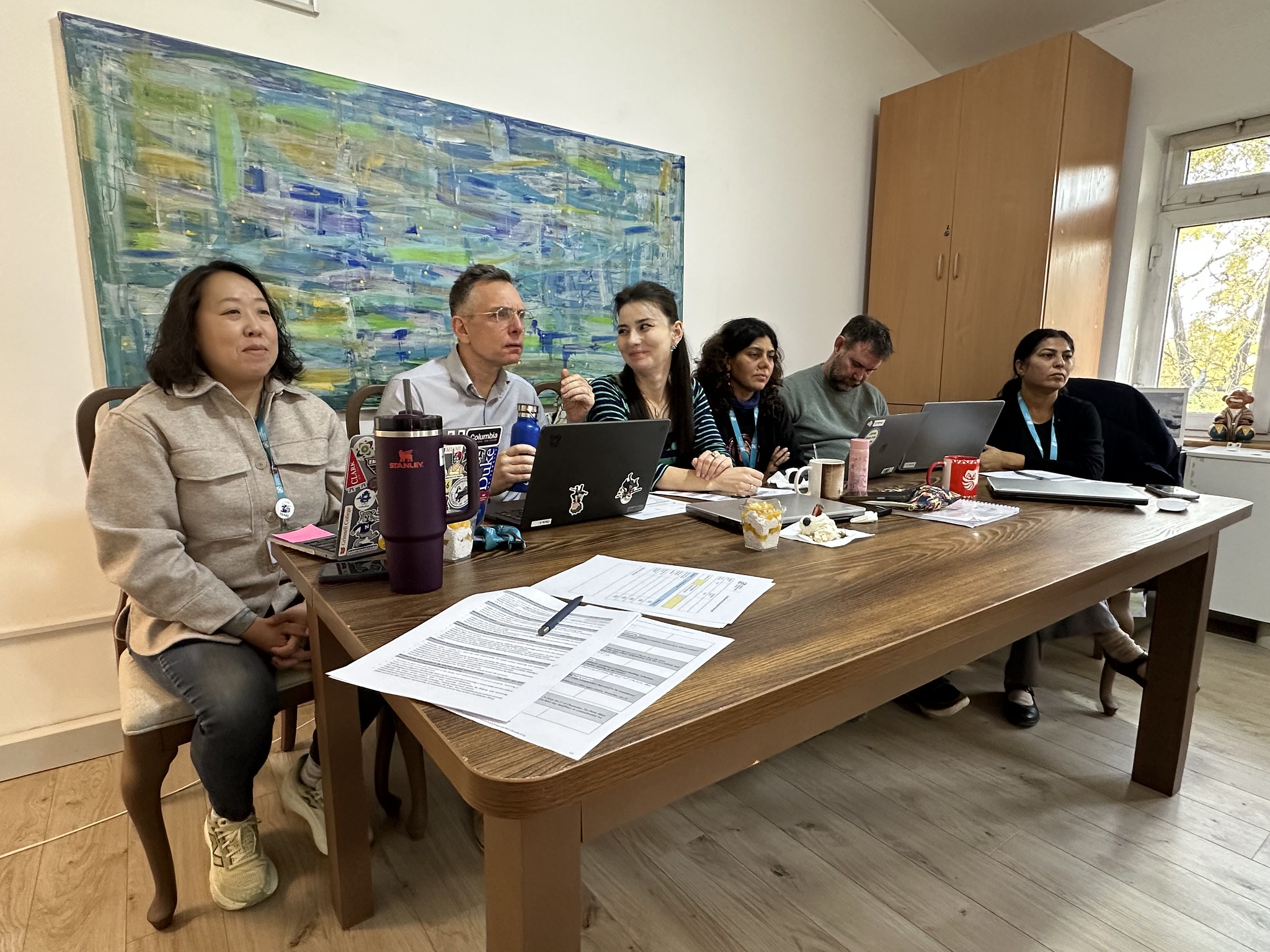
The photo above shows a TIS Search Committee interviewing a candidate for our next secondary school principal in my office. This role puts BANI into daily practice. Principals live on the front lines where systems break, anxiety runs high, small decisions cascade unexpectedly, and the full picture is never quite clear. The best candidates don’t claim to have conquered these challenges. Instead, they demonstrate resilience, lead with empathy, adapt when outcomes are unpredictable, and trust their intuition with incomplete information. The conversations I am having with the committee, reflecting on interviews remind me that BANI isn’t just a framework for understanding our world. It’s a lens for recognizing the deeply human work of educational leadership.

 TIS Director's Blog
Published by