Stanford University Communication Essentials for Work and Life

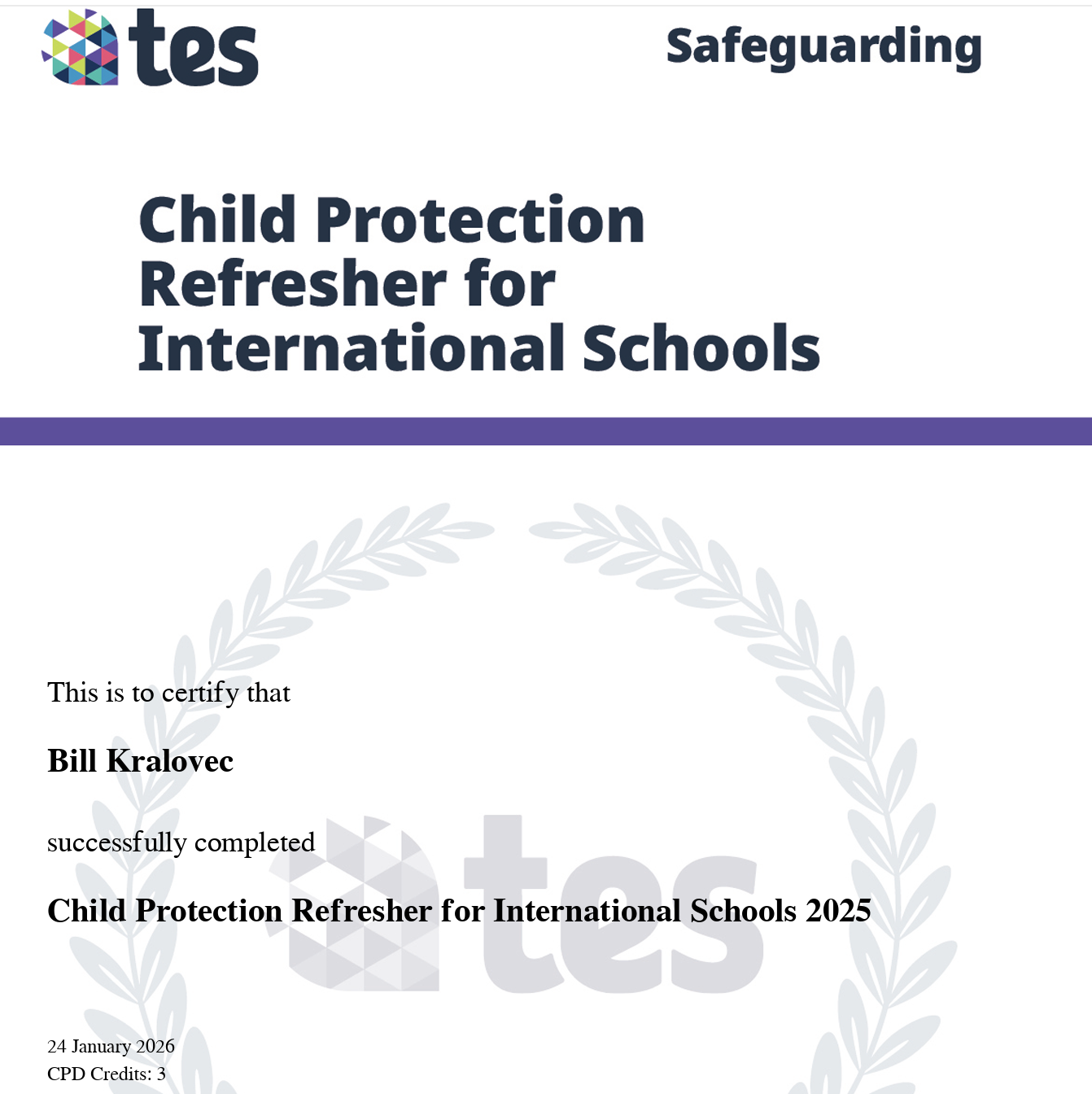
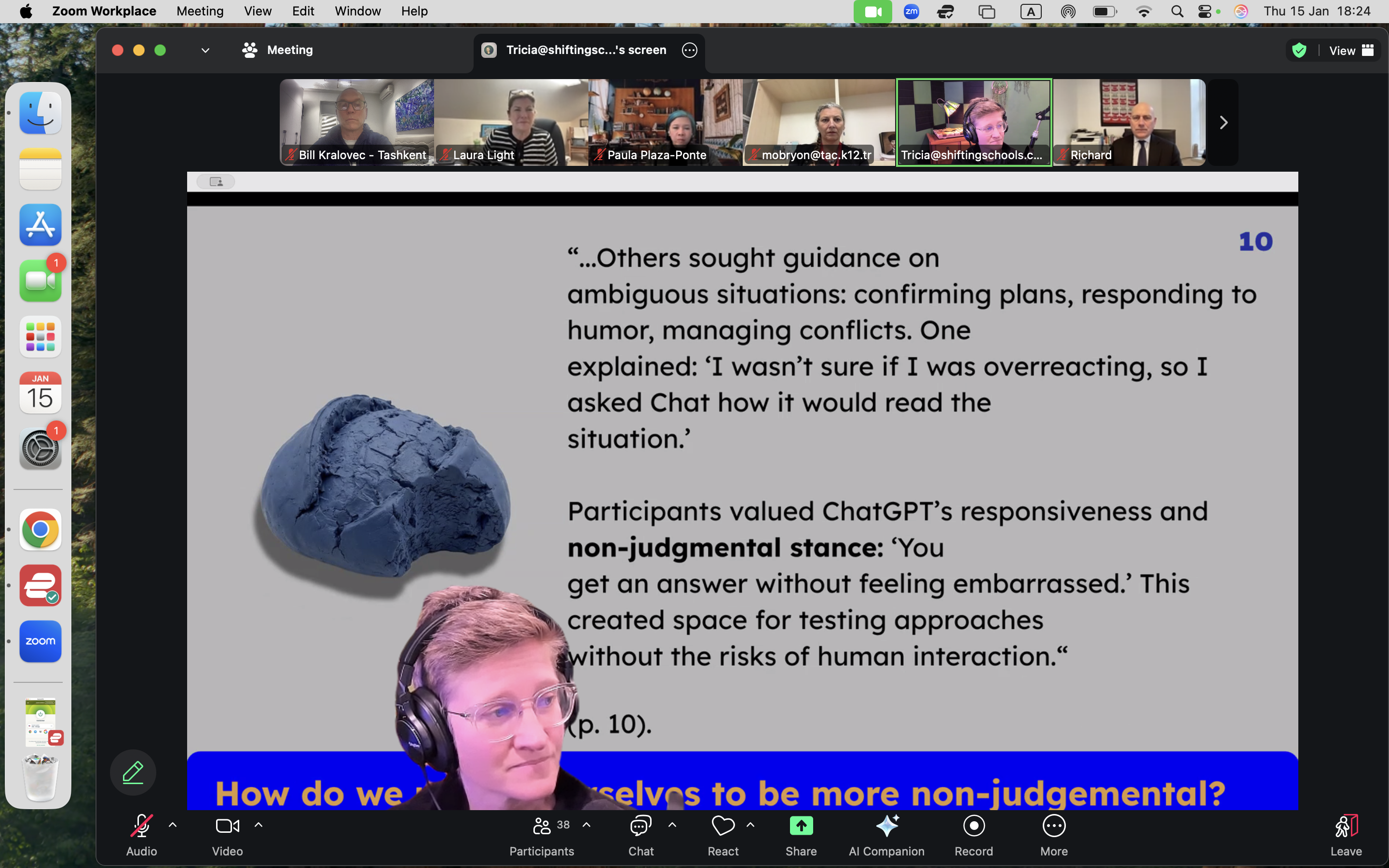
I recently completed Stanford University’s COM 101 “Communication Essentials for Work and Life” as part of my ongoing professional development. Matt Abrahams is a professor at Stanford University Graduate School of Business and the host of the Think Fast, Talk Smart podcast. As the head of school, communication is the majority of my work, whether it be to larger internal and external groups in formal presentations and speeches, leading school teams, and interpersonal communications in all my professional relationships. It was good to rethink how I communicate with others and improve my skills.

Abrahams asked his friends to provide guest lectures, and four stood out in particular. I am using this blog post to consolidate my learning and something I can go back to for future reference.

Jessia Hoffman

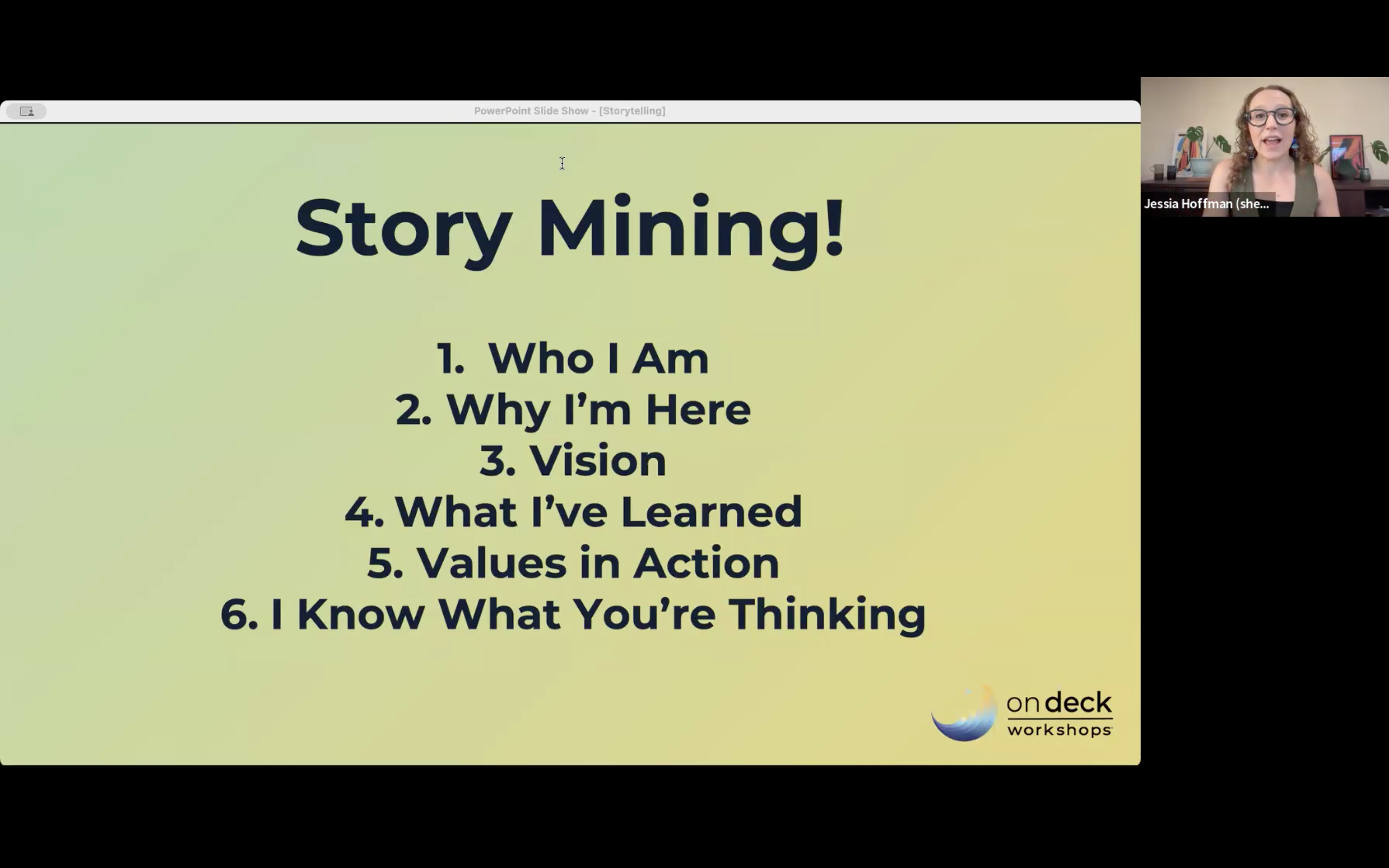
Jessia Hoffman is a Bay Area leadership consultant (On Deck Workshops) who specializes in incorporating Improvisation in teaching and leadership. My big takeaway from this workshop is that humans are hardwired to tell and listen to stories. Using stories increases student/employee engagement and learning. The Stanford Storytelling Project incorporates storytelling in its community. I don’t know why more international schools have a similar initiative. Teachers and students using stories to learn and create change is powerful! A byproduct is also stronger relationships. Stanford University thinks it is such an important part of a learning community that they have a permanent initiative. I know this was “hot” in education years ago, but Hoffman’s workshop inspired me to bring it back. It would be a great start to my leadership at my new school to do this workshop, for colleagues to get to know one another and improve teaching and learning. She did two activities that I thought were valuable.

The first was “The Story of My Life” which goes like this:

  • With a partner, tell the story of your life in 1 minute.
  • Tell it again, not using anything you said the first time.
  • In the third round, use “What Matters to You” if stuck.
  • For homework, write the Story of Your Life ten times using 5-7 sentences per story.

The second activity was “Port Key“. Participants use a random physical object to transport you to another place, like in Harry Potter series. For example, Jessia gave Matt the word “mango” and he told a story of falling in love with his wife while eating mango-flavored “Flogo” yogurt. In his story, the restaurant was “downtown,” and he gave that word to Jessia who told a story. This is a good way to get to know one another and practice your storytelling skills.

The next valuable workshop was led by Joel Schwartzberg, a workplace communications coach, speaker, and speech writer. My big takeaway from his workshop, “Getting to the Point: Simplify, Sharpen, and Sell Your Most Important Ideas” is that to make an impact with your communications, you need to have a crystal clear POINT. Schwartzberg defines a point as a case or recommendation to make your audience feel, think, and/or do. In his consultive work, he says most people are not clear with their main message. He gives techniques to “sharpen” and deliver your point. I will use his ideas of increasing my volume when I speak, not being afraid of pausing, and know the difference btween telling and selling your story.

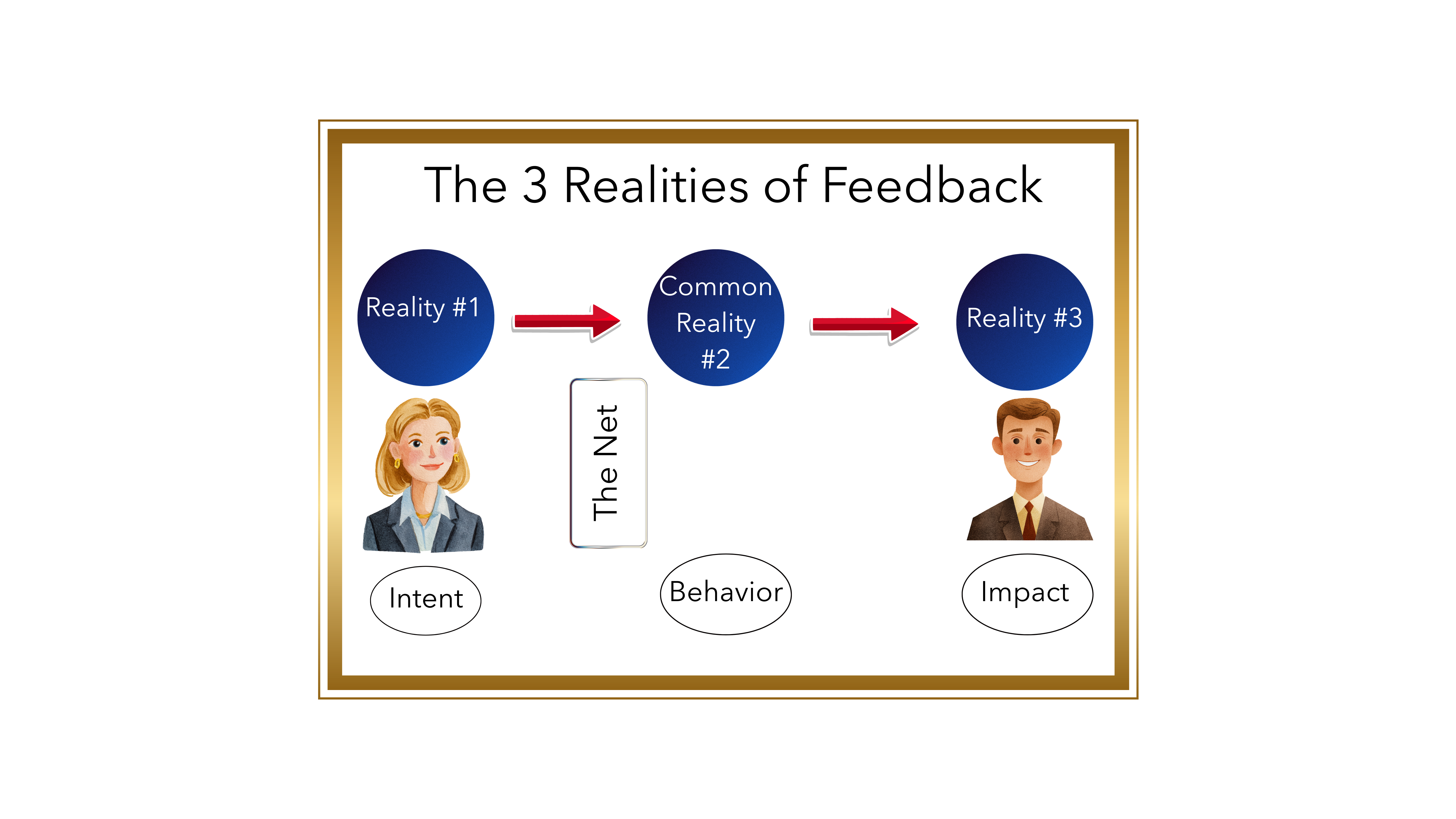
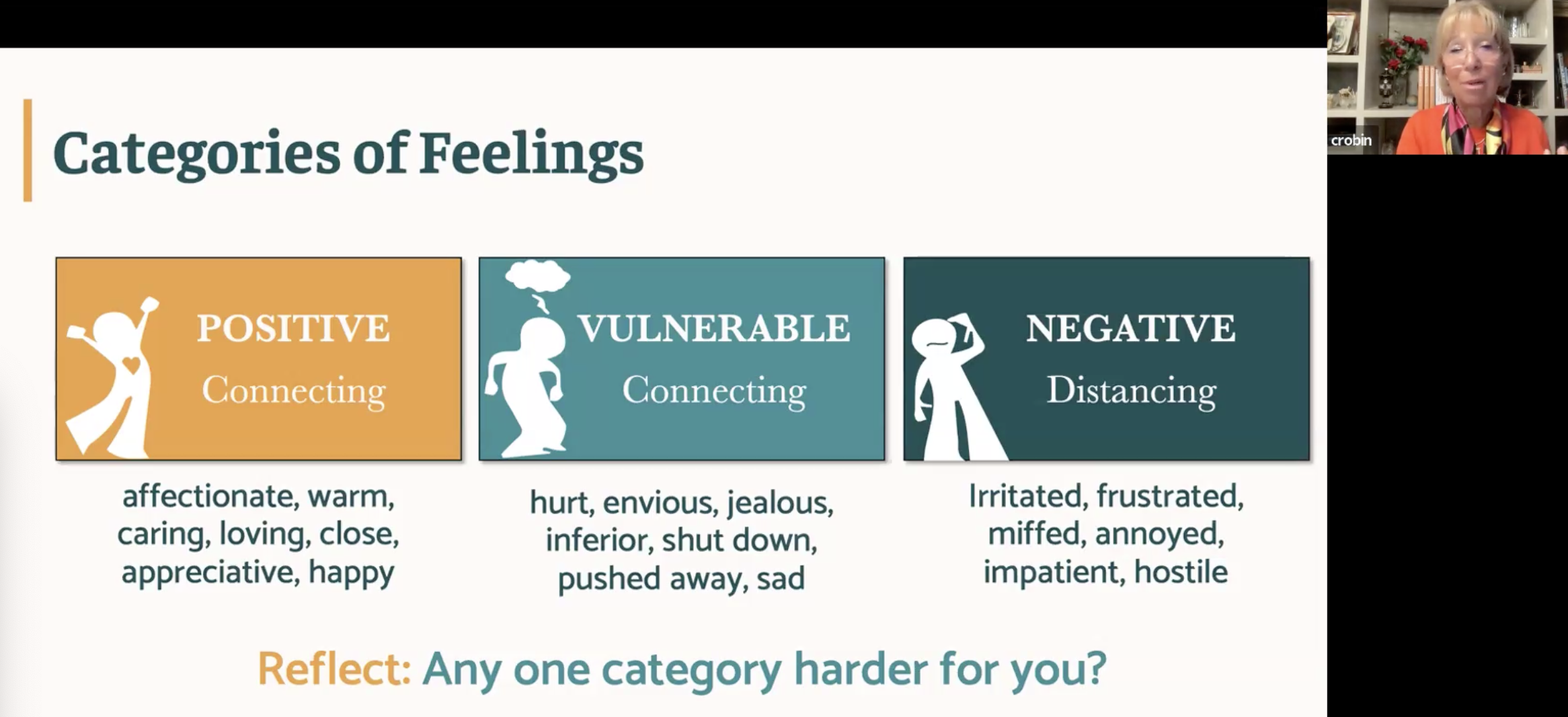
Carol Robin teaches the most popular Masters of Business Administration course, Interpersonal Dynamics, aka “the Touchy, Feely course”. The class and this workshop is based on her book, “Connect: Build Exceptional Relationships with Family, Friends, and Colleagues.” The “touchy,feely” reference is the emphasis on feelings and emotions. Her advice on giving Feedback, was insightful and useful. I created this diagram below in Canva.

Robin’s advice is when giving feedback is to focus on #2 (behavior) and #3 (your feelings) NOT on your guess of the intent. Do not say “I feel that you…”, instead, say “When you (behavior #2), I feel (impact #3). STAY ON YOUR SIDE OF THE NET. She also shared the framework for categorizing feelings below. Often when colleagues are demonstrating Negative feelings that distance relationships, they are masking Vulnerable feelings such as fear or hurt. She also used the word “pinches” to describe those little things that people do that annoy you. It is important to address these before they grow into something larger.

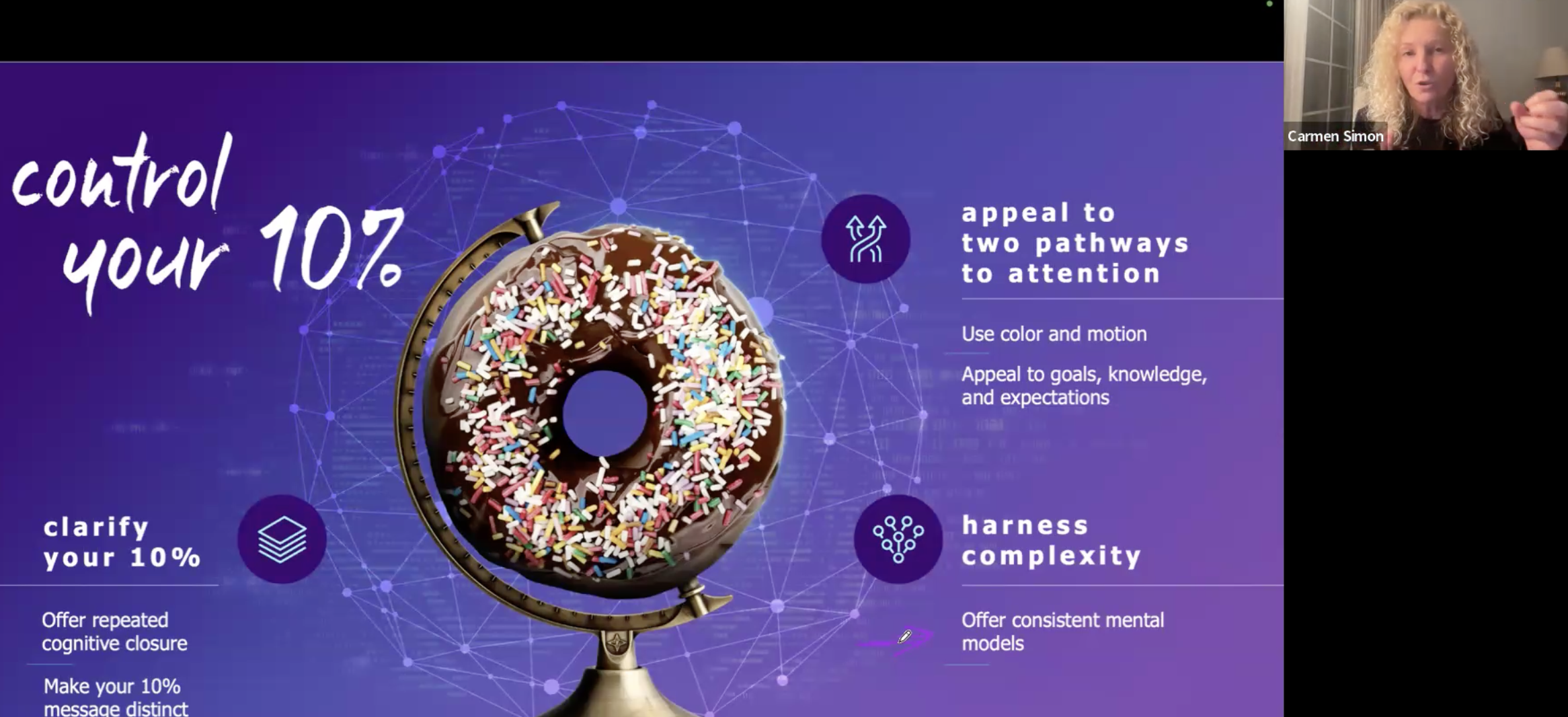
The final workshop I liked was by cognitive neuroscientist Carmen Simon “The Neuroscience of Memorable Content”. She reminded me that audiences forget 90% of what you present within 48 hours. What do you want your audience to remember 48 hours and beyond? CLARIFY YOUR 10%. My takeaways from her was to not be afraid of Repetition. It is OK to repeat your main point in distinct ways several times throughout your presentation. Her other message was the control the focus while “harnessing complexity”. The audience will get board from too simple of a presentation, the human brain likes making sense of complexity. Keep your 10% main message simple and have a large volume, diversity and interdependent concepts/things in your presentation.

BANI: The Human Response to Complexity

Secondary School Principal Interviews in my office (November 29, 2025)

The Association for the Advancement of International Education (AAIE) “Friday’s Five Ideas for the Future” is always thought-provoking. This week, they shared six articles about BANI (Brittle, Anxious, Non-Linear, Incomprehensible). This is a tool or framework that leadership consultants and strategists use to help leaders manage and lead their organizations. Jamais Cascio, author/futurist/speaker from the tech management world of San Francisco, came up with this framework after COVID revealed these truths to us about the world. I liked Jeroen Kraaijenbrink’s article in Forbes because he stated how I feel about the framework. The world has always been like this. The Earth and its inhabitants are too complex to entirely understand. Systems breakdown, there are unforeseen consequences of actions, new technologies are always coming, individuals cannot control everything that happens to them, etc. The articles go on to say that BANI has replaced VUCA (Volatile, Uncertain, Complex, Ambiguous) in leadership consultanting.

I view it as a way for leaders to understand the human response to complexity and unpredictability. It is the psychological state that school leaders find ourselves in when we are confronted with challenges. BANI identifies the internal and emotional reality of when systems fail (Brittle), the anxiety some people feel when facing uncertainty (Anxious), the struggle to comprehend unforeseen consequences, and not being able to understand all aspects of an issue when a decision needs to be made. Forbes’s Kevin Kruse gives good advice for leaders:

  • BRITTLE – Do not only optimize for efficiency, but I also need to prepare redundancies to deal with breakdowns.
  • ANXIOUS – I communicate and lead with honesty, empathy, and direction.
  • NON-LINEAR – I won’t have all the data before taking actions or making a decision. I need to take actions and be ready to modify and adapt as we are going through it.
  • INCOMPREHENSIBLE – I need to take calculated risks and lean on my intuition when “the full picture is impossible to see”.

It helps me to think of BANI not as a strategic planning tool, but rather as a tool for acknowledging and working with the human dimension of leading through complexity.

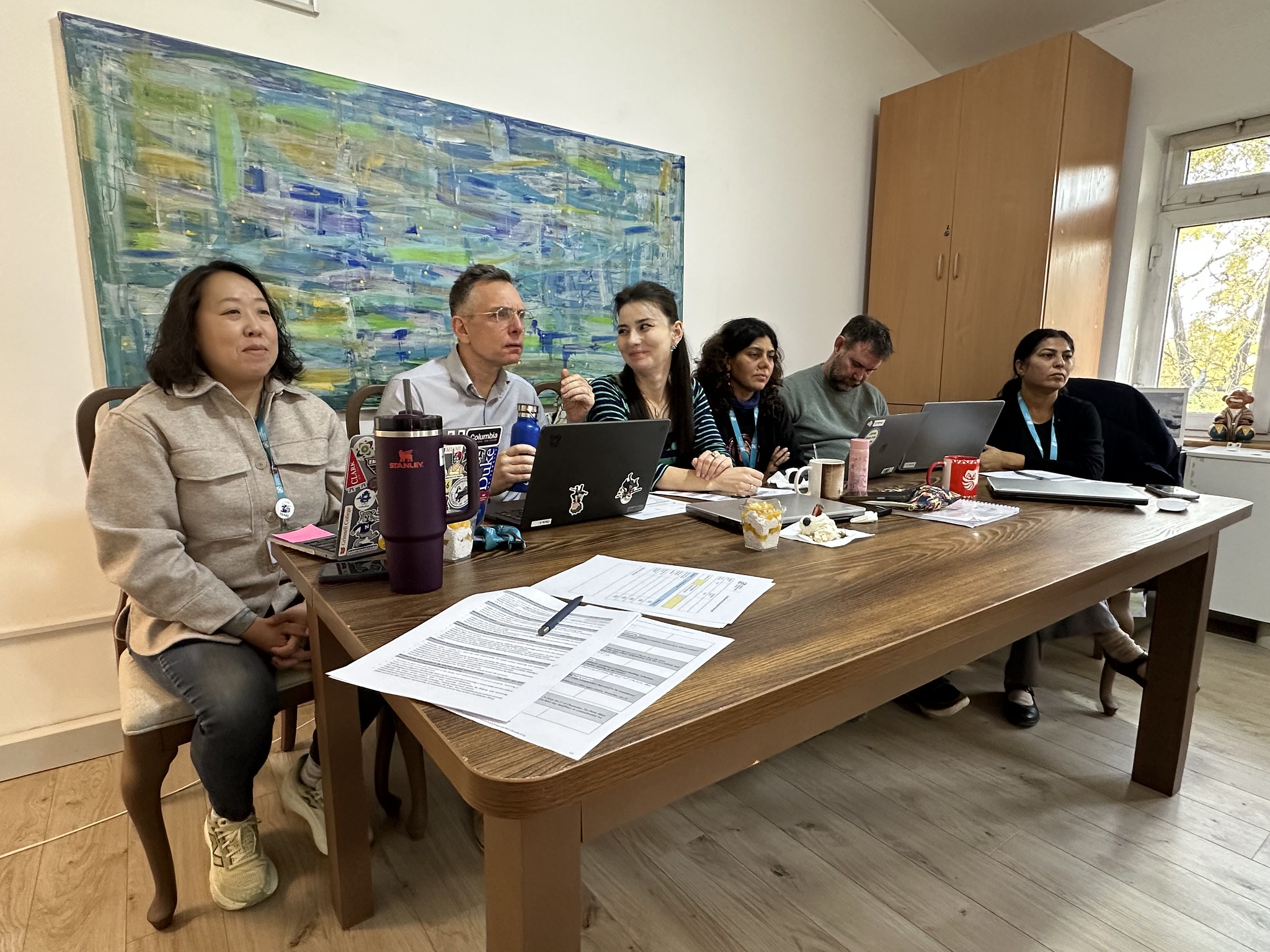
The photo above shows a TIS Search Committee interviewing a candidate for our next secondary school principal in my office. This role puts BANI into daily practice. Principals live on the front lines where systems break, anxiety runs high, small decisions cascade unexpectedly, and the full picture is never quite clear. The best candidates don’t claim to have conquered these challenges. Instead, they demonstrate resilience, lead with empathy, adapt when outcomes are unpredictable, and trust their intuition with incomplete information. The conversations I am having with the committee, reflecting on interviews remind me that BANI isn’t just a framework for understanding our world. It’s a lens for recognizing the deeply human work of educational leadership.

From Consumers to Producers: Matt Glover and the Future of Literacy

Matt Glover Inspires our Kindergarten Authors

Spending a week with literacy consultant Matt Glover has uplifted my view of the future of literacy, especially writing. I see students and adults reading and writing less and less as video (YouTube, Netflix) and podcasting/social media are taking over from the written world. It feels old-fashioned to sit and write a book. Glover elaborated using scripts and transcripts of auditory/video narratives. I like the idea of pushing students to move from consumers to producers of digital media.

Matt Glover is an internationally recognized literacy consultant. He focuses on nurturing writers, early childhood reading, language composition, and supporting children’s intellectual development. He has plenty of examples and research from his over 20 years in Ohio (USA) elementary schools. Glover is the author

“Published Stacks” Glover is a big proponent of exposing students to published works of the types of writing they are learning. In PS to grade 3, the dominant “published stack” is storybooks or picture books. That is the majority of what elementary students should be writing during this time of their lives. He points out teachers ask the students to write single paragraphs or informational reports when these are not published works in real life.

Genre Study vs. Craft or Process Study” He sees schools only doing genre studies year and year, instead of focusing on the craft and process of writing, so students can choose genres that matter to them. (ex – What are the three most powerful revisions you made in this work?) “craft” is punctuation, illustration, “process” is revise or talk with others about writing

Schools need to look at the entirety of a student’s writing units over time to avoid over-repetition. School writing programs that schools can buy off the shelf do not have craft and process studies.For example, one student was so happy that there were no Memoir Writing classes, because she had studied memoir for four years in a row. The student was the only one to know.

Reading Like a Writer” Isabella’s page below in her book is the “page you never read”. This is her interpretation of the copyright page. The teacher never explained what it was to the students. Isabella included it in her books because she saw this in all the books the teacher read to the class. A subtle difference is “reading like a teacher of writing”. Matt took a text and asked, “What do you notice?” “What did this author do?”

dialogue tag” This indicates who is speaking. Glover’s point is adults overlook or take for granted the writer’s craft. Dialogue tags can be quotations or Jabari said either before or after the quotation.

“stack considerations” The process of a teacher determining what published examples to share with a class. Matt categorizes the stack with ALL / MOST / SOME. “ALL” means most important idea, central to the unit “Most” important for most of the students in the class “SOME” have an example of a particular technique/characteristic All teachers have a “go to” example book that they know extremely well and they don’t have to flip around to find a teaching point example. Students are co-constructing the success criteria by looking at what ALL of the stock examples have.

I would like to thank Matt and the TIS elementary leadership team that brought him here and organized a great week of professional development for the faculty.

When Purpose Meets Action: TIS Students Transform Learning into Global Impact

Students in the Tashkent International School Adventure Program recently returned from Tanzania, where our school’s purpose, “Challenging Ourselves, Exploring Boundaries, Making Connections, to Create a Positive Difference” was their daily reality. 

🌊 Earned their scuba diving certifications and immediately put their skills to work on coral reef restoration by cleaning artificial coral beds and constructing new growth structures

🌿 Studied coastal mangrove ecology firsthand, understanding these critical ecosystems’ role in our planet’s future

🦁 Identified mammals and birds in Mkomozi National Park, connecting classroom learning to real-world conservation

🤝 Bridged continents at United World College of Moshi, where the students exchanged Uzbek and Tanzanian cultures and perspectives

The trip further strengthened my belief in the power of experiential learning. The students didn’t just learn about global challenges, they actively contributed to solving them. With more of students’ lives moving to the digital world and who knows how much artificial intelligence will be doing for us in the upcoming years, immersive experiences like these are becoming more important than ever for student growth. The students overcame their fear to learn a new skill and learned they have the capacity to make a difference. 

#ExperientialLearning #InternationalEducation #ServiceLearning #CoralRestoration #TashkentInternationalSchool #GlobalCitizenship #AdventureEducation

United Nations Day at Tashkent International Day

One of my favorite events at Tashkent International School (TIS) is the United Nations Day. This annual tradition highlights the school’s diversity. A parent commented that it was amazing for his children to experience so many cultures in one day. The event makes it clear to our community that diversity is our strength! I went from wearing a necklace of Russian sushki to taking a photograph with Korean parents in traditional Korean gat, to eating a delicious Indian samosa.

UN Day 2025 was the biggest ever in the school’s history and the best one I’ve experienced in my seven years. There were a record 33 different delegations with booths in the “Global Village” and 64 countries in the Parade of Nations. The planning committee wanted something different this year, and two students came up with ideas of a World Cup Football Friendly Tournament and an Art Exhibition based on this year’s theme, “Building Our Future Together”. Both enhanced the day for our families. It was a perfect early autumn day to celebrate our global reach and connect with each other. With so much conflict going on in the world, it was nice to focus on our shared humanity.

I would like to thank the UN Day Planning Committee and all faculty and staff who played a part in making the day memorable. Especially the work behind the scenes from the maintenance, groundscrew, security, and housekeeping who were at school until 11:00 PM on Friday evening.

Russian Government Outlaws the IB

On August 25 this year, Russian authorities declared the Swiss-based International Baccalaureate (IB) an “undesirable organization”. The Russian Prosecutor’s Office stated that the IB “shapes Russian youth according to Western models” and “promotes non-traditional values”. This took place a week before the start of the Russian school year and impacted the 29 IB authorized schools in Russia. The ruling did not come from the Russian Ministry of Education, but directly from the Prosecutor’s Office. The New York Times article, “Russia’s Ban on I.B. Schools Deepens Its Rupture With the West” is a good analysis of the situation. The Times Educational Supplement, “Russia’s IB ban and its implications for international schools.” This follows the closing of the Anglo-American School of Moscow several years ago. This is the official statement from the International Baccalaureate.

I attended an IB Zoom Forum led by IB Director Adrian Kearney today regarding the implications of the ruling for IB World Schools outside of Russia with Russian families enrolled in the school.

  • 1. Can IB World Schools outside of Russia accept transfer students from former Russian IB schools? Yes, but there is no communication between international schools and the former IB Russian school.
  • 2. What are the risks for Russian national citizens enrolled in IB World Schools outside of Russia? The IB Diploma will not be recognized by Russian universities. Schools should remind families of the decision by Russian authorities. The ruling was broad and vague, so it is difficult to interpret what consequences there are for Russian students, teachers, and parents.
  • 3. Can Russian citizens work in IB World Schools outside of Russia? See #2.
  • 4. What advice should we give to Russian citizens’ parents? The IB interprets the ruling that enrollment in an IB World School outside of Russia does not mean “actively promoting” the IB but only being a consumer of it, so it is possible. Note that academic credentials will not be recognized in Russia. Parents are ultimately responsible for choosing education for their children.

TIS is still able to offer IB Russian A and Russian B language offerings at our school. If anyone has questions or concerns, they can reach out to support@ibo.org for more information directly from the International Baccalaureate.


Building an AI-Ready School: A Leadership Framework

Artificial Intelligence is poised to transform education more dramatically than any innovation since the internet.All schools should be focusing their thinking on how it will change teaching and learning, and going above that, how it will reshape our students’ future careers and lives.

I’ve been struggling with what our school does next with Artificial Intelligence. Last academic year, we started with a Professional Learning Community (PLC), developing a whole school Artificial Intelligence Policy, a list of approved AI Tools, and a framework of AI use for student assignments. Cora Yang and Dalton Flanagan inspired our employees to familiarize themselves with AI and to frame the work of the AI PLC. We invited Myron Dueck to come in November to give our work this year a boost. Thankfully, EBLANA Learning consultant Kimberly House introduced their program of comprehensive AI guidance for IB schools at the Central & Eastern European Schools Association (CEESA) autumn meeting yesterday. We also had an insightful conversation among the directors on the best current practices and the future of AI’s impact on schools.

Reflecting on what I learned yesterday, our PLC members should take the next step and complete some of the online AI training courses Eblana offers. In looking at their AI Implementation Framework for International Schools, Tashkent International School has done much of Phase 1 and bits of Phase 2.

A summary of my takeaways from yesterday’s session:

  • I need to read UNESCO’s AI Competency Framework. “teachers must be the guardians of safe and ethical practice” and UNESCO expects an AI-rich environment in schools.
  • Schools are struggling with how teachers can use AI to assess and give feedback to students. The goal should be how to enhance student engagement using AI.
  • AI uses a huge amount of energy! Facts like generating one AI image is the equivalent of charging your phone 3x or a 30-second deep fake video is the same as streaming the entire catalog of the television show Friends 500,000x are incredible.
  • AI is reducing “productive friction” in all of us, educators and students. How much cognitive offloading do we give to AI? What is worth doing myself and what is worth offloading to AI?
  • We all need to be careful about what information we are putting into what LLMs. We also discussed how this relates to child safeguarding and we should all prepare for deep fake videos being used by teenagers.
  • I will learn more about Gemini Gems, Perplexity, and become an AI-certified advanced leader through Eblana.

Solar Energy at TIS

It is exciting when my work at the head of school directly impacts student learning. The board facilities committee developed a pilot solar panel project on the roof of one of the school’s gymnasiums (left photo). TIS facilities manager Rashid Suleymanov is shown sharing the data website with a group of grade 11 students working on a solar energy project. Uzbekistan receives a lot of sunshine, but it also battles with dust. We want to know if we should add more solar panels to the rooftops on our campus. We challenged the students to help us with our feasibility study.

TIS Owls Complete Level One Kayak Trip

I helped lead a level one kayaking trip on the “Tashkent Sea” this weekend. We started our RIVERS strand of the TIS Adventure Program and completed the first two rounds of our beginning kayaking instruction trips. I drove up Saturday morning, and my colleague Irina and I were the instructors for a group of nine grade 11 students. It was my first time teaching the course after becoming an instructor last spring, and thankfully, Irina was there to help me.

The students loved the experience! Many of them had never been in a canoe or kayak and I love watching them develop confidence and comfort while acquiring kayaking skills. Besides learning the set of basic paddle strokes, they also learned how to get back on the kayak in case they capsize. This is nerve wracking for some people, but with calm encouragement and support, all the students were able to capsize and make it back to shore. Our students are very kind and respectful and we just had a great time with them. I love campfires and prepping meals and it was a cool mid-September night alongside the reservoir.

The “Tashkent Sea” is actually the Tuyabuguz reservoir and is a popular recreational area about an hour’s drive from the school. I thank the Uzbekistan Rowing and Canoe Association for allowing us to camp on their grounds and use their facilities. After learning the fundamentals in the morning, we did a tour of three islands in the reservoir and had a photo opportunity at Kindik Tepa (which means “navel or center” and “hill or mound”).

I want to give a special shoutout to the TIS faculty and staff to went above and beyond to give all of the students over the past four days a great experience. These include Victor, the Adventure Program Coordinator, Irina, Margot, Batir, Sartor, Ramon, Kim, and Felix! Thank you!!!!

Comprehensive Sexuality Education

We have the pleasure of hosting Susie March this week at our school. Susie is a consultant who works with schools in developing Comprehensive Sexuality Education (CSE) programs. Tashkent International School integrates CSE into our Psychological, Social, and Emotional Learning Program. Last school year, we had some challenges with our CSE curriculum from families. The goals of her visit are as follows:

  • Develop a common understanding of the CSE curriculum and why our school teaches CSE of all stakeholders, students, faculty, and parents.
  • Train and support teachers in delivering the CSE curriculum and manage sensitive topics when students bring them up in the classroom.

My big takeaway from my time with her is that schools need to offer a robust CSE to safeguard children. When students have the knowledge and tools about sexuality, harassment, and abuse can be avoided or dealt with more safely. Susie ended her talk today with the idea that our sheltered international school students are released into the world and get to university in a different country, and being happy and able to deal with real-world challenges are just as important as high IB scores.

Things to Remember

  1. The United Nations views Comprehensive Sexuality Education as a human right and a safeguarding measure for children. 
  2. UNESCO developed the International Technical Guidance on Sexuality Education 
  3. Susie said in her experience of working with hundreds of schools, female students are most interested in learning more about Sexual Harassment and Consent & Boundaries. With male students, they are a bit more scattered in their interests, with Pornography and Sexually Transmitted Diseases being the top two choices. She used a Diamond-9 technique with 45 different topics, and students need to prioritize which topics they would like to learn more about.
  4. Susie March is seeing much confusion around misogyny from international school students. 
  5. The US State Department Office of Overseas Schools partnered with CASEL to develop Social Emotional Learning & Child Self-Protection Standards and Benchmarks for International Schools
  6. CIS mandates that accredited schools offer CSE.
Diamond-9 Template