ICMEC Child Safeguarding Certification

I recently completed the Introduction to Safeguarding online course offered by the International Centre for Missing and Exploited Children (ICMEC). The TIS Safeguarding Team is piloting the course to see if it will be an alternative to our annual refresher course offered by TES Safeguarding. We also use Childsafeguarding.com for our Russian speakers to complete their annual refresher course.

The ICMEC course is similar to the TES Development course. It covers the basics and gives a good overview of safeguarding and will be a good refresher for our faculty and staff. I liked the extra resources that are available when completing each of the four modules. My big takeaway was the concept of contextual safeguarding. That is taking a balcony view of safeguarding and developing systems and habits that ultimately for schools, encourage people to be aware of possible child abuse and report disclosures and observations to the Designated Safeguarding Leads.

Child Safeguarding Session Notes

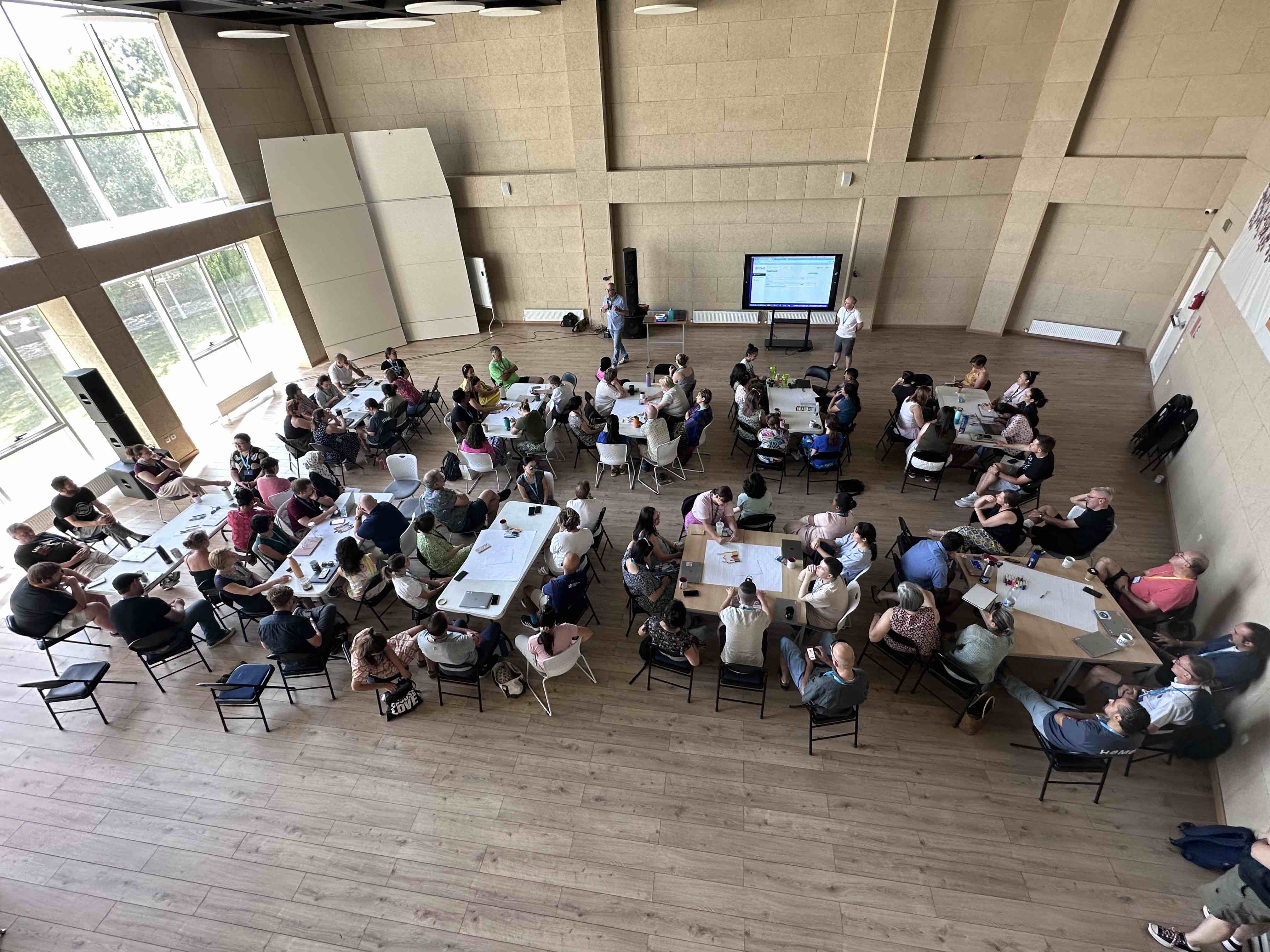
Annually during the Faculty and Staff Preparation Week employees participate in a Child Safeguarding workshop to refresh ourselves about the importance of keeping students safe. This year we are having both sessions for academic staff (teachers, teacher assistants, and assistants) and support staff (guards, housekeepers, maintenance, grounds crew, business office). In my remarks to open the session, I mentioned the following key points:

  • This session is more than compliance, it is a reminder of our collective responsibility of keeping students safe.
  • We are responsible not only for physical safety but also emotional and psychological safety.
  • TIS has a legal and ethical responsibility to safeguard children. We adhere to international school standards set forth by our two accrediting agencies, CIS and NEASC and Uzbek and International Law.
  • TIS has an additional challenge in safeguarding children because of the different languages and cultures. What is acceptable in one culture, might be acceptable in another culture when it comes to parenting.

My key takeaway from the session was how the Child Safeguarding Team will follow up with teachers and others reporting disclosures. We get a lot of reports and there are some confidentiality concerns. The team this year will work on this.

Finally, for outside readers, I would like to define ‘safeguarding” as all programs, initiatives, practices, polices that a school does to keep students safe. “Protection” means actions taken to protect a child once there is a disclosure or report is made.

Misdirect (My thoughts on Scot Galloway’s Essay)

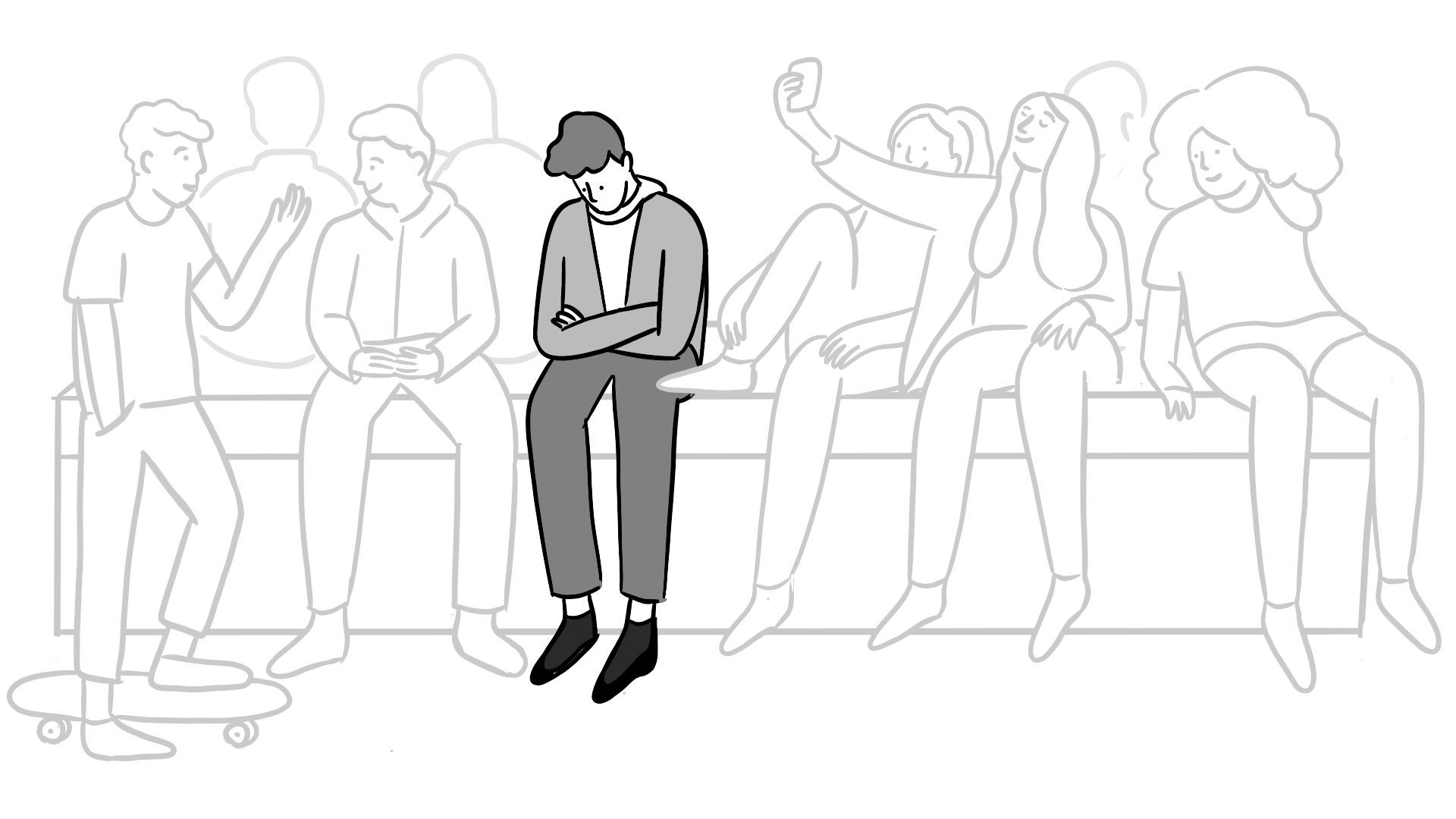
One of my favorite writers and thinkers is NYU professor Scot Galloway. He is an advocate for young men and he wrote about the recent assassination attempt on Donald Trump. The shooter was a disaffected young man with access to an AR-15. There are too many of these types of lonely and hopeless young men in America. It is more difficult for boys to get started today than it was when I graduated from high school almost 40 years ago. Galloway cites the statistic that 35-year-olds have half as much wealth as they did when they graduated from college in 1989 and 70-year-olds have twice as much wealth. The number of men in university compared to women is dropping and in 2023, it was 41%. He points out American media is not focusing on the real problem of depressed young men with access to guns and instead is focusing on the political implications of the shooting.

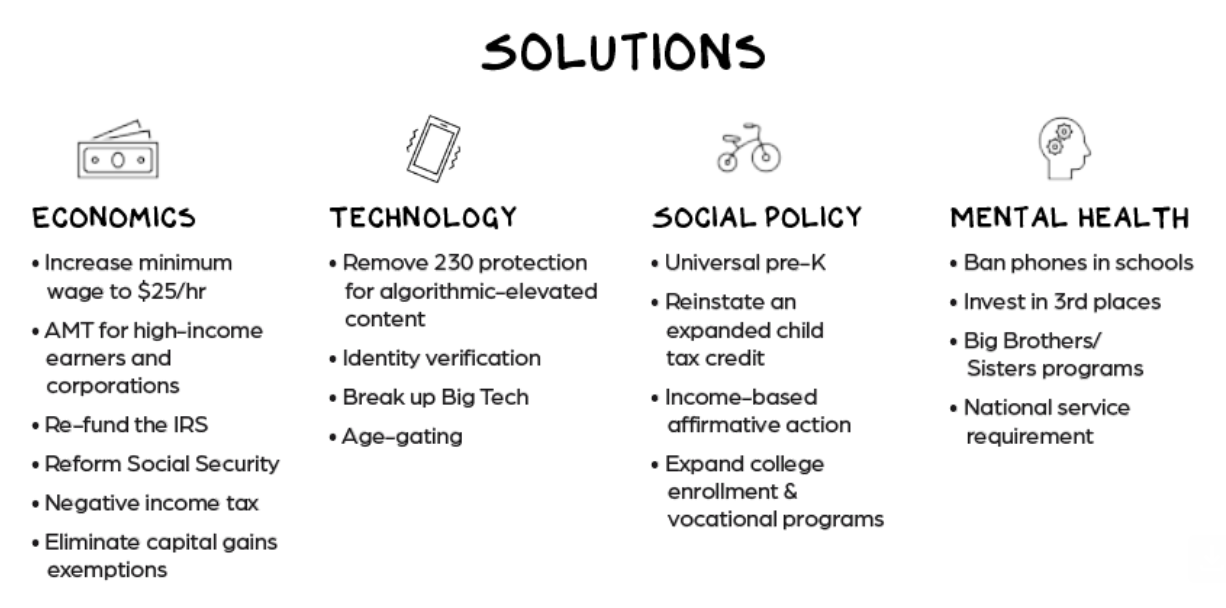
My current school, the Tashkent International School does not have the same problems for boys as in public schools in America. Our families are wealthier and give their sons a good start in life. However, it worries me about the larger societal issue of the struggles of young people (both boys and girls), to get started with their careers, finding mates, and living a fulfilling life. Galloway proposes solutions to this in the graphic below.

Cell Phone Bans in Schools

We are removing cell phones from secondary students in the 2024-2025 school year. From my observations and feedback from teachers and students, they are a distraction to learning. We noticed especially for middle school students and early high school, they are on their devices too much. In our communication with parents they were overwhelmingly in favor of the initiative. We contemplated using Yondr Pouches so we did not have to collect them and store them daily. We decided not to use them due to the cost and reports of hacking them, and we’ll see how it goes with just taking them away in homeroom and giving them back at the end of the school day. Our school is small enough for us to do this. Our pilot went well in June, and we’ll continue to tweak our procedures. One key is being consistent when students are found with cell phones during school hours.

I continue to read with interest about the impact of cell phones on education. This Edutopia article, “Three Schools, Three Principals, Three Cell Phone Bans”. US public schools have bigger challenges with hundreds and thousands of students. As the principals in the article said, teachers still need engaging lessons to capture students’ attention.

Monuments and Leadership

Last week we went on a tour of less visited monuments/memorials as part of the Leadership Possibilities and Paradoxes project hosted by the US State Department’s Office of Overseas Schools. We had an insightful tour guide, a former federal prosecutor, lawyer, and history buff who gave us the context and history of each monument. This morning we had a reflective conversation about the meaning of monuments of great leaders in our society led by a professor from St. John’s College. St. John’s is known for its Great Books curriculum so John was an expert discussion leader.

The Lyndon B. Johnson Memorial Grove is the bank of the Potomac River and is rarely visited. This spot was chosen because LBJ and his wife enjoyed relaxing there as it looked over the city. It made me think about how my wife Nadia is always there for me. Leadership can be stressful and emotional draining and it is important to have a supportive spouse or partner. LBJ had a tough time (1963-1969) because of taking over from President Kennedy and the on-going Vietnam War. Reading his biography, I was impressed with his accomplishments and his idea of the “Great Society”. He created Medicare and Medicaid, established federal loans for university students, and two important Civil Rights Acts. I can imagine him and his wife talking about a tough day in the White House and looking across the Potomac over the beautiful city of DC.

The Franklin D. Roosevelt Memorial is more visited and more prominent in the city. He is the longest-served president, 12 years from 1933 to 1945. The monument has four “rooms” that cover each of his four terms. In reading his quotes and thinking about his accomplishments, the Democratic Party needs another FDR today! Someone who strongly advocates for marginalized populations (poor, immigrants, elderly, etc.) He also had a strong spouse and his wife is also featured with a statue, the only First Lady to have this honor.

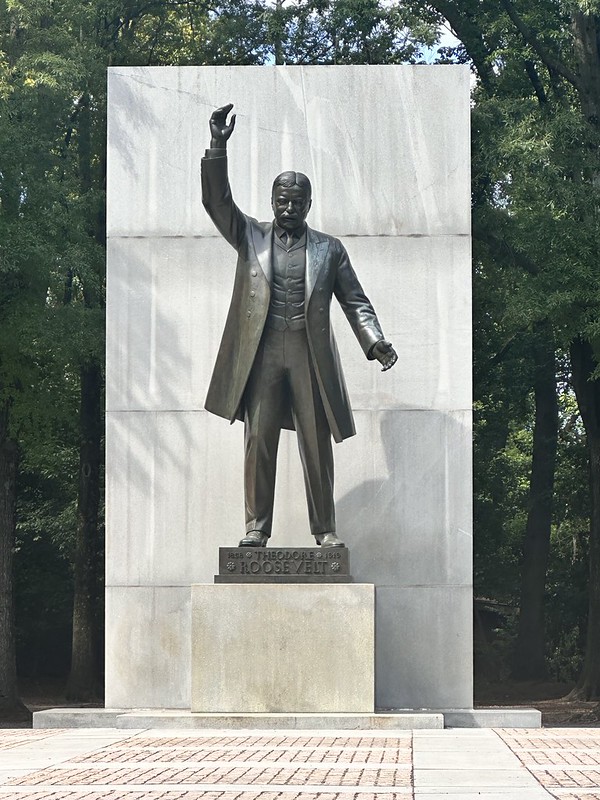
The final monument was his cousin, Teddy Roosevelt Island. I have not read much about him and only know that he was a driving force behind the National Park System. I learned he was the youngest president, elected at age 42.

Some of the major ideas discussed by our group after the tour were as follows:

  • John felt that no monuments should be taken down or changed as they are history. People today are taking down some statues and monuments because the values have changed since the monuments were reflected, for example Civil War Confederate heroes in the US South.
  • One school leader thought it could be viewed as selfish, previous generations dictating to future generations what was important and to keep them forever.

McChrystal Group “Team of Teams”

In preparation for the US State Department’s Office of Overseas Schools Leadership Symposium, I read retired General Stanley McChrystal’s book, Team of Teams: New Rules of Engagement for a Complex World. The premise is in a rapidly changing environment, the traditional hierarchical structures of leadership fail. It advocates for flexible, decentralized teams that can rapidly adapt and communicate across organizational boundaries to foster innovation and resistance in complex environments.

I see the leader needing to reiterate the shared purpose of our school often to all employees, emphasizing our goal and each team’s part in it. (COMMON PURPOSE). We need to ask good questions with a kind demeanor and look for ways for teams to contact each other more frequently. (TRUSTING TEAMS). Leaders should create a culture in which these questions are not threatening and develop non-defensive answering techniques. Hold more frequent, shorter, daily Operations and Intelligence briefings (SHARED CONSCIOUSNESS). School leaders have a mindset of “EYES ON – HANDS OFF” and show enthusiasm, and interest and offer not only advice but encouragement while doing the rounds. Remember to first observe and listen deeply to understand. (EMPOWERED EXECUTION).

General Stanley McChrystal (Alexandria, Virginia)

I also read on his website this idea of “Leading Like a Gardener”. I see this style of leadership as focusing on coaching individuals to develop their decision-making skills and motivation, instead of telling people what to do all the time. A leader develops a soil (culture) that plants (people) can thrive in.

McChrystal is an interesting figure. Is was a career military man and an innovative US military leader in Afghanistan and Iraq. President Obama replaced him when Rolling Stone Magazine published his (and his aides) disparaging opinion of the US government’s policies and actions in the war effort. His techniques were also considered controversial by some. He seems highly respected, however, as his post-military life is successful. He teaches at Yale and runs a consulting firm, the McChrystal Group. We will be spending an afternoon at the offices of the McChrystal Group. I also am interested in his personal lifestyle of running 7-8 miles daily and eating only 1 meal. I think it is important for leaders not only to stay mentally sharp but physically fit as well and I would like to hear from him if he feels the same and exactly why this is so. I am going to listen to several interviews he has given over the years to get a better feel for his leadership philosophy.

AI-Generated Child Sexual Abuse Material

I have time to read more in the summer. This week’s AAIE (Association for the Advancement of International Education) newsletter highlights the issues of Artificial Intelligence (AI) generating CSAM (Child Sexual Abuse Material). As an international school leader and the Strategic Head of our Child Safeguarding Team at our school, I need to keep abreast of online threats to children. The Washington Post reported a record high number of CSAM reported to the National Center for Missing and Exploited Children. The Center was alerted to 88 million files in 2022.

The problem has a new layer with AI generating inappropriate images of minors. Governments are fighting it through laws and hearings. Tech companies are using AI to detect and scrub the internet of these images and videos. This article in Time “As Tech CEOs Are Grilled Over Child Safety Online, AI Is Complicating the Issue” has a good overview of the problem.

United Nations Interregional Crime and Justice Research Institute (UNICRI), through its Centre for AI and Robotics, launched an AI for Safer Children Initiative as described in the video below.

This NBC News article reports AI companies and the non-profit Thorn are combating AI-generated CSAM. Stanford researchers found CSAM in the data that some AI Large Language Models trained on. Thorn is helping companies develop principles, such as checking data sets before inputting them into their AI models. This is a link to the Thorn website for more information.

AI Readings

One of our professional learning themes next school year will be the impact of Artificial Intelligence in K-12 international schools. I am trying to read as much as I can this summer. I use Chat GPTo almost every day and appreciate it editing my writing and helping me make sense of a lot of data and information.

Watercolors by Emma Larsson for Harper’s Magazine. Larsson’s watercolors are responses to poems featured in this essay. This watercolor is a response to the AI continuation of Emily Dickinson’s poem. All paintings © The artist. Courtesy the artist and Simard Bilodeau Contemporary, Los Angeles 

Metal Machine Music: Can AI Think Creatively? Can We?” Laura Dubreuil Harper’s Magazine, July 2024

This article discusses the capabilities and limitations of AI in creative processes. Large Language Models (LLM) can figure out the patterns of language, grammar, and writing to produce solid, even really good writing. If everyone relies on AI to complete their essays, blog posts, school assignments, etc. Dubreuil sees a homogenization of writing. She also thinks AI is great at figuring out patterns and has a lot of source material to draw from but it is not as truly creative as the human mind. For K-12 international school leaders, the essay offers several insights:

  • Students risk an over-reliance on AI for creative tasks and they have to figure out ways to use it to enhance their creativity.
  • Students need to be skeptical when evaluating AI-generated information. They need to think critically when using it.
  • Teachers should encourage original thinking and provide opportunities for students to do so.
  • We as a school need to discuss the ethical use of AI. Maintain the most important part of the creative process is the teacher-student and student-student interactions.

The Future of Education in a World of AI Ethan Mollick

Dr. Mollick is a professor at the University of Pennsylvania. One of his research interests is AI and he is optimistic about humans using AI. I placed a hold on his book, “Co-Intelligence: Living and Working with AI” Mollick compares AI to the introduction of calculators in schools in the mid-1970s. Initial resistance is followed by integration until a consensus is reached.

We’ll find a practical consensus that will allow AI to be integrated into the learning process without compromising the development of critical skills. Just as calculators did not replace the need for learning math, AI will not replace the need for learning to write and think critically. It may take awhile to sort it out, but we will do so.

Ethan Mollick

I already use Chat GPT to help me understand what I am reading and give me context and background to ideas and topics I encounter. AI Tutors will be used by all students, although it will never replace the human teacher-student relationship. Mollick sees the lecture/assignment model of education fading away as schools need to discover ways for students to become “active learners” in the age of AI.

Does an International School Leader Need to be Machiavellian?

Cover Page The Prince 1550 edition

One of the readings for the “Leadership Paradoxes and Possibilities Project” I am participating in next month is Niccolò Machiavelli’s The Prince, published in 1532. I listened to BBC Historian’s Melvyn Bragg’s In Our Time podcast on the subject. Bragg introduces Machiavelli’s famous work with the following quote.

One must be a fox in order to recognise traps, and a lion to frighten off wolves. Those who simply act like lions are stupid. So it follows that a prudent ruler cannot, and must not, honour his word when it places him at a disadvantage.

Machiavelli wrote The Prince while he was exiled to his farm after being released from a brief imprisonment. He was a diplomat and senior official in the Florentine Republic government that governed the city from 1498 to 1512. The Medici family with the help of Pope Julius and the Spanish military, usurped power of the city in 1512. He was caught up in the aftermath and was tortured and imprisoned for 3 weeks until released to his farm. His goal in writing The Prince was to use it as a portfolio showing his expertise in politics. He loved working in government and wanted to get back into it with the new regime. Little did he know that this work would become an all-time classic and that an American school leader would be assigned it for a class on leadership. I am always amazed when reading works of the ancient Greeks, Romans, and authors from the Italian Renaissance how much human nature hasn’t changed over the centuries.

International School leaders do not need to be concerned about having their schools taken over in a palace coup d’état, but in my 14 years of being a Head of School, I’ve run into several “Machiavellian” figures intent on ruining my leadership. The vast, vast majority of international school employees, board trustees, and parents do not fit into this category. In reading The Prince again while flying to the USA, my guiding question is What leadership advice can I take from this ruthless political treatise? Below are my major takeaways from Machiavelli’s work and I am applying these to a modern, international school context.

  • It is easy to become isolated as the Head of School. A leader needs to know what faculty, students, and parents are thinking. This is so that when “disorders spring up, one can quickly remedy them” and not be surprised when a major problem blows up and it is too late to remedy. Machiavelli recommends also looking ahead for “troubles” because they are easier to remedy before they approach a leader.
  • When taking over a new school, either crush your enemies or treat them well. Do not allow them to be lightly injured because they seek revenge and cause problems for you. This is always a concern when there are internal candidates who didn’t get the position still working at a school when a new Head begins.
  • Only avoid a fight if you do not have the advantage.
  • It is hard to install new orders (systems) because there are always people who benefited under the old system and will resist change.
  • “All armed prophets have conquered, unarmed prophets have been destroyed.”
  • Keep your focus on the core business of the school, when “princes think more of ease” they lose their states. The core business of schools is teaching and learning and student enrollment. For Princes in the Italian Renaissance, the core business of leadership was keeping a strong military.

Probably the most famous idea of the book is that it is better to be feared than loved as a leader. Machiavelli wrote that the goal of any leader is to keep everyone united and loyal. Macchiavelli warns leaders that showing “too much mercy invite disorders to arise”. I think sometimes you need to be tough on people who are sewing division or not doing their jobs. Leaders should proceed with “prudence and humanity” not hubris. Macchiavelli actually advises leaders to be both feared and loved, but this is a difficult path to walk, so he suggests it is easier for a leader to be feared. The fear of employees preserves your leadership because they fear punishment. However, Machiavelli goes on to say to be feared, but NOT to be hated, especially with powerful people in the school. This is a fine line between fear and hate. He says princes get in trouble when they take women and property and become hated. What are “women and property” in an international school context?

  • A prince is respected when he is a true friend or downright enemy. Better to choose a course than remain neutral. A prince who avoids present dangers and follows a neutral path is generally ruined.
  • A prince should show himself as a “patron of ability”. Which I take is to support good teachers and good leaders in your school. Don’t be afraid to surround yourself with strong people, they enhance your leadership and are not rivals to it. A leader is judged by the people he hires.
  • Let your colleagues understand that to tell you the truth does not offend me. “A prince ought to always take counsel, but only when he wishes and not when others wish.” Wise princes take good advice.
  • A leader should be a constant inquirer, afterward, a patient listener.
  • Machiavelli quotes Frederick the Great, “The older one gets the more convinced one becomes that his majesty ‘King Chance’ does 3/4 of the business of this miserable universe” The quote is about luck or fortune, which always plays a role in any leader’s success. My takeaway from this quote is to prepare for the unexpected and to be adaptable.

That concludes my review of the book. I am looking forward to having discussions about the book and enhancing my learning.

Making International Schools Safe For All

Harassment has no place in the TIS community and will not be tolerated. This includes but is not limited to harassment over any of the following: religious beliefs, racial or ethnic background, sexual orientation, or gender.

TIS Statement of Community

June is International Pride Month and international schools around the world are challenged with protecting and supporting LGBTQ+ students in their schools. International schools in particular often are located in countries where homosexuality is illegal or there is strong religious or moral opposition.

Our school issued a Statement of Community this year in response to world events that created discord between nationalities. There are also misunderstandings and confrontations over race, gender, religion, etc. with a student body of around 50 nationalities. The Statement challenges us to protect ALL students. Schools need to raise awareness and educate not only the students but also parents and employees of this ideal. Child safeguarding is a primary of schools, and the network of parents, extended family, and school employees, need to be aware of this goal.

School leaders are in difficult positions. Many religions and cultures believe that LGBTQ+ people are devient and immoral. Other countries accept that homosexuality is normal and natural and 5-10% of any population will be gay and have laws protecting the rights, such as marriage or antidiscrimination. Diverse international schools will have significant numbers of students, employees, and families on both sides of this divide. We take the stance of “protecting” students from hate speech and discrimination. A family with strong religious views may feel the beliefs of their family are not being protected when Pride Month displays are shown on campus. I believe schools are places where the exchange of ideas and opinions is valued and protected. This must be balanced with treating everyone with kindness and respect. There are no easy answers, policies, or actions that schools can take to create a totally harmonious environment.

The Association for the Advancement of International Education (AAIE) sends a weekly newsletter (Friday’s Five Ideas for the Future) and this week’s topic looks at how international school leaders can support and represent the LGBTQ+ community. They always share articles and this is what I am taking away from my reading this morning.

I learned about the idea of the Overton Window a concept developed by the Libertarian Think Tank in my home state of Michigan, the Mackinac Center. The idea is society’s opinions on controversial topics changes with the times and politicians sense this and react through enacting laws that capture the Zeitgeist. Below is a short explanation of the Overton Window. In America, views have shifted to more freedoms and rights for the LGBTQ+ population.

I learned about the work of the Trevor Project, a non-profit organization that works to prevent suicide and intervene in crisises with LGBTQ+ youth.

AAIE believes international school leaders have the moral and ethical obligation to talk about these issues now because as leaders, we have the power to make schools safe and welcoming for all.