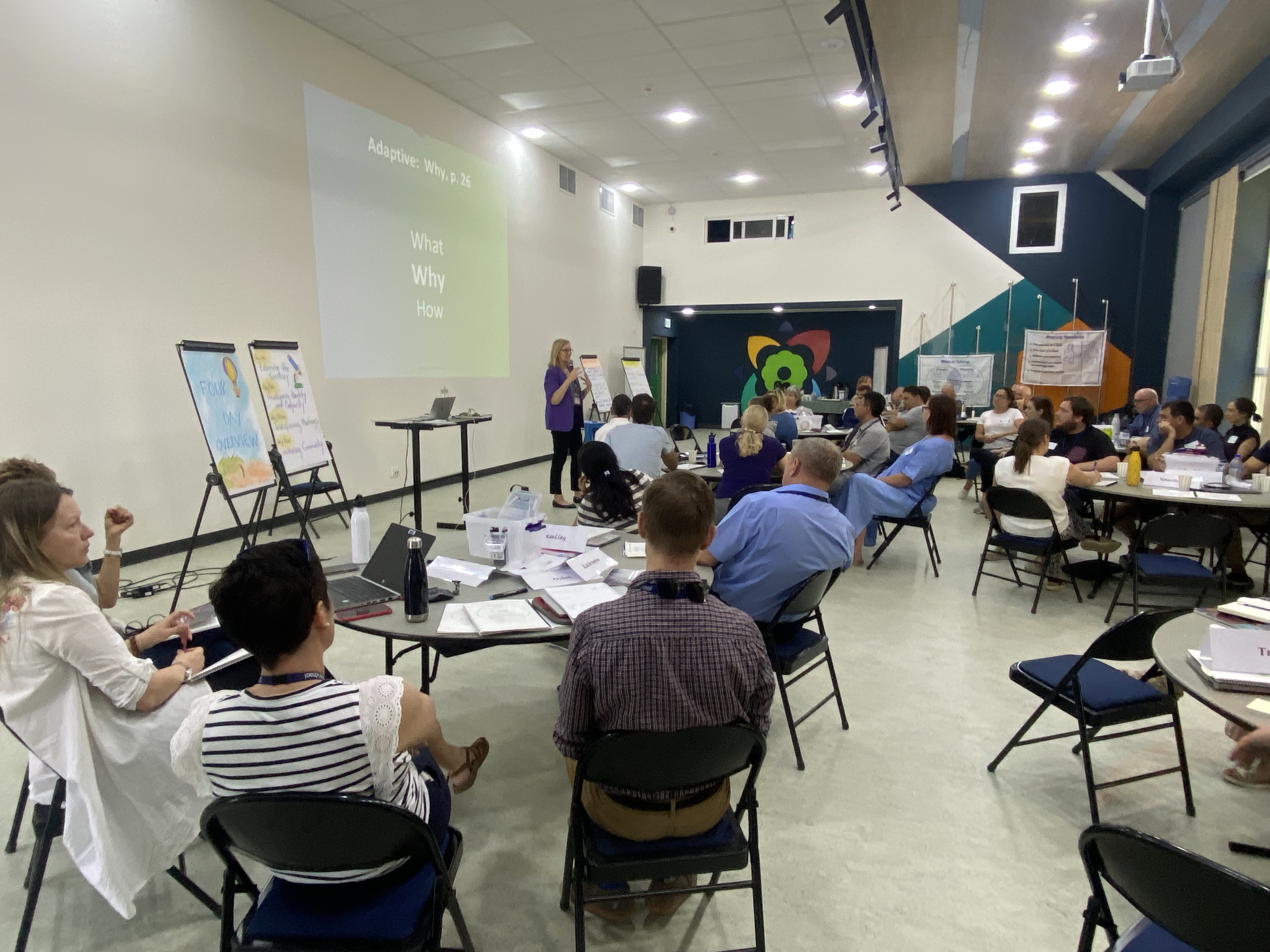
Adaptive Schools Foundation Seminar Continues (Days 2 & 3)

The second and third days of the Adaptive Schools Foundation Seminar focused on the fundamentals of holding effective meetings. My first big takeaway is the group needs to define its identity and purpose. Garmston writes “the most powerful way to change behaviors is to change identity.” That means inculcating effective habits of group members and providing the necessary structure for successful meetings. TIS is a complex system, and that means “adapting to changes, dealing with conflicts and constant learning” as Larry Cuban from the National Education Policy Center writes. A leader can influence a group’s identity through using the Adaptive Schools fundamentals such as the Norms of Collaboration, clarity of purpose, working agreements, and purposeful agendas.

I liked the three meeting purposes. Every meeting should have a Task (the ‘what’), a Process (how are we going to do it) and Group Development Goals (“who” we are and “who” we hope to be). It is basic, but often with the hectic pace of schools, this structure gets overlooked. It was made clear in Day 3 that of course, no one has the luxury of unlimited planning time for meetings, but for the high-stakes meetings, it is necessary. These concepts can also be used for daily or weekly meetings and just a little forethought in the structure of a meeting will go a long way.

The Seven Norms of Collaborative Work are pretty straightforward.

  • Pausing – allow of thinking time before responding or asking a question; also good for when meetings get heated or unproductive.
  • Paraphrasing – clarifying a member’s contribution to help drive forward the meeting;
  • Posing Questions – inviting questions to get the group thinking
  • Putting ideas on the table – use plurals and possibilities language to generate comment and focus on the idea, not the person who proposed the idea
  • Providing data – helpful for the group to construct shared understanding of the issue
  • Pay attention to self and others – “reading the room”
  • Presuming Positive Intentions – I used to say “Most Respectable Interpretation” (same concept)

The next fundamental piece that we learned in Day 3 is the Structure of Meetings. All meetings should have the following structure:

  1. Welcome / Audience Connect
  2. Inclusion Strategy – bringing people’s consciousness to the task at hand
  3. Introduction / Overview – context of the meeting within the larger school system or work leading up to this point.
  4. Outcomes – most important feature; clarity of what will be accomplished is the “x factor”
  5. What, Why, How? – clarify that the topic is in the group’s mandate “sandbox”, what is the benefit of the initiative and how we will reach a decision
  6. Visible Charted Agenda – AS trainers have simple, beautiful charts to confirm identity and tasks on hand

The information provided to us on decision-making will probably be one of the most useful. I’ve been criticized for being too slow in reaching decisions and want to improve. I think part of the problem is I need to be clearer on the process, including, the timeline. I really want to take to heart the three roles of groups in decision-making. A group leader can ask groups to fill three possible roles:

  1. Inform Your job is to give me the best information possible and my job is to inform me. My job is to make a decision. It is important to show them how their information will be used in the decision.
  2. Recommend You will make a recommendation to me or a committee which has the final say.
  3. Decide – The group makes the decision, not me. I’ll live with your decision.

Garmston and Wellmen, the founders of Adaptive Schools think this is so important that a leader should name the ultimate decision-maker 4 times. In the introduction, during the conversation, at the conclusion of the meeting and in the minutes of the meeting.

I will also use the five examples of decision-making strategies that are explained on pages 73 to 75 in our Learning Guide. They are way of collecting feedback from team members in an organized way that focuses on criteria to evaluate ideas or initiatives.

Adaptive Schools Foundation Training at TIS

Training Bridget Doogan leads TIS faculty & staff in the Adaptive Schools Foundation Seminar (Day 1 – September 8, 2022)

43 TIS employees are participating in the Adaptive Schools Foundation Seminar from September 8-11, 2022. The goal of Adaptive Schools Training is to improve “the pattern of adult interactions in a school” (ie, teams) to positively influence school climate and, most importantly, instructional outcomes for students. When teachers, support staff, and leadership form high-functioning groups, students learn more.

The founders of the adaptive school movement are Bob Garmston and Bruce Wellman. They formed the Thinking Collaborative about 20 years ago, and it this groundbreaking work has helped organizations design teams and systems that know their purpose and identity. Using group dynamic techniques and setting group norms through dialogue and discussion, teams, whether it be a faculty or an economics class, can perform more efficiently by focusing on what is most valuable to members. Garmstan and Wellman’s work has become the Thinking Collaborative and can be broken down into Cognitive Coaching, Adaptive Schools, and Habits of Mind. They were way ahead of their time, and schools around the world implement these techniques to form better teams.

TIS last performed the training in 2014 and we are bringing it over the next two years so the majority of our faculty and staff will be recently trained in the concepts. The school goal is to improve collaboration and the functioning of team through the school. Adaptive Schools states the goal of the seminar is to “develop our collective identity and capacity as collaborators, inquirers and leaders.” My goal for the 4-day workshop is to improve the way I lead meetings and to develop middle level leaders and teachers to do the same. The techniques can be used in a classroom by teachers or by facilitators leading adult groups. I hope my capacity as a communicator grows and our meetings are more productive.

“Adaptive” is an interesting term. The seminar defines adaptive as “changing form while clarifying identity”. The pandemic certainly made us change form and as we are coming out of the trauma of the pandemic, we are clarifying our identity. With suspension of normal activities for over 2 years, I find myself asking the focus questions of Who are we? Who do we want to be? Why are we doing this? and Why are we doing this this way? over and over again as we bring back “normal” school activities and events.

My big takeaway from Day One is the idea of the difference between dialogue and discussion. Professional deliberation is different than regular conversation. The Latin root deliberate means “to weigh,” as in evaluate, assess or ponder.The Greek dialogos means “through” and “word.” Dialogue is all about listening to each other for a common understanding the problem and everyone’s view of the problem. This needs to take place first because “misunderstanding lies beneath most intragroup and intergroup conflict.” The Latin root discutere means to “shake apart,” and the goal of a discussion is understanding AND a decision that everyone in the group can support or at least live with.

Child Protection for International Schools

All English-speaking TIS employees must complete the online course Child Safeguarding For International Schools during the first quarter of the 2022-2023 school year. Educare/TES is the leading provider of child safeguarding and protection in the UK. The term “safeguarding” means promoting the welfare of children and preventing and responding to abuse of children. Naturally, schools should play a leading role in this as we have intimate relationships with students, and our faculty and staff are often the first to notice signs of abuse. Our school takes its responsibility to protect children seriously and the course is a good refresher to the concepts of a comprehensive safeguarding and protection program.

I completed the course yesterday, and I always pick up ideas or value the reminders to help the school safeguard our students. Below are my major takeaways from the training.

  • The statistic from the World Health Organization that 25% of all adults suffered physical abuse and 20% of women were sexually abused reminds me how common abuse is found in families.
  • Social workers refer to the “Toxic Trio” of domestic violence/abuse, parental mental illness, and parental substance abuse that often lead to abuse of children.
  • We need to do more police background checks on our employees and volunteers. It is particularly difficult for international schools because teachers often move countries every few years.
  • The language barrier between expatriate children and their nannies/drivers needs to be considered by our families as a risk.
  • It is difficult for employees and caregivers to speak up for fear of being wrong. Schools must balance creating an environment that encourages reporting and protects the rights of those accused or involved in the report.
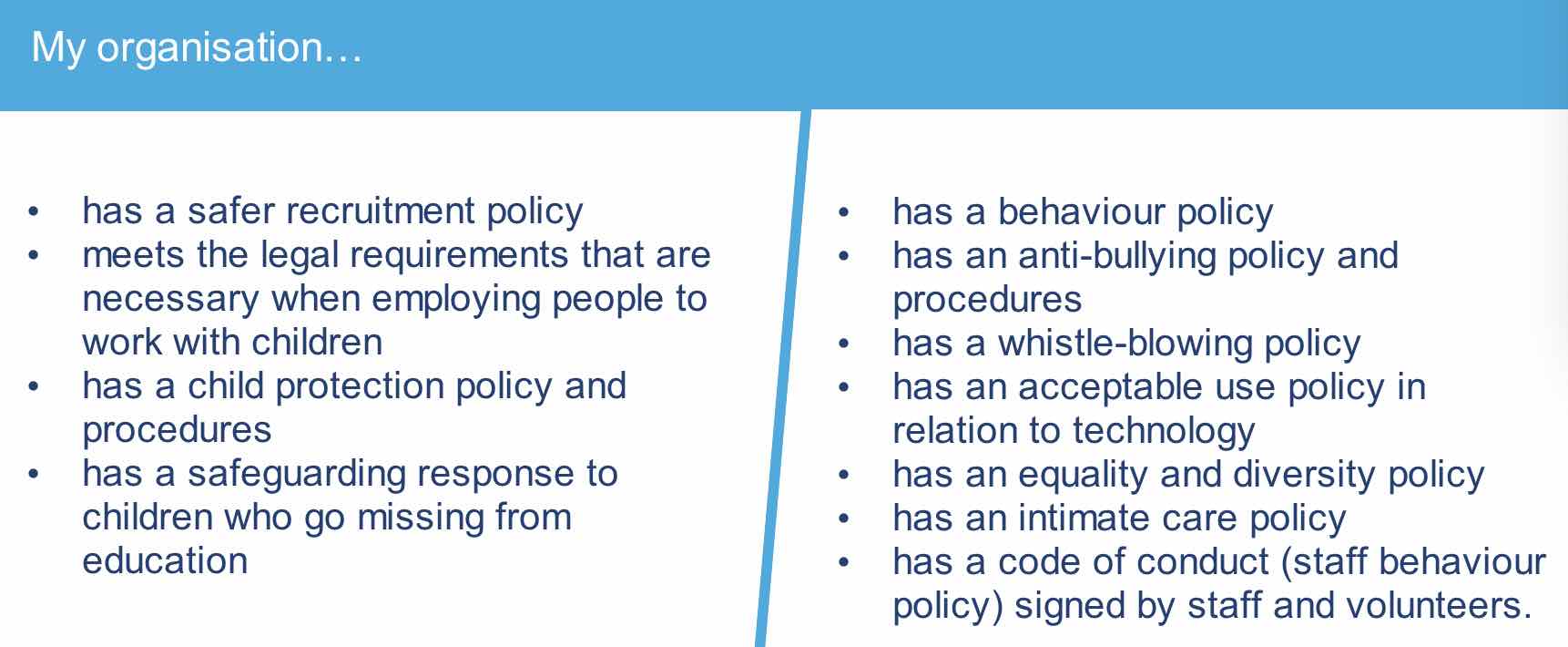
A Useful Checklist

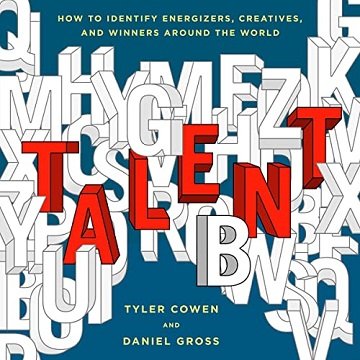
Talent: How to Identify Energizers, Creatives and Winners Around the World

Recruiting teachers is one of the most important aspects of leadership’s work in schools. I am always trying to improve our practices to get the best teachers that we possibly can. Good teachers drive student learning. On the long flight from Uzbekistan to the USA, I read Talent: How to Identify Energizers, Creatives, Winners Around the World. I listen to one of the authors’ podcasts, Conversations with Tyler and Tyler was interviewing Daniel. They referenced the book, so I bought it with the goal of helping me and our school be better at recruiting. Tyler Cowen is an economics professor at George Mason University. Daniel Gross is an Israeli/American entrepreneur and together, they have written an excellent book about recruiting. The book’s main message is for recruiters to develop a mindset to spot talent and to hone your judgment and data evaluation skills. “There is a shortage of workers and leaders that can make things happen.” This post is a summary of my notes from the book on how to find those workers. Note to self – I should re-read Chapter 10 “How to Convince Talent to Join Your Cause”.

2- How to Interview and Ask Questions: I lost confidence in the value of interviews over the years. I think you can learn more about a teacher by doing extensive interviews with references and watching them teach. This book helped me re-look at interviewing as a valuable tool for learning valuable insight about a candidate. The key is to get candidates into conversation mode and telling stories. The idea is to get them away from prepared answers to typical interview questions and to learn about the “everyday” candidate. Unusual questions can force them to reveal their true selves. Cowen and Gross focus on the unstructured part of interviewing. The book has an appendix of good interview questions that elicit specific information. Below are some salient points that I want to remember.

  • If you hear a person doesn’t practice their craft/job in their spare time, they are poorly suited for a top position. It is good to have an obsession with continual self-improvement.
  • Stories teach recruiters how a candidate organizes ideas, and adds emotions and narrative.
  • Pushing candidates or asking for further examples will reveal broader stores of intellect and energy.
  • Beware of people stuck in their past; look for people seeking to expand their sphere of people they can impress.
  • Don’t overestimate articulateness – focus on the substance of the answers.
  • Changing the physical setting of the interview gets candidates out of the protective mode and stops the candidate from falling back on preparation.
  • Get reference checks also into the conversation mode and let them know that a fault or weakness of the candidate is not going to ruin the recruiter’s opinion of them.

3- How to Engage People Online: Good questions to ask colleagues at the start of recruiting season are as follows:

  1. Why are person-to-person interactions often more informative than a Zoom call?
  2. In which ways might a Zoom call be MORE informative than a person-to-person?
  3. Does online charisma differ from in-person charisma?

What the authors think are missing in Zoom calls are social presence (interaction with others / project self image), info richness (how a person enters a room) and synchronicity (technical delays prohibit the natural exchange of ideas). Online interviews drain away status-markers, such as male height (good for me!) and push people to get to the point succinctly. Turn off the video to make a Zoom call more intimate.

5 – Five Basic Traits of Personality The authors think about what personality traits recruiters should be looking for. They list 5 traits for recruiters to consider.

  • Neuroticism – This is a negative trait, anger, fear, embarrassment, sadness, etc.
  • Extraversion – Engaging with others
  • Openess to Experience – Curiosity, new ideas
  • Agreeableness – Desire to get along vs. contrarian/competitive
  • Conscientiousness – Good at planning and a strong sense of duty

These are difficult to measure in an interview but they are something to have in mind. The recruiting team should be talking about how candidates score in these personality categories. Conscientiousness and extraversion are the two qualities that equate to higher salaries. Charisma is important for CEOs not CFOs. Avoid unethical people and 1 in 20 are toxic. Avoid lemon and look for fraud, falsifying documents, etc. “Personality is revealed on weekends”. Look for people with stamina as they have more energy which is better than “grit”.

“If you are hiring an executive, try to discern what they are doing all the time to improve their abilities at networking, decision-making, and knowledge of the sectors they work in.”

6 – More Exotic Personality Traits to Think About Cowan and Gross further expand on other personality traits that influence worker performance and recruiting.

  • Sturdiness is the quality of getting work done every day with extreme regularity and without long streaks of non-achievement.
  • Generativeness is a certain vitality to individuals that can be striking. They talk quickly, move quickly and in general seem to be enthralled with life.
  • Insecure Overachievement is the quality of never quite feeling comfortable with your output, despite knowing at a deep level that it is good.
  • Pessimistic Perfectionism individuals believe that their work is never good enough…person smart but never quite ready to put their work forward.
  • Happiness (or Fun-ness) always having a smile and a sense of amusement can be a powerful quality, ensuring that the person is almost always invited to participate in another endeavor.
  • Clutteredness people cannot express their ideas in clear, simple fashion. When you ask them questions, they will respond by piling new info on top of the old rather than by clarifying their initial point.
  • Vagueness and Precision – What bucket does the candidate fall more in, thinking in never-ending, mushy concepts so hard to mobilize vs. people getting to the point succinctly which may rub people the wrong way.
  • Adhesiveness – Social intelligence; knowing in a grouop who is doing their job, who is slacking, who are the leaders, who is stepping out of line, etc.
  • Ability to perceive, understand, and climb complex hierachies – “they know how to allocate their efforts, don’t let insecurities blind themselves to big picture; take on most relevent challenges; find help; choose goals well
  • Demand Avoidance – people who have a hard time knuckling under bosses; some people go around cursing the boss and moving from one job to the next; highly successful individuals are very good at being selectively disagreeable
  • How good is a person at opening up and understanding new and different cultureal and intellectual frameworks?
  • Know where you are in the pecking order of schools? Ask why does the person want to work with us?

8 – Why Talented Women and Minorities are still undervalued. Women score highter than men on traits of agreeableness, neuroticism, extraversion and openess. Men have higher variance of agreeableness, women of extraversion. Predicting gender of a person via personality traits is 85% accurate; personality for women predicts earnings more so than for men. Talented women seem to boast less and show less overt agression; One study showed criticism from female bosses are perceived 2x more negatively than from male bosses; deeper voices perceived as more authoritative; women more likely to use narrow, highly specific words and mane more likely to use broader, bigger picture words. labor markets reward confidence, sometimes even excess confidence; high confidence is demanded more at the higher job positions; It is harder for ambitious women to be seen as likeable; men have greater confidence in their ideas; talent spotters should pay greater heed to women coming from nontraditional backgrounds and who are late bloomers; women are better at assessing the intelligence of both men and women; make sure you have women giving feedback into your hiring process; higher intelligence ratings go to people who smile and wear glasses; always have woman in 3-partner interview panel; they are better than men at detecting deceit or disingenuous;

  • Women behave more risk-averse manner than men do
  • Women more averse to competition than men
  • Women suffer from a confidence gap relative to men
  • women “put themselves forward” less

Regarding culture, interviewees from many foreign cultures are more polite and distanced/formal than white Americans. Individuals from different cultures are harder to read. Both sides in an interview with a cultural gap, take fewer chances and are less natural, tell fewer jokes and reveal less about one’s personal life.

9 – Search for Talent in Beauty, Sports, and Gaming, or How to make Scouts Work for You – AI picks out the top possible fashion supermodels and sends them a text message; Houston Astros skip in-person scouting and use video and Statcast to measure massive amounts of data.

One thing schools can do is invest in soft networks, this includes just doing quality work in a publicly observable manner more than intentionally trying to build a network. There are specific things schools should do:

  • Top schools explicitly cultivate cooperative networks across their alumni and also across current and former faculty and students.
  • Some organizations explicitly organize a collection of experts and later draw on that community for help and advice, perhaps for hires.
  • Social media platforms can attract talent. (Twitter, blogs, YouTube, podcasts)

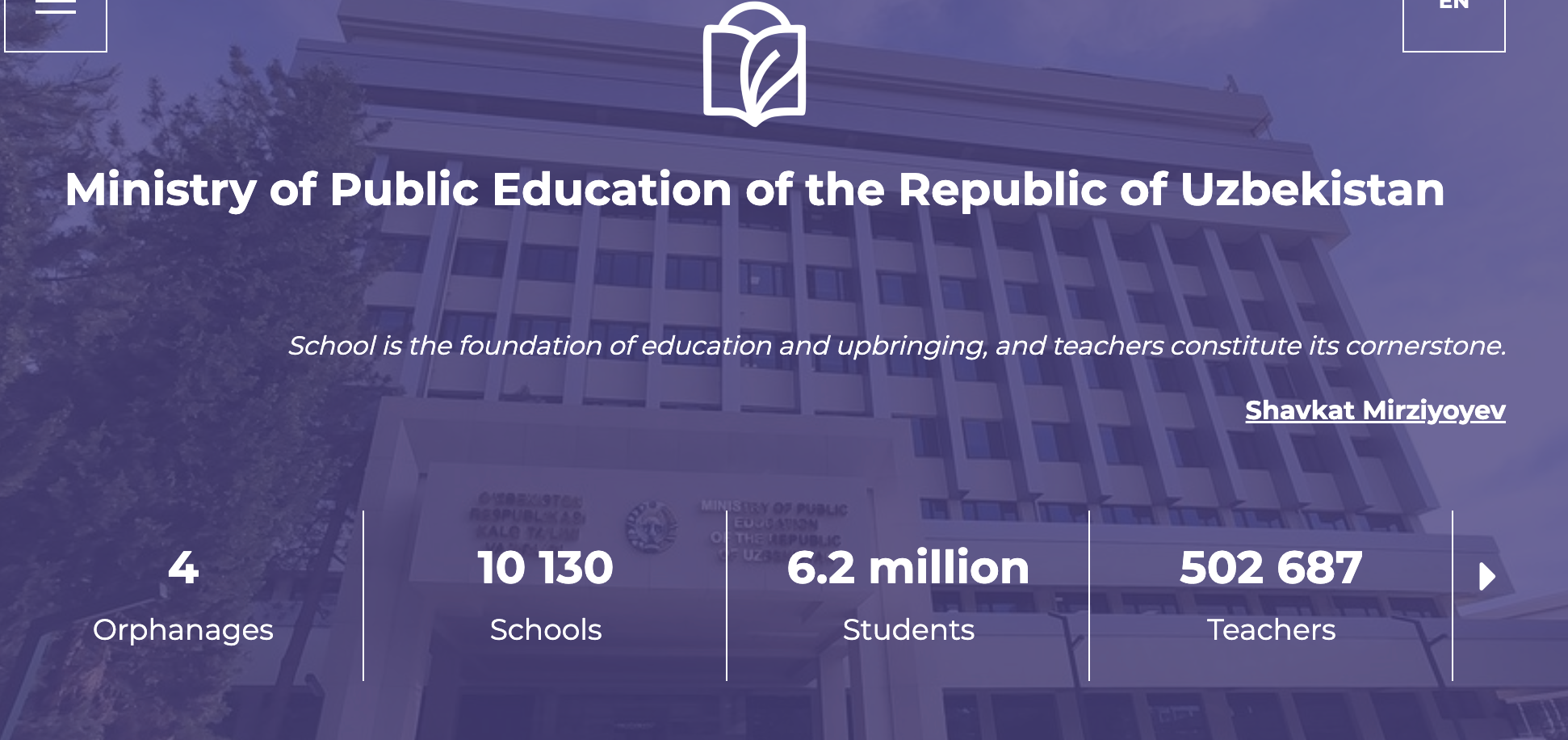
Republican Education Center – Ministry of Public Education Visits TIS

Last month I met with the director (Shukhrat Sattorov) and the Head of the International Relations Department (Javlonbek Meliboev) from the Republican Education Center under the Ministry of Public Education of the Republic of Uzbekistan. Javlon and Shukhrat are researching international school curricula and looking for ways to apply them in public schools in Uzbekistan. We discussed the pros and cons of the International Baccalaureate curriculum and applying it in a state institution. Using the IB to improve public schools has been done nationally by education ministries in Ecuador and Japan.

The Republican Education Center is developing national educational standards, supporting and selecting textbooks, piloting curricula, and most importantly, training teachers to deliver a modern, engaging, student-centered pedagogy. The Tashkent International School is honored to help the Center in its goals. We appreciate our host nation of Uzbekistan and would like to contribute to improving public schools. We are looking forward to collaborating with them.

How School Leaders Can Rebalance Teacher’s Time

Image courtesy of Edutopia

The pandemic taught educational leaders to pare down the demands on teachers to focus on student learning. This article in Edutopia, “How School Leaders Can Teachers’ Job Demands and Resources” captures what leaders can do to help teachers. Demands on schools and teachers, in particular, are always increasing. At our school, we have the luxury of having many employees dedicated to supporting our mission. We provide free, after-school childcare for faculty until 5:00 PM.We also have personnel devoted to helping with housing issues which must take up a lot of time with teachers in US public and private schools. We can however, focus on school-related tasks that are busywork and not directly impacting student learning. Some of these demands that we started trying to streamline include ordering supplies and requesting maintenance work.We need to audit the tasks we assign teachers and ask if it is completely necessary. The other piece of advice is to emotionally support teachers and to allow them more control of their jobs, giving more decision-making authority to them.

Are you getting your 8 to 10 hours of sleep?

Photo courtesy of Brain Balance Centers

Sleep is often an overlooked aspect of student well-being in schools. I don’t understand why because a good night’s sleep (8-10 hours for adolescents) is fundamental to maximizing one’s performance and mood. Adolescents in the US and around the world are chronically sleep-deprived (22% of teens say they sleep at least 8 hours per night according to a 2019 CDC study) mainly due to using their digital devices which are an irresistible stream of communication with friends and entertainment. I always thought that secondary schools should have sleep pods in schools for teenagers to take 20-minute naps during the day to refresh their brains and bodies.

Another aspect is the early starting time of schools. Teenagers’ circadian rhythm is different from adults with the most active brain times starting from mid-morning to late in the evening. I know my peak brain performance time is 7:00 AM, which differs from teens. I read this was a survival advantage for early humans. With teens more awake in the evenings and adults in the mornings, this offered maximum protection for vulnerable human groups resting in the middle of a savannah. Lisa Lewis in this Atlantic article, The State Finally Letting Teens Sleep In from June 8, 2022 discusses the impact of school schedules on the sleep of teens. The state of California is following the American Academy of Pediatrics recommendation that secondary schools start no earlier than 8:30 AM. The lack of proper sleep worsens mental health, grades, athletic performance, etc.

The Tashkent International School starts with an 8:20 AM homeroom and classes starting at 8:30 AM which is inline with best practices. However, we can do more as a school to promote better sleep habits with our teens. The IB curriculum is challenging and often teens are studying or completing projects instead of sleeping. I would like to give a workshop for our high school students about sleep during their Social and Emotional Learning times.

Pandemic Thinking – July 11, 2022

As we are approaching the start of the 2022-2023 school year, international schools around the world are thinking about what pandemic protocols they will put in place. I would like to move to treat COVID-19 cases like we do influenza or other infectious diseases. The only roadblock in my mind is the length of infectiousness of people with COVID. With the flu, most public health agencies recommend isolating 5 days, but with COVID, days 6-10, people are often still contagious, even without symptoms. The amount of time students and teachers have been outside of school has been detrimental to learning (Covid Learning Loss Has Been a Global Disaster). Our school has had close to 300 members officially report their infection with COVID and not one has been hospitalized. How do schools move forward in the 2022-2023 school year balancing

This week’s Washington Post Coronavirus Updates is full of good information. The CDC reports that very few children under 5 years of age are getting vaccinated against COVID which indicates that parents are not enthusiastic about protecting their children, probably because young children usually exhibit mild symptoms. I also read with interest the advice about booster vaccines. Most authorities recommend everyone get at least 1 booster shot after their initial full vaccine dosage. They also go on to say that getting a second booster is OK. They do not recommend getting a booster every 4-6 months until more research is done.

Some U.S. officials have signaled that more people should have access to another booster. Anthony S. Fauci, the government’s top-infectious disease expert, said he’s “leaning toward flexibility” for adults younger than 50 who got their last booster many months ago, and whose immunity is waning.

Washington Post Coronavirus Update – July 8, 2022

My personal takeaway is to wait to get a third booster shot. I received my last booster in December 2021, but I will wait for the cold/flu season this winter. I think health officials will have a better understanding of the effects of multiple boosters and what strains are circulating at that time.

Sky News Photo of Wuhan Institute of Virology

All of us have pandemic fatigue after more than two years. This Washington Post opinion piece from July 7 discusses the latest subvariant of Omicron (BA.5). I am also surprised that more experts are not pressuring governments around the world to find out the source of the outbreak. I think learning how this novel strain of the coronavirus developed into a worldwide pandemic will help avoid future global pandemics.

54 Days

Elementary Additional Wing – June 20, 2022

The renovation of the existing elementary building started the day after students left thanks to the work of the elementary teachers and teacher assistants. The faculty had to clear out all of the supplies and equipment. Facilities Manager Rashid Suleymanov led his crew in storing the boxes and furniture, and with Project Manager Cyril Courjeau, they prepared the Gabus construction company for 54 days of intense work. The TIS summer break from June 16 to when the teachers return to their classrooms on August 7 which is a period of 54 days. They have those 54 days to refurbish and connect the existing building to the new building. They will be installing connecting hallways, opening up doors, removing walls, replacing floors in many of the classrooms, covering the building with travertine, as well as a myriad of things that need to be done before the students and teachers come back. 

It was strange to walk out of the elementary building without the construction wall. The corrugated aluminum fence was first erected in the summer of 2018 when the utilities work first started on the project. The construction was halted and delayed for several years due to a variety of reasons. The fence has been there since my interview visit in September of 2018. Workers took down the fence so they can work on the facade and connect the buildings. 

I couldn’t help but think of the war in Ukraine and the scenes of half-destroyed buildings when looked at the construction site. Unlike Ukraine, this is hopeful destruction with the promise of a new building and an expanded elementary campus on the horizon. Cyril and Rashid and the Gabus construction team have a lot to do in the next 54 days and beyond. 

Besides the big elementary project, there are also several other construction projects taking place during the summer break on the other side of the campus. I am excited to see what the refurbished Multi-Purpose Room (MPR) will look like when we return to campus. The MPR is used for assemblies, meetings, performances, exhibitions, and classes. I always felt it should be a showpiece room for the school and thanks to Olga the designer, it will be. 

Rashid is also directing the replacement of the floors on the second and third floors of the secondary school building. It is our oldest building on campus and although we joke about it, the squeaky floors are a distraction to teaching and learning. The construction industry in Uzbekistan has improved greatly since the wooden floors were put in and we are looking forward to a modern and quiet floor for the secondary students and teachers. 

The last big project will be installing a new chiller (air conditioning system) in the secondary school building. Thanks to Finance Director Feruza Abdullina and the board facilities committee, a new system was purchased earlier this spring. The global supply chain disaster caused by the pandemic is slowing down the arrival of the chiller, so it will most likely not be installed until the Fall Break, but the foundation has been laid for cooler indoor temperatures in the years to come. 

Operations Team Meeting

Finally, I wanted to recognize the work of the TIS business office and IT Director, Hoji Kobilov. They were meeting this week to analyze the feedback from faculty and staff on how to improve the RMS system. Faculty use the RMS software to order and pay for supplies and other expenses, ask for maintenance or groundskeeping tasks and apply for professional development. Feruza and Hoji have a goal of better “customer” service. The user feedback will help the software developers make for a more efficient user experience. This will allow the teachers to focus more on teaching and learning. 

NEASC-CIE Summer Webinar

The Tashkent International School is accredited by the New England Association of Schools and Colleges – Commission on International Education since 2002. NEASC is one of six American regional agencies that accredit international schools. NEASC traditionally accredits CEESA (Central & Eastern Europe Schools Association) international schools. They are headquartered in Lowell, Massachusetts and as the name indicates, they accredit schools in the states of the New England region of the US, pictured in purple below (Maine, New Hampshire, Vermont, Massachusetts, Rhode Island and Connecticut). I’ve worked in international schools that were accredited with WASC (Western States) and Advanced Ed (southern states).

The United States Regional Accreditation Agencies

I attended the NEASC-CIE Summer Webinar hosted today, June 22, by the Director and Associate Director of Accreditation and School Improvement, Jeff Bradley and Trillium Hibbeln, and others from the NEASC/CIE international accreditation team. The purpose of the webinar was to give a preview of initiatives in the 2022-2023 school year. Some of the highlights I took away from the webinar are below.

  • They are launching a Community of Practice for Experienced Chairs starting in October. A chair is a volunteer educator who leads accreditation visits. Leading a visit is a big responsibility and a good leader can really make a big difference in the accreditation experience for schools so I am glad they are doing things like this.
  • NEASC/CIE will be requiring background checks for visitors.
  • The planned visits this fall are mixed virtual and in-person. I think virtual visits can be done, but they are not as good as in-person visit. There is much to be said for being together in the evenings with team members reflecting on what was seen and heard during the day. This all can be done virtually and a hybrid approach can save money/time/carbon by not sending a full team. Some team members could be virtual instead of on-site and contribute to the report and process. I think this will be the future format of accreditation visits.
  • My feedback in the webinar to NEASC was to give accreditation team chairs advice on what are the key documents from the school to read before the visit, especially for working heads of schools. We have busy working lives and being able to use our time efficiently would be appreciated. I also wanted some more advice on how to work with colleagues from the Council of International Schools and the International Baccalaureate when we are on joint visits.
  • I am interested in learning more about the collaboration between the IB and NEASC regarding the Collaborative Learning Protocols (CLP). This is a link to a presentation on the latest alignment of the ACE pathways and IB standards.
  • From what I’ve read of the ACE standards, they are really good and I am curious to see how they are mapped against the IB standards. This is a link to the 10 ACE Learning Principles and the 6 Foundation Standards. They are launching an ACE 2.0 that has more emphasis on DEIJ and SEL issues and rubrics for each of the Learning Principles.
The new logo of the 4 Cs ACE pathway, summarizing the big areas of accreditation