Boy Scout Training

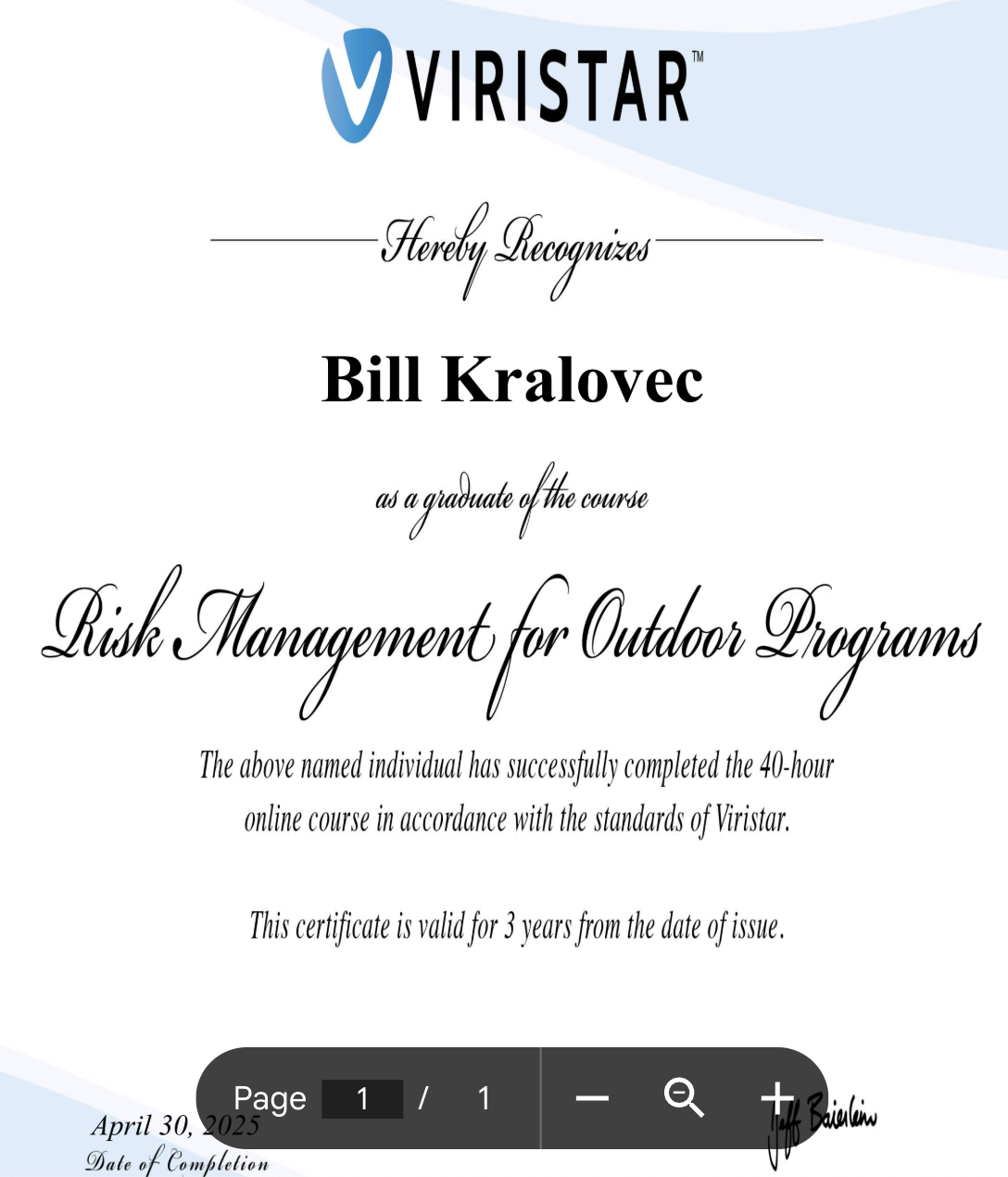
The Tashkent International School supports a Boy Scout Troop run by parents and teachers. I am the Charter Organization Representative (COR) and recently completed training for that specific position. The COR is the point of contact between Boys Scouts of America (BSA) and the Charter Organization, in my case, the Tashkent International School. I was not a Boy Scout as a child but I do see the value of promoting citizenship, service, kindness, and learning outdoor skills. BSA helps our TIS Adventure Program, especially the focus on developing wilderness skills. I have also completed Youth Protection Training that integrates well with our Child Safeguarding practices at the school.

We are losing several key parents this year and I hope we can continue to have a thriving Scouting program at TIS. If you are interested in helping out, please contact our Outdoor Learning Coordinator.

Morning CrossFit Training

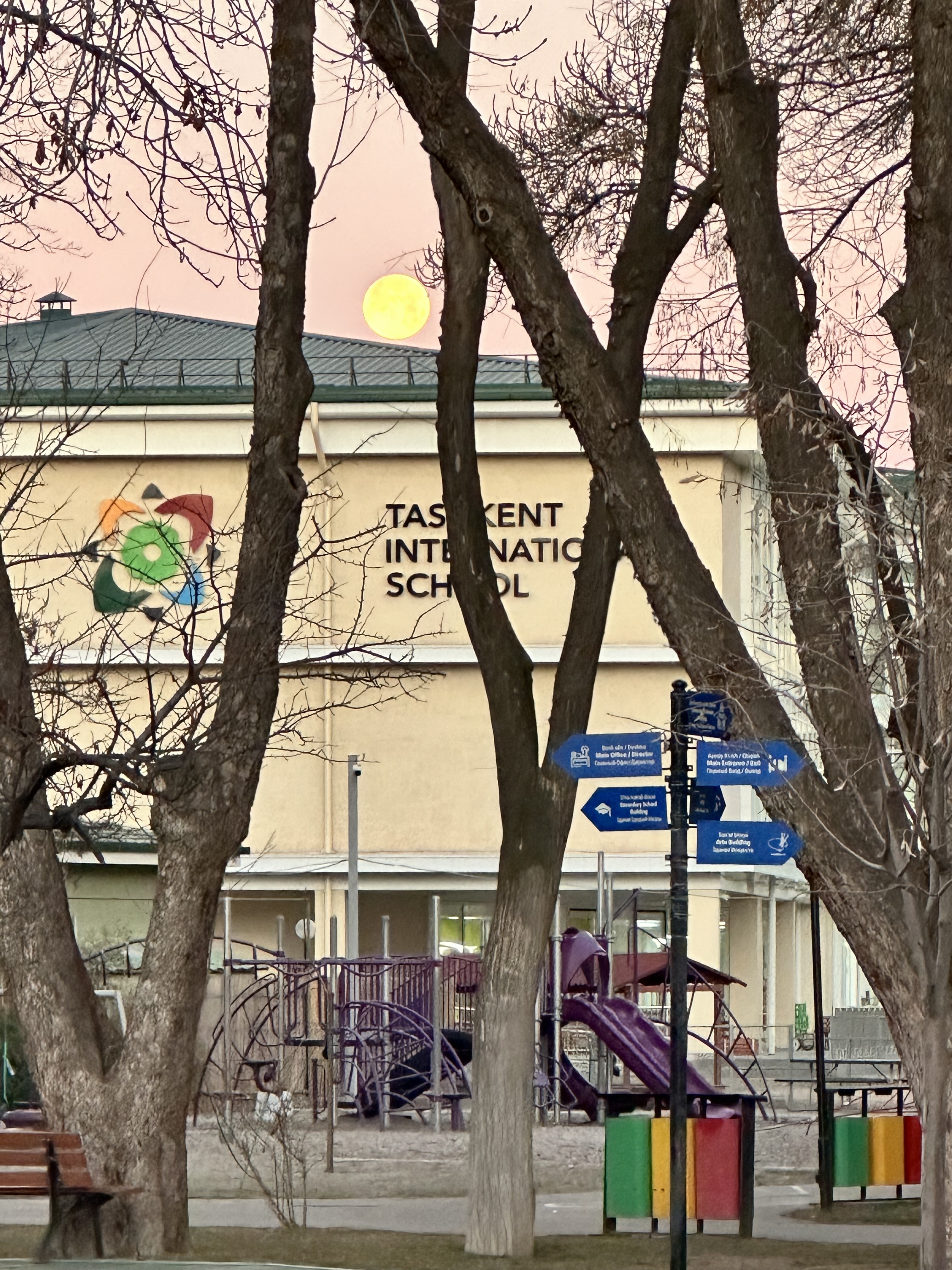
I felt exhilarated after joining the TIS Cross Fit training session on Tuesday morning. Cross Country Coach and TIS Adventure Lead Robin Marsh leads a group of students, parents, and teachers every Tuesday before school. After the workout, I took these photos of a simultaneous sunrise and “moon set” on our winter morning campus. Beautiful! It is good to stop and soak in the beauty of nature. It was a cold, dark winter morning and I didn’t feel like exercising, but afterwards felt great. Thanks TIS friends!

Making Life Easier: New ATM Installation at TIS

At Tashkent International School, we’re always looking for ways to enhance our operations so our staff can focus more on what matters most – our students. I’m excited to share a significant improvement in how we handle employee payments at TIS.

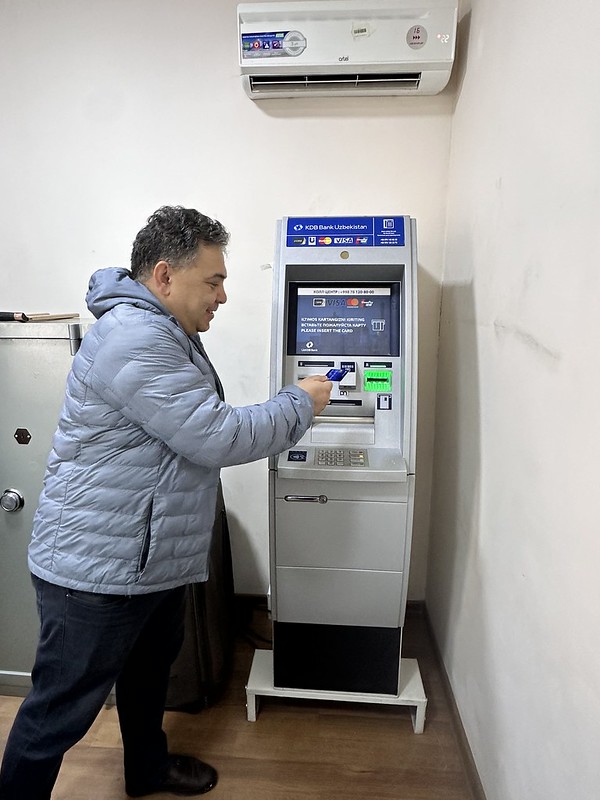
Our Business Office has partnered with a local bank to install an on-campus ATM, which you can see above being used by our Procurement Officer, Kakhramon. This installation represents more than just convenience – it’s a step toward modernizing our operations and improving efficiency.

Previously, our Business Office spent several days each month manually distributing cash payments to employees. With our transition to 100% digital salary payments and the new ATM, our staff can now access their funds commission-free right here on campus, whenever they need to.

This change brings multiple benefits to our school community:

  • Our Business Office can redirect their time from cash distribution to more strategic initiatives supporting our educational mission
  • Employees enjoy greater flexibility in accessing their salaries
  • The school’s financial operations are more streamlined and secure

I’d like to extend my sincere appreciation to our Business Office team for their initiative in establishing this partnership with our local bank.As we continue to grow as a community of learners, it’s these thoughtful improvements that help us better serve our diverse student body from over 50 countries. When our staff can spend less time on administrative tasks, they can invest more energy in what truly matters – providing an exceptional International Baccalaureate education to our students.

Accrediting Schools

Going a bit stir-crazy with report writing…

I try to do one accreditation visit per year. I am a lead visitor (Chair) for the New England Association of Schools and Colleges (NEASC). I usually accredit international schools along with our partners, the Council of International Schools (CIS). We use CIS protocols when it is a joint visit so I work closely with the CIS Chair. 

I like doing accreditation visits for many reasons. I have enjoyed a long career in international schools and feel it is important to give back and support international schools. My many years of experience help me give support and advice to the schools NEASC accredits. Visiting team members are all volunteers and I am always impressed at how much effort we put in to do our best to help other schools. These 5-year visits affirm the good work schools do and give direction for the future of schools. Ultimately, our work improves students’ learning and development. 

Serving on a team is also great for professional development. I learn from the team members and from the dedicated professionals at the schools we visit. I always get an idea or two to use at my current school. It also helps my current school in our own accreditation process. 

Finally, it is a nice way to see the world and I just completed a week in Izmir, Türkiye, on the Aegean Coast. Not being a capital city and with Turkish law prohibiting Turkish citizens from attending international schools, the school was quite small. It was a fine little school however, and it was a pleasure to go behind the scenes of the school and get to know the students, parents, and teachers in their community. 

Rethinking Global Citizenship Education & Service Learning

I am taking the course “Rethinking Global Citizenship Education (GCE) and Service Learning (SL) Using a Critical Lens” along with several of my colleagues at the school. Tashkent International School was founded by service organizations (United Nations and Diplomatic Missions). The course aims to improve our students’ community outreach and service learning. For many years, TIS needed to be careful because the first president of Uzbekistan, Islam Karimov, led a government that was suspicious of foreigners and international organizations. The school needed to keep a low profile. With the new president and the opening of the economy, TIS is now in a position to develop relationships with local groups and contribute to the development of the country. More importantly, to instill a mindset in our students that service to others should be a priority in their lives.

The graphic above presented in the first module sums up the goals of the course. The big idea I am taking away from the first module is to get students thinking about the root causes of inequities in our societies. Moving away from thinking of service learning as something students do to or for, but instead with and by the school’s partner organizations. One challenge facing international schools is our schedules are jam-packed with activities and initiatives. Both faculty and students do not often have the time to slow down and really think and reflect on our service projects.

Rebecca Gilman (left) LeeAnne (right) are leading the course

The assigned reading for Module 1, “Soft Versus Critical Global Citizenship Education” by Vanessa Andreotti was thought-provoking. She refers to Open University Professor Andrew Dobson’s view that global trade creates inequities and by being from the West, by not doing anything, we are active in keeping the developing world poor. 47% of the world is considered poor by the World Bank with incomes under $6.85 per day. He thinks “justice” should be our governing factor instead of ideas of “making a difference” and “being charitable”. Along with other thinkers, he believes that only rich nations and citizens can be global, as most people can only think and act locally because they are too poor to have other options. The G7 countries say they are acting globally, but they act in their own self-interest. Andreotti pushes back and says that Dobson’s view is a bit too simplistic. He also thinks the individual responsibility is more important than organizational change.

She presents the work of Columbia University professor Gayatri Spivak. Professor Spivak believes that “Western” values are projected as universal and we should not forget that colonialism created global inequalities. The “elite global professional class” (me) often reproduces these problematic power dynamics.

Claude.ai summarized the article with the following take:

“The main takeaway is that effective global citizenship education requires moving beyond simple charity-based approaches to develop deeper understanding of global relationships, power structures, and responsibilities. As a school leader, you’re uniquely positioned to implement this more nuanced approach while respecting local contexts and perspectives.”

Leading an IB Education Workshop

TIS Faculty Discuss Improving our Professional Learning Communities

I completed the two-day “Leading an IB Education,” one of six IB Leadership Workshops. I would like to thank the trainer, Seden Chouseinoglou for leading 24 of us. It was a good refresher for me to continually educate our families on the uniqueness and positive aspects of an IB education. The other big idea for me is that “language is the gateway to culture” and I need to work harder on learning Russian.

Inquiry #1 What are the aims of an IB Education?

  1. International Mindedness (local and global outlook)
  2. Learner Profile (personal characteristics)
  3. Broad, Balanced, Contextual, Connected (type of curriculum)
  4. Approaches to Teaching and Learning (methodology)

Reflection – This workshop is a good reminder that we need to continually educate our parents, employees, and students about the impact of an IB education on our students. Further Study – I would like to read more about the IB Leadership Intelligences.

Inquiry #2 What Does It Mean to be Human?: This section focused on the IB Learner Profile, which are traits that make us human. Let’s see if I know all of them. Knowledgeable, Thinker, Inquirer, Carer, Risk Taker, Communicator, Principled, Balanced, Reflective. The best definition of the learner profile is as follows:

“The IB learner profile represents a broad range of human capacities and responsibilities that encompass intellectual, personal, emotional and social growth. Developing and demonstrating the attributes of the learner profile provides an important foundation for international-mindedness. The learner profile supports students in taking action for positive change.”(PYP: From Principles into Practice, The Learner 2018)”

Reflection: Son, Brother, Husband, Father, Friend, Grandfather (hopefully). :::: Friend, Student, Teacher, Colleague, Mentor, Memory (Write a 6-word essay, in the style of Ernest Hemmingway, for your reflection on the Learner Profile)

#5. How do leaders focus learning around the key principles of IB curriculum design? This section focused on the IB curriculums (learning plans). It is more “concept-based” than memorizing facts. Concepts are ideas (skills/knowledge) that students can use their entire lives, or in other words, transferable, big ideas. The trainer referred to the term, 3D curriculum, which means teaching beyond facts. Lynn Erikson is a well-known educational expert who consulted on the new MYP curriculum. The IB Key Concepts are function, form, change, responsibility, perspective, connection, and causation. She shared the video Dove Real Beauty Sketches to use as a prompt to discuss these key concepts. Rob shared with us that the IB thinks of the continuum of the thee academic programs as this: PYP is transdisciplinary, MYP is interdisciplinary, and DP is disciplinary. Two videos were used by the PYP group to humorously show how a concept-based education is better than a content-based education. 5 Minute University and Are Our Children Learning Enough About Whales?.

#6 How do leaders nurture Lifelong Learners?

Students build learning through starting close and then transferring the skills to new contexts. This is a constructivist approach to education. A good activity is drawing the back of your hand with parents.

local contextglobal context
concreteabstract
selfothers
known contextunknown context
familiarless familiar
act locallythink globally
comfortable uncomfortable

ICMEC Child Safeguarding Certification

I recently completed the Introduction to Safeguarding online course offered by the International Centre for Missing and Exploited Children (ICMEC). The TIS Safeguarding Team is piloting the course to see if it will be an alternative to our annual refresher course offered by TES Safeguarding. We also use Childsafeguarding.com for our Russian speakers to complete their annual refresher course.

The ICMEC course is similar to the TES Development course. It covers the basics and gives a good overview of safeguarding and will be a good refresher for our faculty and staff. I liked the extra resources that are available when completing each of the four modules. My big takeaway was the concept of contextual safeguarding. That is taking a balcony view of safeguarding and developing systems and habits that ultimately for schools, encourage people to be aware of possible child abuse and report disclosures and observations to the Designated Safeguarding Leads.

Child Safeguarding Session Notes

Annually during the Faculty and Staff Preparation Week employees participate in a Child Safeguarding workshop to refresh ourselves about the importance of keeping students safe. This year we are having both sessions for academic staff (teachers, teacher assistants, and assistants) and support staff (guards, housekeepers, maintenance, grounds crew, business office). In my remarks to open the session, I mentioned the following key points:

  • This session is more than compliance, it is a reminder of our collective responsibility of keeping students safe.
  • We are responsible not only for physical safety but also emotional and psychological safety.
  • TIS has a legal and ethical responsibility to safeguard children. We adhere to international school standards set forth by our two accrediting agencies, CIS and NEASC and Uzbek and International Law.
  • TIS has an additional challenge in safeguarding children because of the different languages and cultures. What is acceptable in one culture, might be acceptable in another culture when it comes to parenting.

My key takeaway from the session was how the Child Safeguarding Team will follow up with teachers and others reporting disclosures. We get a lot of reports and there are some confidentiality concerns. The team this year will work on this.

Finally, for outside readers, I would like to define ‘safeguarding” as all programs, initiatives, practices, polices that a school does to keep students safe. “Protection” means actions taken to protect a child once there is a disclosure or report is made.

Misdirect (My thoughts on Scot Galloway’s Essay)

One of my favorite writers and thinkers is NYU professor Scot Galloway. He is an advocate for young men and he wrote about the recent assassination attempt on Donald Trump. The shooter was a disaffected young man with access to an AR-15. There are too many of these types of lonely and hopeless young men in America. It is more difficult for boys to get started today than it was when I graduated from high school almost 40 years ago. Galloway cites the statistic that 35-year-olds have half as much wealth as they did when they graduated from college in 1989 and 70-year-olds have twice as much wealth. The number of men in university compared to women is dropping and in 2023, it was 41%. He points out American media is not focusing on the real problem of depressed young men with access to guns and instead is focusing on the political implications of the shooting.

My current school, the Tashkent International School does not have the same problems for boys as in public schools in America. Our families are wealthier and give their sons a good start in life. However, it worries me about the larger societal issue of the struggles of young people (both boys and girls), to get started with their careers, finding mates, and living a fulfilling life. Galloway proposes solutions to this in the graphic below.

Cell Phone Bans in Schools

We are removing cell phones from secondary students in the 2024-2025 school year. From my observations and feedback from teachers and students, they are a distraction to learning. We noticed especially for middle school students and early high school, they are on their devices too much. In our communication with parents they were overwhelmingly in favor of the initiative. We contemplated using Yondr Pouches so we did not have to collect them and store them daily. We decided not to use them due to the cost and reports of hacking them, and we’ll see how it goes with just taking them away in homeroom and giving them back at the end of the school day. Our school is small enough for us to do this. Our pilot went well in June, and we’ll continue to tweak our procedures. One key is being consistent when students are found with cell phones during school hours.

I continue to read with interest about the impact of cell phones on education. This Edutopia article, “Three Schools, Three Principals, Three Cell Phone Bans”. US public schools have bigger challenges with hundreds and thousands of students. As the principals in the article said, teachers still need engaging lessons to capture students’ attention.