Developing a Community of Learners (My Dream School)

TIS Faculty Build Their Dream School

I am in a professional development session this morning led by TIS teacher Claire Van Loon. The topic of the workshop is “Developing a Community of Learners”. Claire challenged us to design our dream school. My dream school’s Purpose is “We will fully realize our individual and collective humanity.” Specializing in boys education “Modern Masculinity – Become an Enlightened Warrior” A broad description of the curriculum is below:

Basic Cultural Knowledge

  • Reading Comprehension and an appreciation of reading books
  • Numeracy (statistics, understanding risk, financial)
  • Express ideas through writing, speaking (rhetoric), video production, podcasting
  • Deep understanding of history and world religions
  • Deep understanding of local flora and fauna (ecology, climate change, stewardship of the earth)

Personal Happiness

  • Be in top physical fitness condition
  • How to relate to others
  • How to learn new skills and ideas
  • Career Guidance
  • Self Presentation (fashion, grooming, social etiquette)
  • Personal financial literacy
  • Power Yoga (meditation, breathing, body flexibility)

Learn By Doing… ie Practical Stuff All students will be able to…

  • ride a bicycle
  • swim and scuba dive
  • play a musical instrument
  • literate in a second language
  • start a fire and camp/hike in a variety of natural environments
  • defend oneself (weapons training, martial arts)
  • DIY – Home repair and renovation
  • Chef certification in 2 cuisines

Emergency First Response Training

TIS Faculty Complete CPR Training

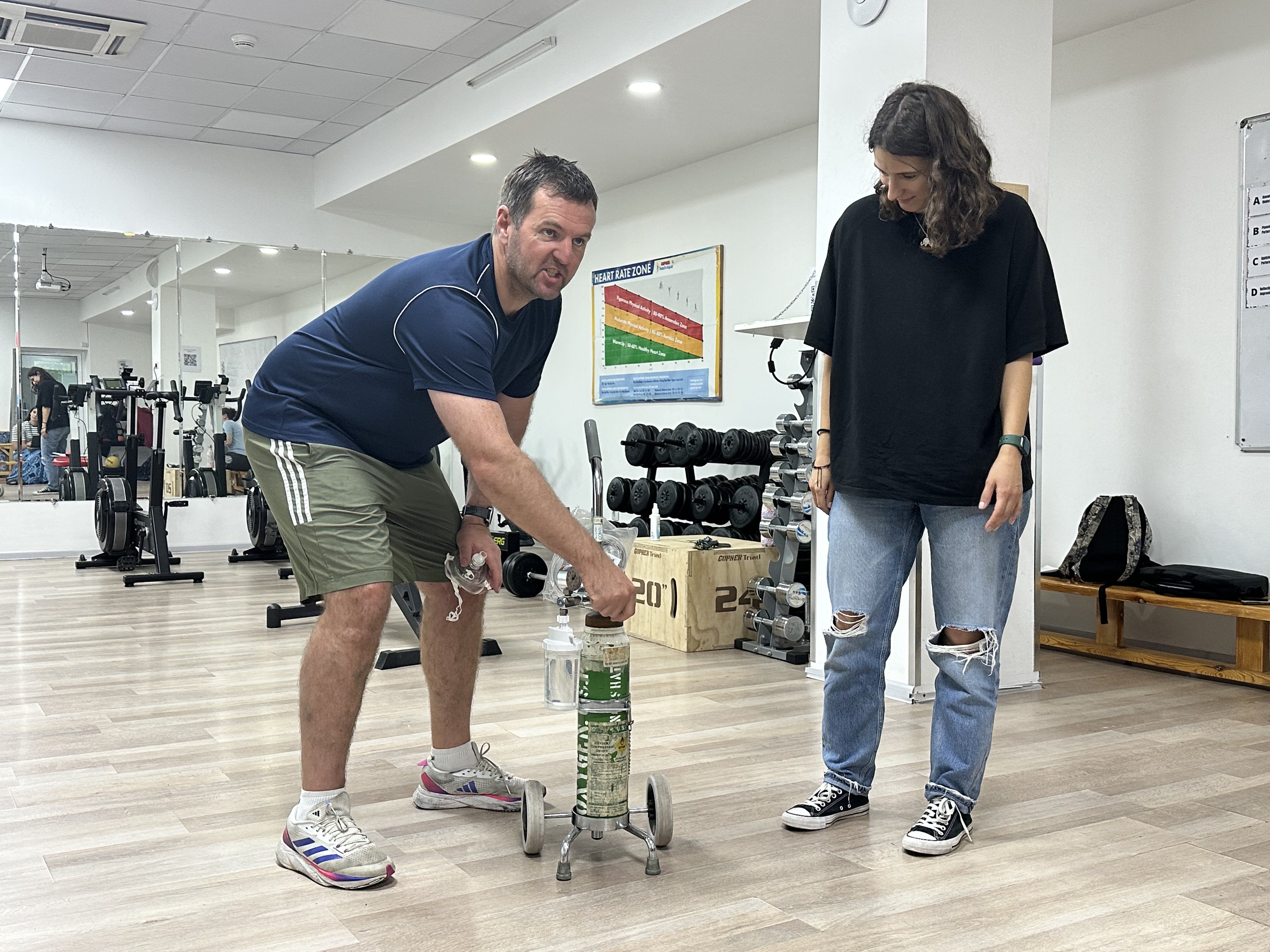
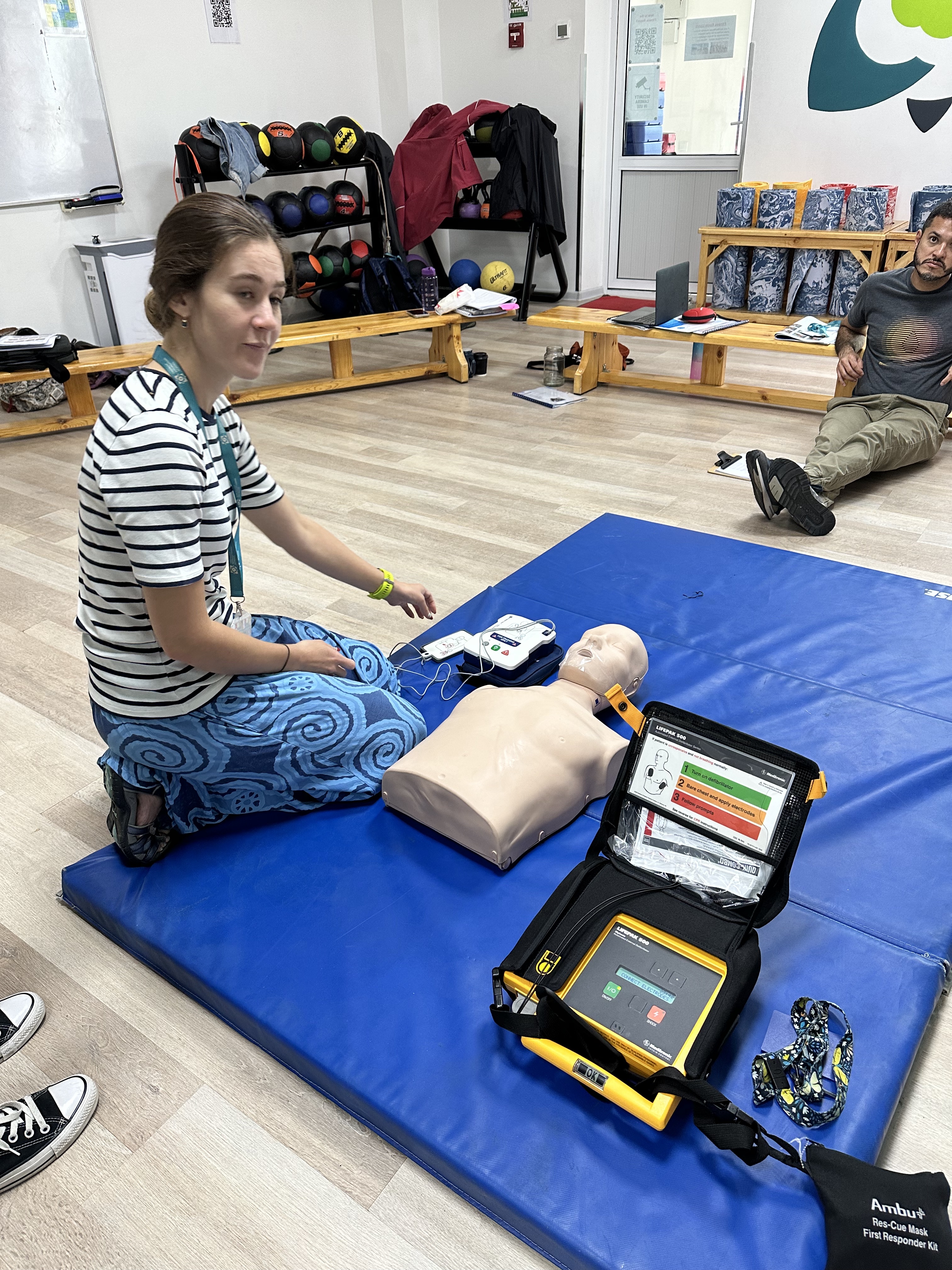
During the Professional Development Day today, I completed Emergency First Response Training. The school is using PADI Emergency First Response Training. So far this school year, 45 employees and 20 students received certification as first responders. The course consists of both online and in-person training sessions.

MYP Coordinator Rob Tate is our in-house trainer and he started our workshop by reminding all of us of these key points that are often missed by people taking the course.

  1. When you ask a person to go for help, don’t forget to ask him/her to come back.
  2. Don’t forget to pinch the nose when you tilt the head when establishing an airway.
  3. You are not going to make it any worse.

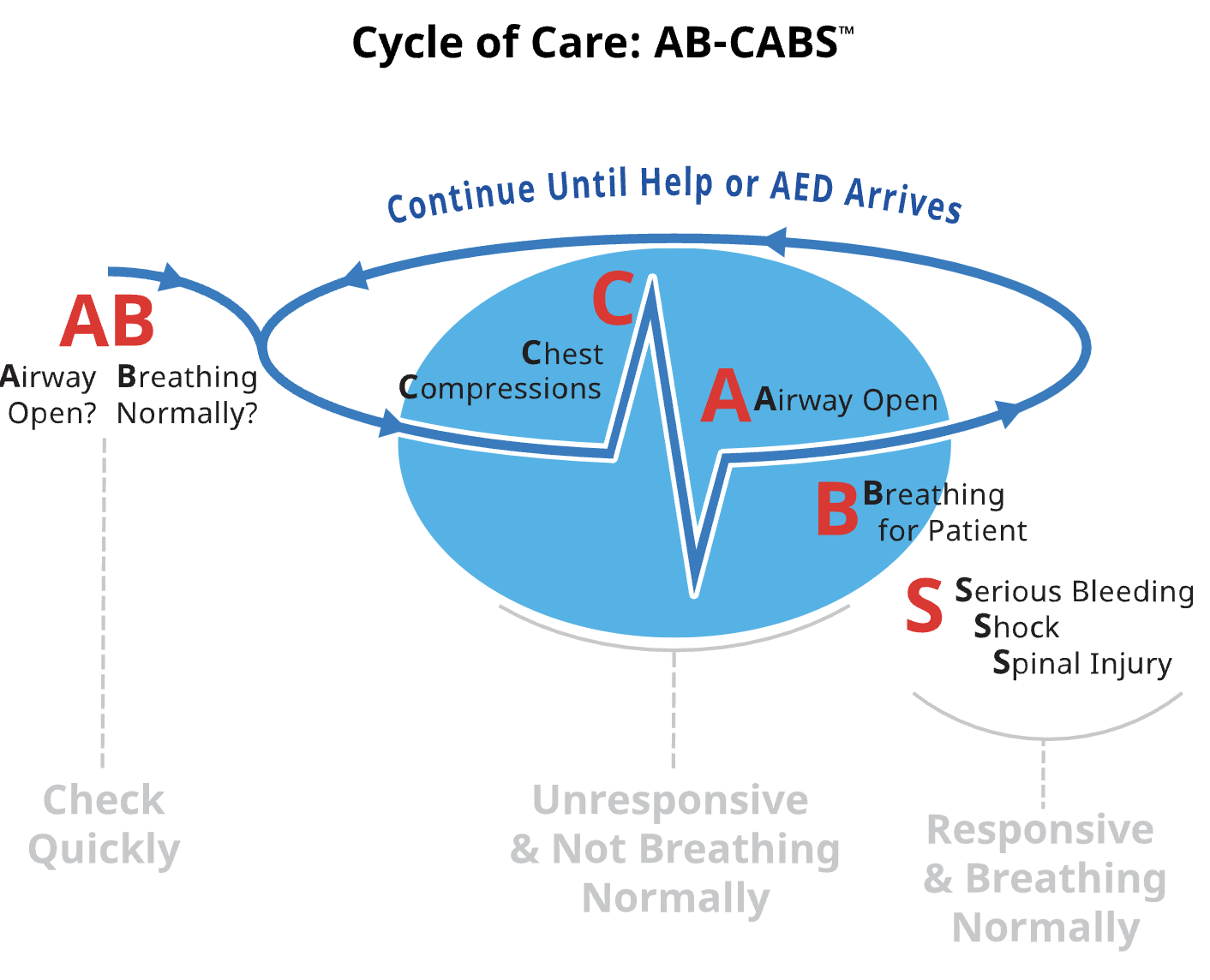
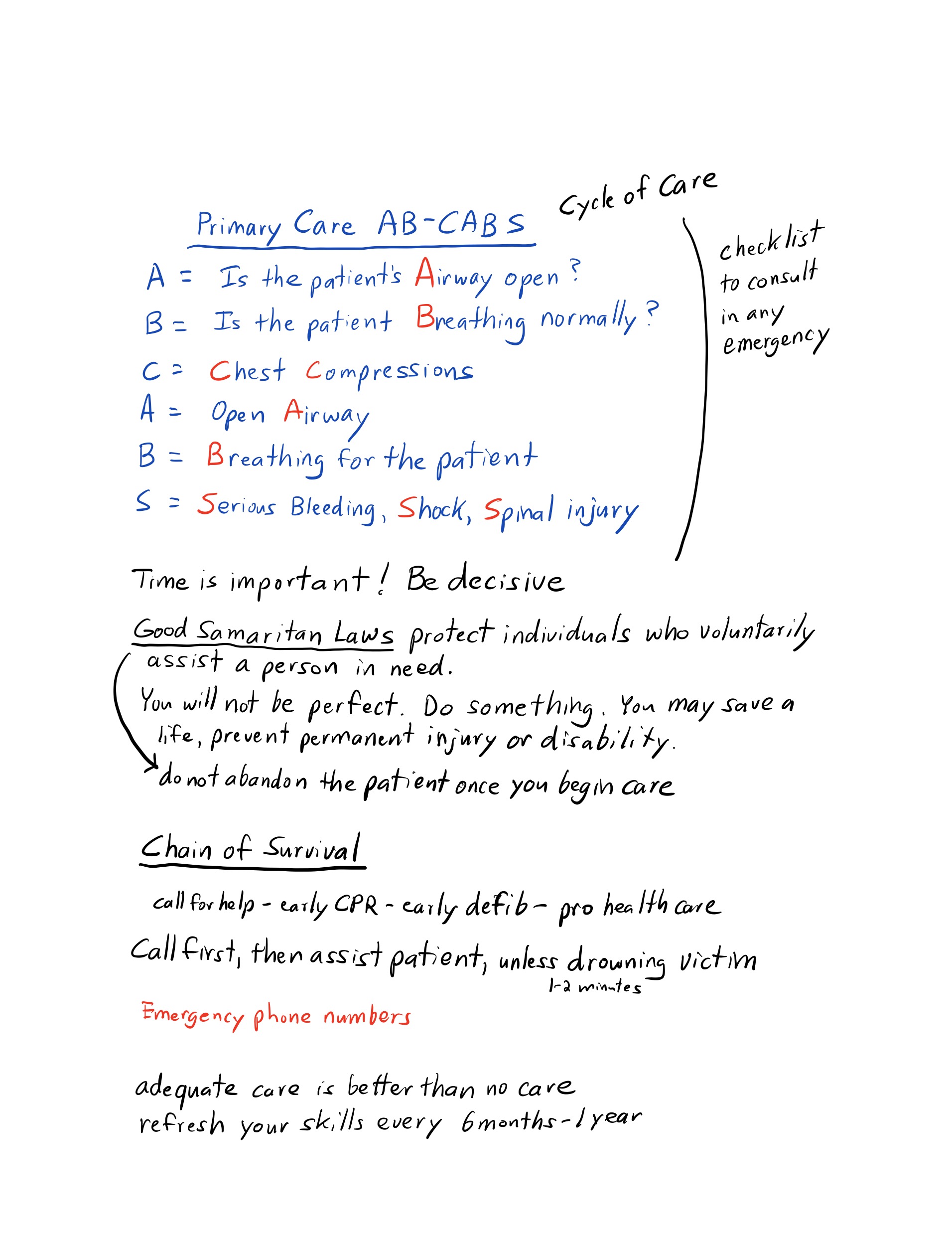
Above are two key diagrams to keep in mind in any situation requiring delivering medical assistance. The first is the Cycle of Care (AB CABS) and this is a checklist to use in a stressful situation. The second diagram reminds us to immediately call for help and where an amateur first responder can fit in the chain. TIS is fortunate to have an English-speaking family medical clinic on our campus. A doctor is always about 6 minutes away with advanced care Monday through Friday, 8:00 AM to 6:00 PM.

My big takeaway from the sessions is we need to better identify where the First Aid Stations are on campus, especially the first aid stations with AED (Automatic External Defibrillator). It would also be good to have laminated emergency phone numbers placed in all medical kits and ask employees to put the numbers in their phones. Below are my notes from the online portion of the training that I took with my iPad and shared with my computer.

Adolescents Struggling with Mental Health (Truman Group Conversation)

I attended an online conversation between the CEESA Directors and the co-founder of the Truman Group, Sean Truman yesterday. The Truman Group provides online psychological counseling and mental health services to expatriates.

Sean reminded us that the mental health of adolescents is at an all-time low. This is a trend that he has been seeing and the research supports, over the past 15 years and it was accelerated by the pandemic. The number of days of school missed, suicide attempts/completions, hospital visits, etc. are all increasing. Anxiety, depression, trauma, grief, addiction, life transitions, etc. are all issues that I see increasing, not only in students but also in faculty and staff. On a recent visit, our health insurance provider mentioned to me that mental health claims are up from 2% to 13% over the past two years.

Directors shared what they are seeing at their schools. This included the trauma of recent conflicts in Ukraine and Israel. Sean pointed out that we overuse the word “trauma”. Trauma is when a person fears death or being harmed and should only be used in cases of violence. Adults in schools have done a good job in having students acknowledge their feelings, but sometimes, students are over-sensitized. We need to remind ourselves as educators that sometimes, life throws adversity at students and often, an adolescent does not feel good. We need to teach them to work through it and be resilient instead of feeling like a victim for ordinary life events or news.

My one action item takeaway is that I want to make sure we include mental health counseling for our community during a crisis. I will review our crisis response procedures that mental health counseling is on our checklists and we are prepared in case of crisis.

.

AI For Personal Productivity

I completed Greg Shove’s online workshop “AI for Personal Productivity” from the education company Section recently. It really motivated me to start using Artificial Intelligence (AI) in my daily work as a school leader. He gave practical advice on how to use it. I think of AI as my personal superpower that will augment my work. My ears perked up when Shove said that AI is the antidote to cognitive decline due to aging. At age 56, I want to continue leading schools for many years to come and it sounds like AI will help me greatly. I highly recommend taking the course for yourself to get you started. The next offering will be on November 15, 2023.

In the workshop, he suggested what Large Language Models to use and how to organize your chats and prompts. We then audited our workflows to see how AI could help us in our daily and weekly tasks. Greg sees AI serving as a Personal Assistant, A Creator, or A Strategist, depending on the task. I was reassured when he said we should not be concerned about uploading our work to an LLM.

Shove thinks that by using AI, we will get time back by reducing drudge work and spending more time interacting with others and weighing decisions instead of prepping for making decisions. AI will help me make better decisions and improve my confidence.

I’ve been seeing a multitude of Artificial Intelligence courses being offered to educators. I want to be on the first wave of school leaders using AI and hope this course puts me on my way.

Queering the Curriculum: How to Diversify a K-12 Classroom

I attended the first Central and Eastern European Schools Association (CEESA) Diversity, Equity, Inclusion, and Justice (DEIJ) Speaker Series this evening. International school educators Justin Garcia and Kristina Pennell-Göetz led a workshop about “queering” the curriculum. I interpret queering as a verb means to challenge society’s thinking on norms. An example from the workshop that got me thinking was the idea of a “normal” family. It is relatively common in international schools to have families with adopted children. When adopted children are a different color from the parents, how does that impact how they feel about our norms about family.

In breakaway groups, we discussed the principles from a framework promoting gender and sexuality self-determination, especially for LGBTQ+ students, parents and educators from the National Council of Teachers of English. Below are the principles.

My big takeaway from the workshop and from a conversation I had last week with IS Helsinki Director Kathleen Naglee is for me to find subtle ways of giving the message that our school, Tashkent International School, is a safe space for all students. I hope through my language, listening, and enthusiasm that LGBTQ+ students, parents, and employees will feel free to communicate with me and feel they belong at TIS.

TIS Child Safeguarding Training

At the start of every school year, we require all employees to attend a child safeguarding workshop and to take an online refresher course. As you can see from the photo above, we held an introduction to our child safeguarding and protection program. We covered the basics, like who are the Designated Safeguarding Leaders, how to make a report, among other major aspects of what we do. We also introduced our new online reporting system. TIS is using cPOMS to help us organize our documentation and to make it easier for people to make reports. This week we will be spending some more time learning the software.

I completed the TES Develop Child Protection Refresher course during Teacher Work Week. Above is the final checklist as a summary of the course. It is a very good reminder that keeping our students safe so they can develop to their potential is our first job. All children deserve a good start in life. Educators have a special role in giving children that good start.

Threats & Opportunities of AI

Dr. Gary Marcus

Professor Scot Galloway from New York University is one of my most inspirational thinkers. I recently attended an online workshop hosted by him and his friend, Gary Marcus, the retired psychology professor and one of the leading voices in artificial intelligence. The workshop was entitled, “Threats & Opportunities of AI” and they gave an overview of the field as of July 2023.

The main threat of AI was in the field of misinformation and interference by bad agents in America’s democratic elections, especially in the run-up to the November 2024 presidential election. They proposed having a six-month to 30-day moratorium on election advertisements before the big day. They see an absence of governmental regulation of AI as being a big problem. Companies focus on profits, not the better interests of society.

Professor Marcus is not impressed with the Large Language Models (Chat GPT). They are clever at putting together a “pastiche of human language they do not understand” and the software makes many mistakes. In the short term, AI is not reliable enough to take over most jobs. Perhaps occupations like voice-overs will be done through AI, but there will be more job creation than job destruction. As Scot Galloway put it, “Someone who understands AI will take your job, not AI will take your job.”

In regard to the field of education, it is almost impossible to replace teachers and professors. The magic of education is getting students together in discussion to learn how to present their opinions and ideas, take an argument and give importance to the material they are learning. Professor Marcus advises teaching kids a “healthy skepticism” of AI and to think critically about AI tools. AI will improve rapidly and students should learn how to add AI to their tool box of skills.

I am seriously considering taking their AI for Personal Productivity course on September 13.

Daniel Pink Newsletter

Daniel Pink’s newsletter always has useful and insightful advice to improve your leadership, people skills, and performance at work. I can’t recommend it enough to subscribe to his newsletter, I especially love his “Read, Watch, Listen Try” recommendations. In this week’s newsletter, he recommends the following:

  • READ – Propublica An independent, non-profit, investigative journalism website.
  • WATCH – Episode 1 of Black Mirror
  • LISTEN – The Ezra Klein podcast.
  • TRY – The Oasis App takes your vocal half-formed ideas and puts them into fully-formed blog post or essay through AI

Safeguarding: Best Practice and Process for Safer Recruitment

Screen Shot of the Webinar

Recruiting agency Schrole, hosted a webinar about Safer Recruitment. Schrole manager Sam Crowley hosted Jane Larsson, executive director of the Council of International Schools, and Laurie McLellan, the director of Nanjing International School (China) and they answered questions about recruitment. Below are my takeaways from the webinar.

  • Laurie is always surprised by the lack of calls he receives from schools that his leaving teachers are hired by. This year he did not receive a single reference check from the 10 teachers who left and the rate of reference checks are only about 10%. Jane reminded all of us to make video/phone calls! References often do not document inappropriate behavior, challenging behavior, etc. and the only way to get these out is through conversations with supervisors who worked with them.
  • Laurie always follows up when he gets CVs that list “travel”, “study”, or “leave” to describe gaps on their resume. People telling the truth usually give easy methods of following up to confirm what they did during their gaps.
  • To get rid of bias and safeguarding, Luarie’s school has a policy of at least three people interviewing or meeting candidates.
  • “What is on your front door?” Having the code of conduct, documents regarding child safeguarding, etc. on the school website and advertisements, will deter predators who may not apply at your school and find an “easier” target.
  • Laurie feels that peer references are not important, and prefers only supervisors. Perhaps at big schools, it might have some value, but he suggests going beyond the three listed references most candidates.
  • The Head of School reference is very important even though they are not the direct supervisor. Laurie has a child safeguarding script that he only uses with directors.
  • CIS recommends using their “Managing Allegations Protocols” when someone in a school community is facing allegations of misconduct.
  • Sometimes people embellish their resumes, especially with their job titles or roles at the school. Follow up with people with vague or odd-looking responsibilities.
  • Online recruitment is better than in-person fairs regarding child safeguarding because we are spending more time with candidates before hiring them with online recruiting. Years ago, directors and principals needed to make decisions quickly at in-person job fairs.
  • Schrole Verify is a good service they provide to conduct police checks, verify credentials and do an internet search of candidates.

Supporting International School Directors

Peter Welch, the director of the American International School of Bucharest, Romania delivered a workshop this morning during the spring CEESA directors meetings. Peter’s main message was that school leaders need to have a network of support around them.

Directing a vibrant, well-resourced, diverse international school community is such an honor and privilege. Every day, we have the opportunity to profoundly impact the lives of colleagues, students, and parents. With this meaningful work comes also much emotional energy, stress, and mental and physical challenges. Peter pointed out that in our roles as head of school, we face the following conditions:

  • Constant change (TIS average turnover is 100 students (and their parents) and 15 foreign faculty and staff annually)
  • Huge range of risks that we need to manage
  • The stress of being “public property”
  • Extraordinarily varied communication environment (I started my career as a biology teacher and now I am negotiating multimillion-dollar construction contracts.)
  • Changing board members and nurturing our relationships with them.

The stress on international school heads is increasing over time and creating an emerging crisis of leadership. The study cited below from 2011 showed that the average tenure of an international school head is under 4 years. Peter said that it is even less today. Heads are leaving the profession at an unprecedented rate. Much of it is due to school boards that administrators report to being mostly made of non-experts who may be biased due to having children in the school with limited time and energy due to their day jobs and they are changing regularly. The vast majority of board trustees I’ve worked with have been good people who have the best interests of the students and school guiding their actions. They are just put into a difficult position to govern the school under these conditions.

Quantitative and qualitative data from the 83 chief administrators who participated in the study suggests that the average tenure of an international school chief administrator is 3.7 years…

https://journals.sagepub.com/doi/10.1177/1475240911398779 (2011)

What can be done to help international school leaders? I am not sure much can be done regarding the system of international school governance. That is a whole other workshop. What Peter focused on in the workshop was the idea of directors thinking about their own network of support. The diagram below shows that directors need people around them to talk through issues and problems, people to encourage them, and people and ideas to inspire and give guidance. The biggest missing piece was to find people to listen to and converse with without judgment.

We discussed the fact that one of the most precious resources at a school is the director. The head of the school usually is the highest-paid employee and boards should be thinking of the head as a precious resource. They must be protected and nurtured to help push the business forward. This led to a conversation about executive coaching. The term “executive coach” might not capture the role. Alternative terms include mentor, ally, critical friend, associate, etc. One director in the meeting has an executive coach and he values the objective, independent voice that filters and makes sense of what is happening in a complex international school community and gives you advice on what actions to take.

There were two resources mentioned in the workshop. The first is the work of Richard Lewis, an expert in cultural intelligence and global communications. His chart to the left summarizes general communication styles in different cultures. I’ve worked mostly in the “Multi-Active” cultures which Uzbekistan fits right in. Prior to coming to TIS, I was in Japan which is a “Reactive” culture. I am from an American style of communication “Linear-active”. There is a lot to unpack here and it might be worth my time to read his seminal book, When Cultures Collide.

The other person mentioned was Viv Grant who is a UK-based school leader coach.

In the CEESA region, the chief executive of the school is referred to as the “director”. In other parts of the world, the CEO may be referred to as “head”, “head of school”, “headmaster”, or “lead teacher”.