

Ewan McIntosh is one of my favorite consultants when it comes to communications. He helped me introduce our new Purpose Statement (We are a community of learners who challenge ourselves, explore boundaries, and connect with each other to make a positive difference) to our faculty and staff back in May 2022. It was a very successful presentation and rollout of a radically new Purpose Statement, much in part thanks to him. We started by allowing people to share the special moments that were occurring in their classrooms and celebrating our coming back together on campus after COVID. He is the technical advisor for the first minister in Scotland, and the longer I am in leadership, the more I realize that much of leadership is communications.

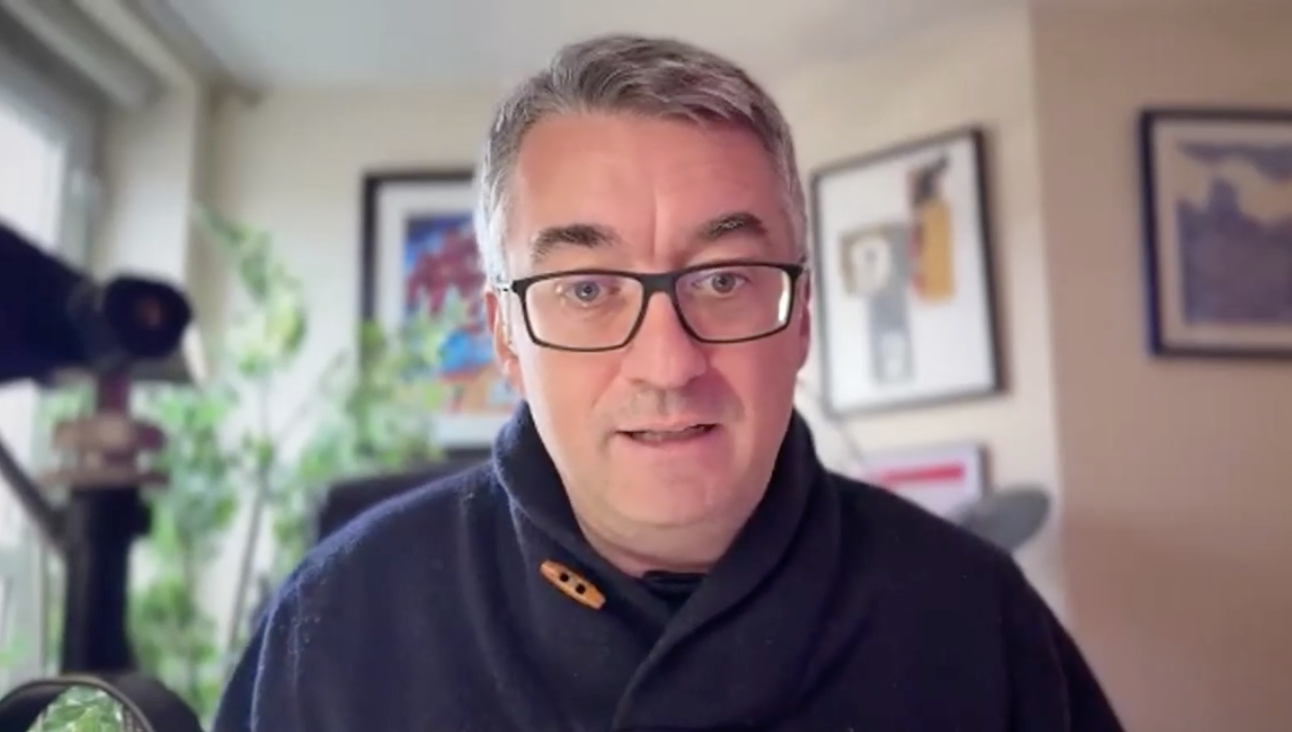
I also did a Middle Leaders Workshop with him, and he inspired our facilities committee to go ahead and do a prototype cafeteria redesign. Often, groups are hesitant to make a bold move due to fear of reactions from others or wanting to be perfect. His advice was to go ahead with a prototype. The color scheme and design elements we developed served us well for other interiors in the school. He is also famous for the standing meetings starting at unusual times (ex, 10:12 AM) and lasting as long as they need to (e.g., 7 minutes).
Finally, I also learned the technique of a “sprint”. Sprints are small groups of faculty and staff working together intensely for a short amount of time to develop an initiative in the school. Short amount of time can range from a full day to an academic quarter. Initiatives that drag out over longer periods of time lose their momentum with the busy life of a school and just thinking about a long period of time like that makes the task seem more complex that what is really is.
Last week I participated in an online workshop focusing on creating memorable end-of-year communications through eliminating educational jargon and institutional language (belonging, legacy, support, engage, excellence). Emotional leadership comes through concrete stories with humor (underrated – take your people seriously, not yourself) and love, and focuses on one clear message rather than overwhelming audiences with multiple priorities.
For example, “With the end of a successful and busy year…” is boring. Leaders should be thinking about what they want their audience to feel. (joy, pride, satisfaction, unity, etc.) No one wants to feel “informed”.
Ewan gave us six core principles:
- Enemy #1 is Noise: Your audiences are cognitively overcrowded. School leaders are trying to convey information AND have an emotional hook. “Nobody remembers normal – Don’t do the expected.”
- Ban Wallpaper Words
- Strategy as Sacrifice: The Five Penny Piece Approach
- Show, Don’t Tell: The Cup and Saucer Approach
- Write Like People Are Busy: The Airport Test
- Write in Pictures: The Filmmaker Test
- What is the one word your school uses repeatedly and explains almost nothing? EXCELLENCE / BELONGING / LEGACY Now your next task is to ban it. You shouldn’t tell people to belong; only share a story of how you or someone else belongs. “Think of someone who made a positive difference this year and helped you along.
- I get depressed when teachers go on about how much they are looking forward to their holidays. What a gift to be able to be with vibrant young people, doing this cool work. I want to change their mindset.
- Strategy is sacrifice. Who are you now? Who do you want to be in the future? Lessen your message to a single focus. When you are focusing on a single thing in a speech, 95-99% of the people will get it, a small number will not (ex- 3 complained about the “f-bombs” before 9:30 AM. Choose a target, and really go for it. Drawing on David Ogilvy’s principle that “strategy is sacrifice,” Ewan contrasted dustbin lid strategy (so broad that anyone could align with it) with five-penny piece strategy (tight, concrete, specific). When leaders target a narrow, specific message, some people won’t connect—but the majority will deeply engage.
- Don’t tell them (I am proud of you), show them through a story; What do you want people to feel? If you want people to be proud, don’t tell them to feel proud. The CUP is what you are saying, the SAUCER is what you want them to feel. Don’t be obvious.Leaders must distinguish between what they say (the cup) and how audiences feel (the saucer).
- “If our community remembers only one thing from this year, it’s…” ex1) every person in the community, has helped shape something that is truly special ex2) We had a plan, and we followed it. (Who is the hero of your story? – your students or to the audience – what challenges have they gone through? – Why is following a plan so hard?
- Write your speech on the one thing you want to convey and that they are super busy!
- Within five seconds, audiences should grasp what matters, why it matters, and why they should care.
- First Line in a Speech – What matters Second Line – Why does it matter? – Why should they care?
- Exercise to try is to take a paragraph of a newsletter, cut it in half without losing the meaning.
- Invisible words show, don’t tell. The more educational jargon you use, the less credibility you have.
THE GOTO STRUCTURE FOR ANY SPEECH
Hook: Start with something compelling, curious, different—the “fish pie moment”. Don’t indicate where toilets are or acknowledge everyone’s tired (which reinforces fatigue) . Slap audiences around the face with a story that makes them go “huh?”—this is a good thing.
Story: Tell a true, relatable story. Avoid references to luxury holidays in Mauritius with three kids looking at fish through clear water—this signals salary disparities and breaks trust. Choose stories that build trust and feel accessible to everyone in the room.
Bridge: The penultimate sentence explains why the story matters. Amanda’s bridge would be: “This story matters to me because it’s the moment I realized I truly belonged here, that I’d found my people. That’s how I wish I could act every day when I’m being my best self”.
Close: End with a call to action—give people a job to do. Don’t simply say “thank you” and leave audiences hanging. Options include: raise a glass (ensure they have one in hand), write a commitment on a postcard under their chair, or share their pledge aloud. When you end with their voices telling you what they wrote or pledged, you create a fundamentally different close than a head teacher monologue.
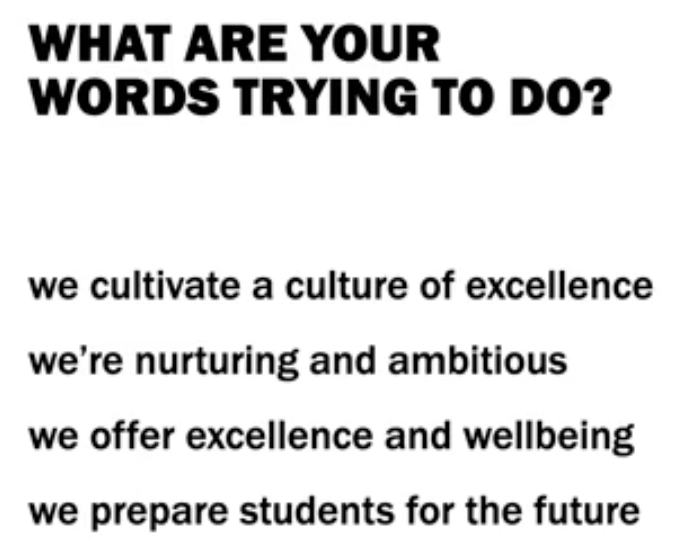
Instead of using these abstract words, can you convert them to concrete examples? Don’t say “excellence”, tell a concrete picture. These are “wallpaper” words. Replace them with an action, a moment, an image, a scene, etc.


Published by