Teaching Strategies Don’t Make You an Expert Teacher

New Zealand Education Professor Emeritus John Hattie is publishing a new book this month, “Visible Learning: The Sequel“. It is a follow-up to his 2008 Visible Learning. That work was based on Hattie and his team statistically analyzing thousands of research studies on influences on student achievement (learning) in schools. His team published a ranking of influences (teaching techniques / personal circumstances) on student achievement. I am looking forward to reading his book and was interested in hearing what he had to say in this TES Magazine interview from January.
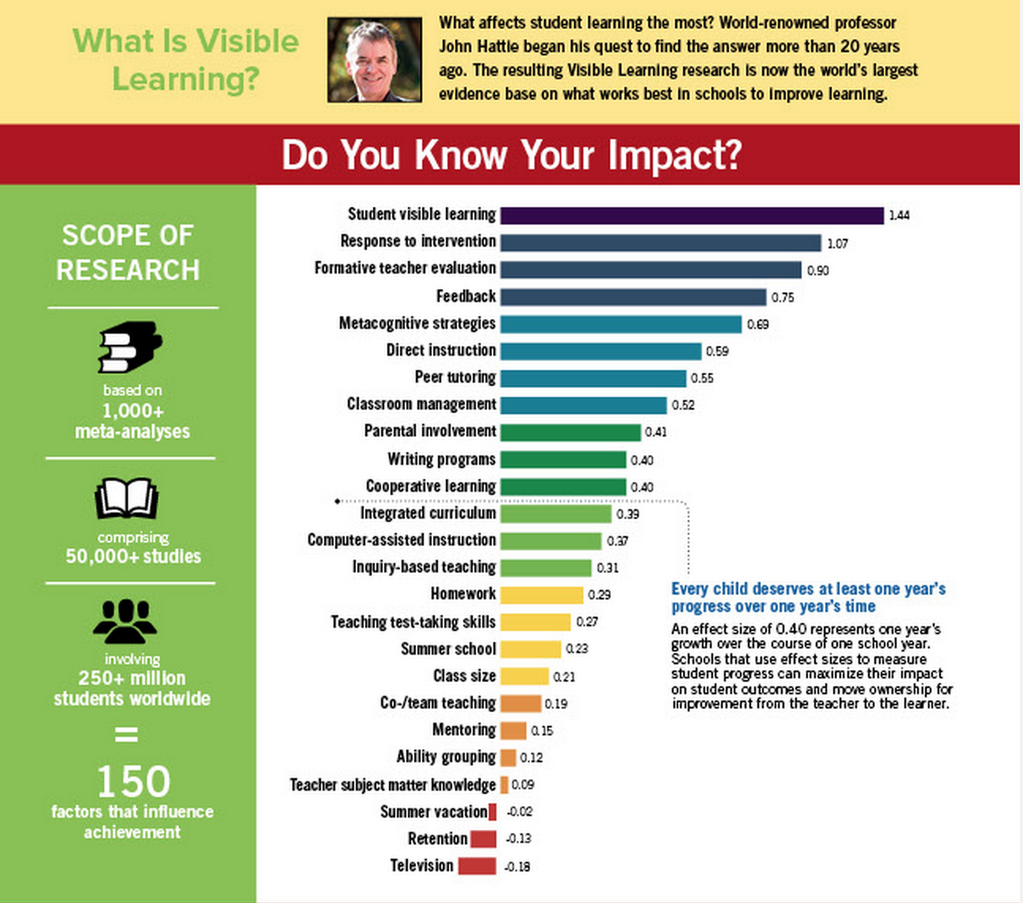
His book was all the rage in education and we offered teachers in one of my previous schools, consultants from Hattie’s Research Group to work with our faculty. We focused on the strategies that had a highly positive impact on student achievement.

The problem is: we are hopeless at identifying successful teaching and scaling it up; that’s one of the most frustrating things in our business.

So, we need to ask less about how students engage in doing work, and more about how students think, know and solve. We need to shift from focusing on the impact of talking to focusing on the power of listening.

Tes Magazine – January 11, 2023 John Hattie interview

Hattie’s thinking has evolved and the sequel does not have any tables of influence. Hattie mentioned a new observation technique in Australia of filming an expert teacher talk through his/her thinking behind lesson planning, then filming the lesson and afterward, filming the teacher breakdown the decisions made during the lesson based on what was taking place in class.

We stopped a couple of years ago because the technology is now far ahead of where we were. But one of the things we found, from our work in England, was that 89 per cent of classroom time is spent with the teacher talking. Teachers asked around 150 questions a day, most of which required less than three-word answers. That’s the norm. Most teachers don’t know that, and they deny it. But the evidence is undeniable, and when they do see their own results, it drives them to improve.

Tes Magazine – January 11, 2023 John Hattie interview

Hattie’s quote above shows teachers often rely too much on direct instruction. There is a place for this, but Hattie is stresses for educators to switch from focusing on what they are doing, and moving to what the students are learning, in other words, the impact of the teaching on students.

My final takeaway from Hattie’s interview is his key finding in his work, that teacher expertise and quality is the most important factor in student learning. As the leader of the school, I need to make sure we hire teachers with this expertise and support the improvement of the teachers we have.

This reminds me of admissions and thinking about why families choose a K-12 school or a university. Often they focus on the campus, facilities, marketing literature, etc. They should be choosing schools based on the teachers and professors.


Diversity, Equity, Inclusion and Justice

DEIJ is a hot topic with international schools worldwide. We are beginning our journey at the Tashkent International school through an Equity Task Force that is defining what our initiatives will look like over the next couple of years. The group asked me what I envision for DEIJ and I wrote the following:

“I would like to have a DEIJ strand in our Strategic Plan, enhancing our Global Citizenship strand. The Central & Eastern European Schools Association (CEESA) DEIJ Recommendations for CEESA Schools provides a comprehensive framework to define our initiatives over the next couple of years. I think we should start with making sure our policies and guiding statements address the best practices of international school DEIJ standards. This means a brief statement in the Board Governance Manual and detailed guidelines in operational handbooks such as Child Safeguarding & Protection and Recruitment. DEIJ is a mindset or lens that all TIS employees should view their daily work and interactions with students, parents and colleagues. Our first job is to raise awareness in community members so it is in everyone’s consciousness and to continually bring it up in all the work we do here. Eventually, all TIS employees will have a DEIJ mindset in their actions and conduct.  For our context of Uzbekistan, I think we should prioritize empowering women and decreasing income inequality.”

We targeted May 19 as a Professional Development Day to introduce DEIJ to our faculty and staff.

Chat GPT: A New Era in Computers

(update – The IT Director sent me a link with good ideas: https://bfischool.padlet.org/jillianz/ne2eytz0rcg1w1t8

I am fascinated by artificial intelligence (AI) and the new Chat Bot, Chat GPT (Generative Pre-Training). A “chatbot” is a computer program that allows people to have a simulated conversation with the program. Simple chatbots are quite common, for example, a chat dialogue that appears on the screen of a website you visit, or entering voice commands into Siri on an iPhone. Chat GPT is the most sophisticated and user-friendly chatbot to have wide public use. It is data-driven and predictive (conversational) and the GPT is a big jump in complexity from the Siri assistant I use on my phone. It is contextually aware and uses natural-language understanding (NLU) and machine learning (ML) to learn as they go.

The software was developed by a non-profit company called, Open AI. The research laboratory received large donations from Microsoft, Elon Musk and others. They are based in San Francisco and in 2015, decided to go the non-profit route to make sure they are developing AI for the good of humanity. The co-chair, Sam Altman, expects it to surpass human intelligence in the coming decades. The New York Times has a lot of articles on AI and ChatGPT including a good introduction to the technology on its podcast, The Daily, “Did Artificial Intelligence Just Get Too Smart?”.

Of course, my 20-year-old son already has been using it and yesterday morning he helped me get started. I was preparing a script for a holiday message to our school community. Instead of me writing it, I asked Chat GPT to do it with including some basic instructions to reference our school’s Purpose Statement and the importance of relationships. I was amazed at what came back and with a few tweaks and personalizing it a bit more, I had a strong script. I would compare it to someone using a Wikipedia entry to start a research paper, but even more sophisticated. The software has the incredible ability to scour much of the internet and quickly synthesize ideas into a coherent structure. Of course, it is only as good as what is posted on line, so it makes mistakes. I do not see it replacing humans yet and I view it as a tool that can be used as a base to work from, but we will be grappling with ever-improving versions of AI in the next coming years.

I do think this is a really big deal for education, our economy, and the world as a whole. I am going to experiment more with it over this holiday break. I can see why Google is “declaring a code red” for its search business. Why should I bother doing a search for components of a good holiday message when I can just ask the computer to write the speech for me. My son also showed me Open AI’s digital image software, Dall-E 2, a program that creates images from descriptions you can input. I asked Dall-E 2 to create a Monet-like painting of Tashkent, Uzbekistan. As you can see below, it looks like the Tashkent Television Tower in the background and the Japanese Garden in the foreground.

I wonder how K-12 international schools and universities will deal with the technology. I can see students using ChatGPT to help them complete essays, lab reports and other writing assignments. Schools will need to work AI into their honor codes and academic honesty policies. For example, it can come up with a decent International Baccalaureate Extended Essay including a bibliography and in-text citations. I like CNBC Sofia Pitt’s take on the technology, “ChatGPT’s value really lies in its ability to explain complicated topics as if you were talking to a human, and to do simple writing tasks.” I am sure this will not be the last AI post I do this school year.

How to Detect a Liar: Daniel Pink’s Latest Recommendation

Daniel Pink is one of my favorite authors. I read several of his books and subscribe to his PinkCast newsletter. He always has useful recommendations. The latest edition of the PinkCast features author Eric Barker. Barker’s latest book is “Plays Well With Others: The Surprising Science Behind Why Everything You Know About Relationships is (Mostly) Wrong”. Relationships are the key to success for students, teachers, and parents in a school community when it comes to happiness and learning. Humans are hyper-social animals and interactions with other humans is integral to our well-being.

In the Pinkcast episode above, Daniel talks about how to detect a lie. This could be especially useful to educators when they are gathering information from students. I was surprised at how often humans tell lies. I would guess some of them are “white lies” that lubricate social relations. I will read a .pdf preview from Eric’s book and see if it will be worthwhile to purchase his book.

What I Learned from the Pandemic?

What did school leaders learn from the pandemic? It finally feels like we are mostly out of the crisis management mode we’ve been living in since the novel coronavirus spread out of China in March of 2020. I think this is a good time to reflect on what we learned from this horrible experience.

My biggest takeaway was a crystallization in my mind that the relational aspect of learning is the most important part of education. Many people think that school is all about facts and figures on a test. It is not. It is all about the relationship between teachers and students, between students and their parents, and between students themselves. This creates an environment that causes us to care about the information we are teaching and learning. David Sax, author of The Future is Analog, articulates this brilliantly in his interview with The Gist’s, Mike Pesca. Learning technology enhances how teachers deliver information and plan lessons but it will never replace human-to-human education. Larry Cuban, a professor of Educational Technology at Stanford writes about the history of new educational technologies being introduced to schools. It always goes back to the relationship between teacher and student. This cannot be developed on Zoom/Google Meet. Teachers will always be necessary, and even with Artificial Intelligence coming soon to common use, daily human contact will always be at the heart of schools.

Emily Oster’s article in the Atlantic, “Let’s Declare a Pandemic Amnesty” reminds me of the uncertainty that surrounded the pandemic at the beginning. It was a “novel” coronavirus and we didn’t know the impact. Some people panicked, some ignored it, and most people were a mix of caution and getting on with their lives. It is easy to look back and see what we got wrong and what we got right. In my mind, I think it was shown that schools were not “supersites” of viral spread and school closures did more damage than good for students. I also am taking away that mask mandates are not necessary. A well-fitting K95 surgical mask protects individuals and people should be encouraged to wear them if they feel like it. mRNA vaccines work (prevent serious symptoms) and schools should strictly enforce vaccination policies for all contagious diseases. It is wrong to allow unvaccinated children to enroll in schools.

“The Fog of War” applies to pandemics as well. The deluge of information, misinformation, opinions, etc. was overwhelming for school leaders to deal with. I remember panicked teachers desperately looking for flights out of Uzbekistan, people wiping down groceries with disinfectant, the WHO advising us first NOT to wear masks and then later to wear masks, etc. It reinforced for me that a school leader needs to take in a wide range of information, but in the end, he/she needs to reflect on it and make his/her own path forward based on what is best for the school community as a whole.

Final learning was to pair with experts. No school leader was a public health official before the pandemic. I felt like I became one over the last three years :), but bringing in the Head of the World Health Organization, seeking advice from the US embassy medical team and forming stronger bonds with our sister Tashkent International Clinic helped me figure out what was going on in an ever-changing viral pandemic.

Implicit Bias Training

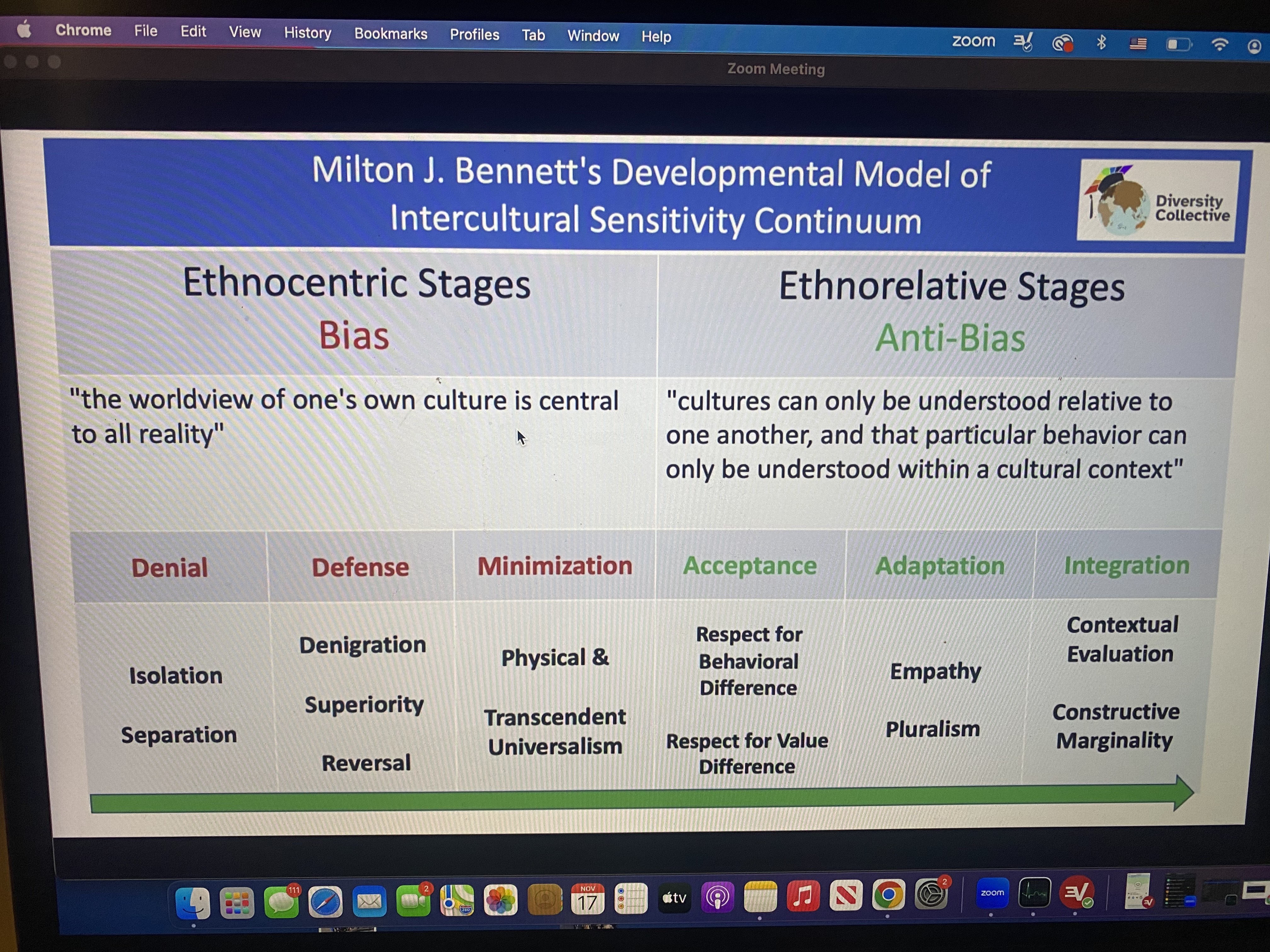
I participated in an Implicit Bias workshop offered by Alan Phan and Aparna Sundaram from the Central and Eastern European Schools Association (CEESA) Diversity Collective this evening. The workshop was aimed at school leaders and recruiting practices. Heads of Schools have a lot of power in selecting faculty and staff. Implicit biases are unconscious attitudes or stereotypes that humans hold that affect our actions, decisions and understanding. These can be positive or negative. They are personal and can be affected by media, experiences, friends family, and colleagues. Alan and Aparna went through the research literature on the subject. One interesting slide was Milton J. Bennett’s Development Model of Intercultural Sensitivity Continuum (below). Alan said most international school leaders are in the Acceptance Stage and the goal of training like this is to move people into the Adaptation and Integration stages. I would like to think my 30 years of living outside my home culture of the USA and working in a field that is predominately women and getting to know intimately families from all over the world, has helped me overcome my biases.

It is human to be biased and my main recruiting takeaway from the workshop will be to Make the Unconscious Conscious, as the slide below mentions. I will ask myself questions about why I like or don’t like a particular person when making hiring decisions.

Remembrance Day Ceremony

Raising of the French Flag in the Garden of the French Embassy

One of my responsibilities as the head of the Tashkent International School is to represent the school at diplomatic events in the expatriate community in the city. These events are an opportunity to solidify relationships with diplomatic missions that depend on TIS to provide a world-class, English-language education for the dependents of their employees.

Yesterday I attended the Remembrance Day ceremony hosted by the French Embassy. The French Ambassador is one of the “Founders” of our school. The Founders are the ambassadors of the five diplomatic missions (USA, UK & Northern Ireland, Germany, Korea, and France) as well as the Resident Coordinator of the United Nations mission. The French and UK embassies rotate hosting the ceremony here in Tashkent and often, a TIS student reads a poem during the ceremony. This year, the French School and the British School provided students to participate.

UK Ambassador Timothy Torlot Speaks While French Ambassador Aurelia Bouchez Looks On

Remembrance Day memorializes the signing of the Armistice on November 11, 2018 which marked the end of World War I hostilities between the Entente (French, UK, USA, and others) and the Germans, the last remaining country fighting against the Entente.

I was touched by the moving ceremony. The ambassadors reminded us of the folly and tragedy of war and especially the senseless murder of young men. Now that I have two sons reaching 18 years old, I realize how immature and young they are at that age. They are still children and it is so wrong to send them into war. Their best years are ahead of them and to lose the experiences of falling in love, having a family and career, and growing old, are the worst that war brings to humanity.

Ambassador Torlot also reminded us that war is currently taking place in Europe once again. Humanity does not learn the lessons of the past.

Soliciting Parent Feedback

Last week I hosted a parent coffee with the goal of soliciting feedback from TIS parents. Over 30 parents attended the session and it was valuable for me to hear directly from them. My main “takeaways” from the session were as follows: 

  1. Concerned about the influence of the internet and digital technologies on children’s development. This includes social media use, gaming, screen time, etc. 
  2. More information on different aspects of the school ranging from teacher credentials, curriculum, student achievement data such as IB scores, university acceptances, foreign language study, to information about the IB teaching and learning techniques.  
  3. Too many cafeteria snack offerings have high sugar and fat content. 
  4. TIS to consider the most effective methods of communication between school and home. 

Below are the meeting minutes

Over 30 parents attended the Coffee with the Director session. The purpose of the meeting was to receive feedback from parents regarding their experiences with the school. There were 19 different nationalities represented within the parents attending and after introductions and conversations, we shared our different schooling experiences.

  1. Children like TIS and families are mostly happy with the schooling. 
  2. Different cultures have different expectations of schools. 
  3. Parents do not see much homework, especially in the PYP and would like to know more about the educational process and their children’s progress. Elementary School Principal Derek Nelson has a planned session for parents in November.

Director Bill Kralovec shared submissions to the Suggestion Box recently installed near the entrance gate. They are as follows:

  • Share the credentials and educational background of the faculty
  • Share more information about the subject curriculum.
  • There were questions about the wall calendars and 2021-2022 Yearbooks. 
  • Parents are concerned students are using mobile phones too much at school. They are concerned about overall amount of screen time between laptops and phones. 
  • Shorten wait time in the cafeteria for snacks and lunches. 
  • Give students more school supplies (stationary, office supplies)  

At the meeting, the following suggestions/comments were put forth by attendees. 

  • Parents reiterated their concerns about the influence of social media, gaming (ex. MineCraft), mobile phones and screen time on students. Some felt the students spend too much time on screens at school. 
  • The nutrition of snack options for students during break times and after school was questioned. There are too many snacks like donuts, baked goods, chocolate and not enough healthy options.
  • Sugar control (parents think children has unlimited access to the liquid sweetener for drinks)  
  • Consider offering breakfast and offer free healthy snacks for students
  • Director answered questions regarding drinking water. All water is filtered or bottled water. 

Communication Channels

  • Whole School Google Calendar (link)
  • Newsletter (upcoming events, sent every other Tuesday 10:00 AM to email) 
  • Curriculum/Classroom Information through Toddle (ES) and Manage Bac (SS)
  • Emails 

TIS is developing an online Parent Platform, a “one-stop shop” for all necessary school information. TIS is considering starting a Telegram Channel. 

The parents also asked to provide more transparent information about:

  • School graduation;
  • University acceptance;
  • School achievements;
  • Language acquisition 

The HR manager told the parents that the school has a “High school profile” where they can partly find the answers to their questions.

Bill is planning to lead community sessions on the following topics during the 2022-2023 school year: 

  1. Advice to families for dealing with the impact of social media, mobile phones, screen time, etc. 
  2. Latest research on sleep and circadian rhythms impact and learning and what families can do to improve sleep. 
  3. Air pollution impact on health and cognitive ability

The Director thanked everyone and asked the parents to share their ideas, suggestion, and offers with him in person or send them via emails to director@tashschool.org and/or execassistant@tashschool.org.  

CEESA Autumn Board of Directors Meetings

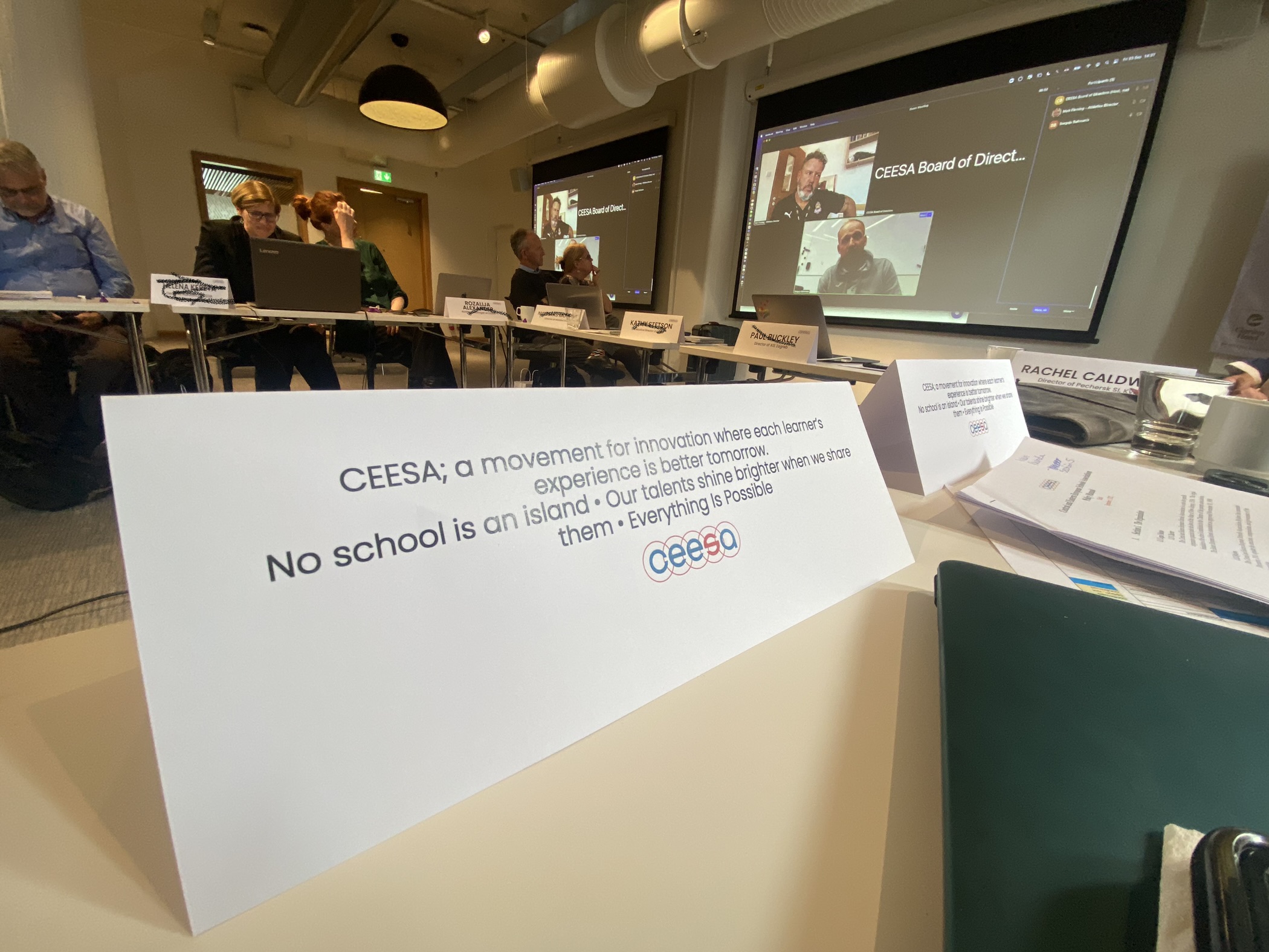
View from my table in the meeting room

I am attending the Central and Eastern European Schools Association (CEESA) directors meetings this weekend hosted by the International School of Helsinki. CEESA is one of the 8 major regional associations of international schools set up by the US State Department Office of Overseas Schools in the 1970s. 16 heads of school and the US Embassy Regional Education Officer are attending the meetings.

One of the purposes of CEESA is to provide professional development opportunities for individuals at CEESA schools. This is a link to the 2022-2023 Professional Learning Events. The highlights include middle leadership training with NoTosh Consultants, emergency evacuation protocols, global and European energy, and financial trends/risks for school boards, Diversity Equity Inclusion and Justice (DEIJ), etc.

My big takeaway from the morning session on Friday was that DEIJ initiatives and policies should be put through a child safeguarding lens. Marginalized groups of any community are at greater risk. Most of the countries in our region are not progressive and “Western” in their government policies or cultures. This creates challenges for international schools trying to safeguard students who may be discriminated against due to sexual orientation, race, gender, etc. I asked CEESA to provide aspirational DEIJ guidelines for members schools. DEIJ also applies to our employees and we discussed supporting minority hires and protecting newcomers to our respective cultures and legal systems. Several of the schools mentioned LGBTQ+ consultant Emily Meadows is working with them. I read her article, “There is a Downside to “Hearing All Voices” and it helped us frame the discussion. Families with conservative views may be a challenge to IB, Western Humanist style of education that our schools practice. The International School of Belgrade’s DEI statement is another good resource.

IS Helsinki’s head of school discussed their school’s commitment to teaching Climate Collapse. What are we as CEESA schools doing? We will be faced with migration, economic collapse, natural disasters, etc. brought to our schools by climate change. ISH is reviewing professional development travel and encouraging teachers to reflect on the ecological impact of flights. I would like to do an audit of how many flights our employees are taking annually and what is our carbon footprint.

In the late afternoon of Day 1, we discussed with the leadership of the Athletic Directors / Activities Coordinators the future of international sports and activities events. The pandemic paused international exchanges for three years and now CEESA schools are thinking about what role the organization should play in secondary school sports and activities. CEESA is unique in that the athletics (sports) and activities are implemented under the CEESA umbrella. This creates challenges for the association which include the following:

  • Wide variety of school types and sizes – School sizes range from over 1000 to under 200.
  • Geographic Distance – Many of the former USSR countries are included. It is almost 5,000 km from Bishkek to Helsinki

We decided to make a task force to study the situation this school year and make a plan by the Spring Educators Conference in March. The other issues to clarify are homestay students versus hotels, competitive balance and offers from other regional organizations.

This discussion does not concern us too much because Tashkent is so far away from most of the CEESA schools, they we rely on our Central Asian Federation of Activities and Athletics for most of our international tournaments and festivals.

Concept-based Mathematics Training at TIS

Jennifer Wathall is an experienced mathematics teacher, IB Workshop Leader, and Concept-based Curriculum Design Consultant. She is providing professional development this week for our faculty this week. I attended several sessions and read the last chapter of her latest book, Concept-based Mathematics: Teaching for Deep Understanding in Secondary Classrooms.

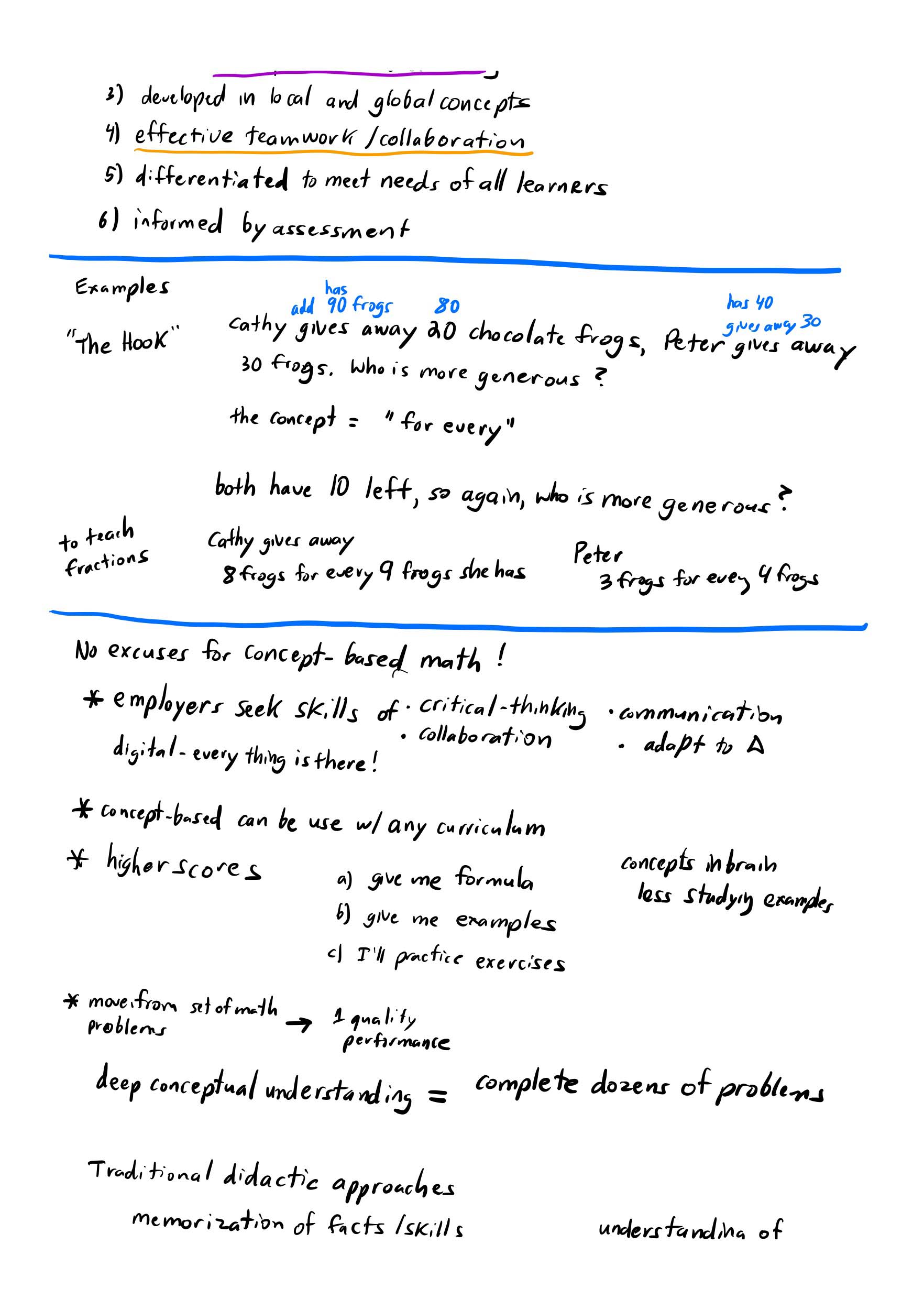
My big takeaway from the workshops reinforcing the idea that mathematics education needs a revolution. In the coming decades, AI and technological advances will do away with the need for calculation. Humans cannot out-calculate computers The major shift in mathematics education is the idea that it is the teacher’s job to facilitate students to gain a deep understanding of concepts instead of the traditional didactic approach of memorization of a formula, demonstrating a few examples, and then assigning them dozens of practice problems.

This creates a difference of opinion between anxious parents taught in the traditional approach to the IB and Wathall’s concept-based approach. TIS has a large portion of families from successful, traditional mathematics teaching culture, including Korea and the ex-Soviet Union.

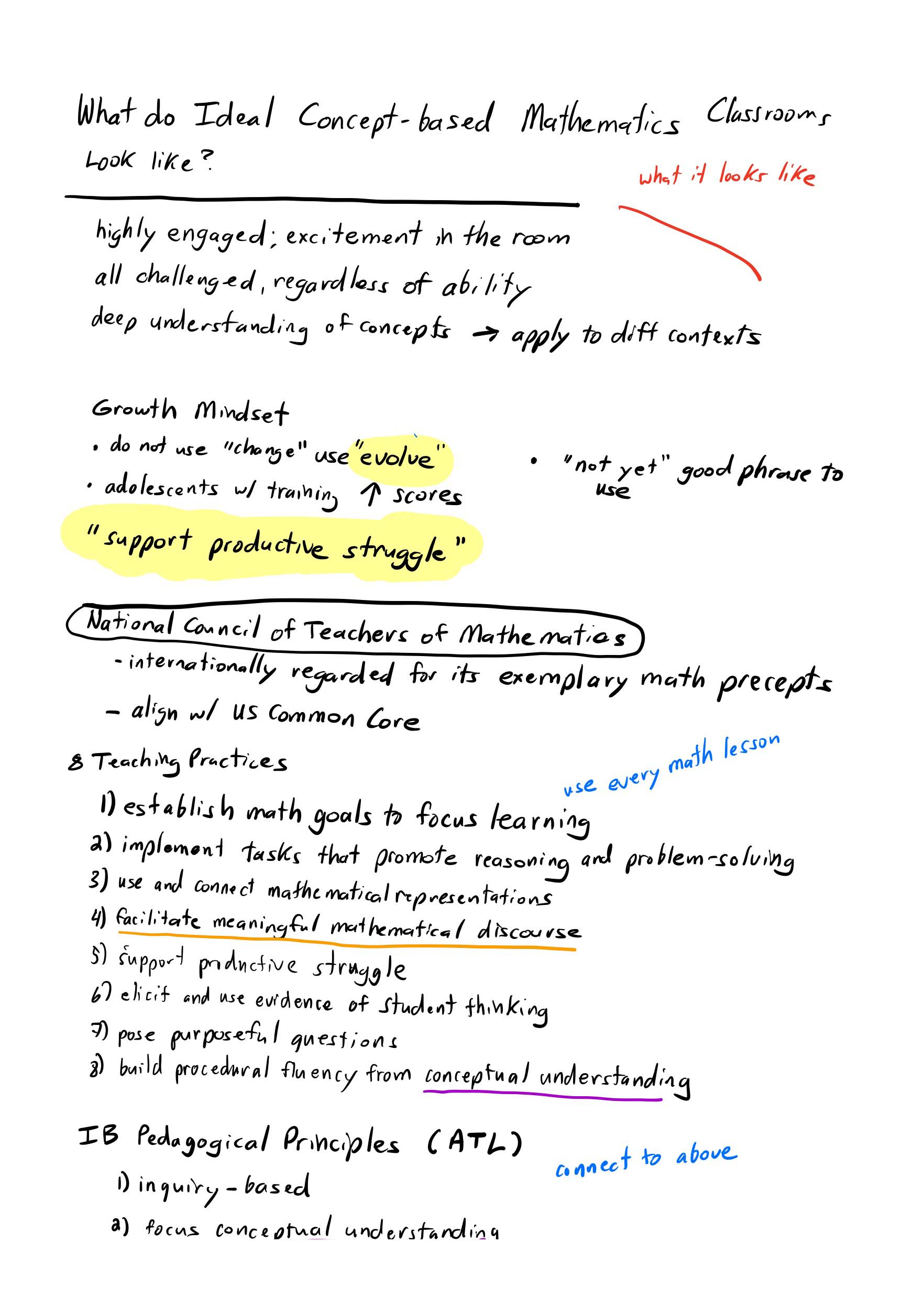
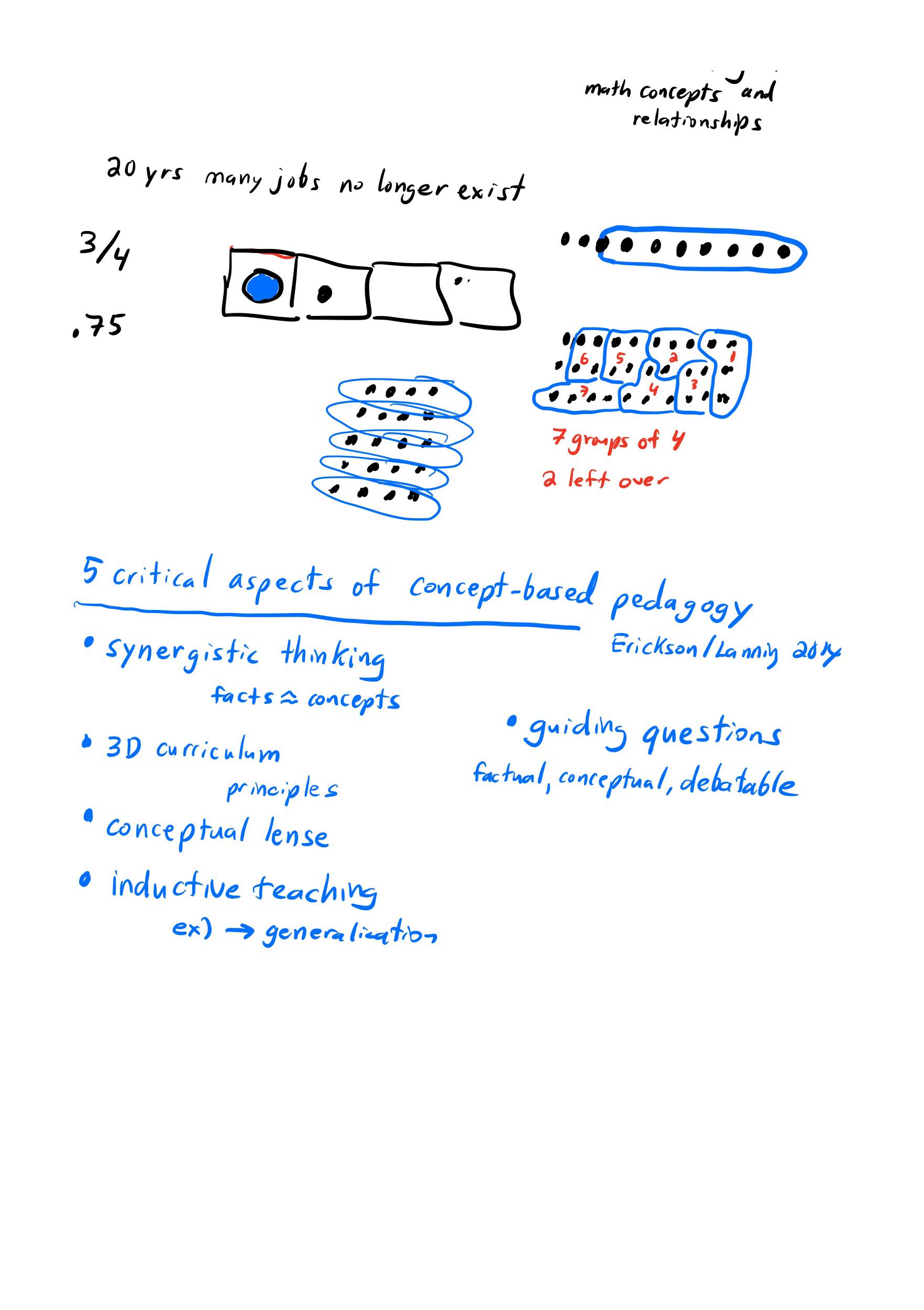
In the last chapter of her book, “What do Ideal Concept-based Mathematics Classrooms Look Like”, Wathall lays out the vision and fundamentals. I am posting my notes at the bottom of this post. The idea of supporting productive struggle and instilling in math students a growth mindset underpins the concept-based classroom. I also like how she ties what employers are looking for; critical thinking, collaboration, communication, and adapting to change to the skills math students should be learning.

I always thought the East Asian methods of teaching mathematics, hours of drills, were the best way to teach mathematics. PISA scores and competitions demonstrated the highest achievement from mathematics students from those school systems. However, one can judge mathematics education by the innovation found in the respective societies. The more “Western” approach of concept-based teaching is producing more innovation. Examples are Apple, Google, Tesla, NASA, etc.

It was a valuable week for our elementary and secondary school mathematics teachers! We will definitely be inviting Jennifer back.