
My Latest Thinking on the Pandemic: January 4, 2021

Sam Harris is an American philosopher, neuroscientist, author, public intellectual and most importantly for this blog post, a podcast host. His Making Sense podcast is available via subscription from occasionally he makes some episodes open to the public. Sam’s December 14 conversation with Yale professor, Nikolas Christakis, “What Have We Learned from the Pandemic?” is available to the public. I read Christakis’s book, Apollo’s Arrow at this time last year. The 3-hour podcast is a kind of “State of the Pandemic” conversation as we near the end of the second full year of the COVID global pandemic. Christakis believes the first patient contracted the new coronavirus around October 1, 2019 and the first person carrying the virus left Wuhan around November 1, 2019. The TIS Academic Council started planning for the pandemic on January 22, 2020 and the first case arrived to Tashkent during Spring Break in March of 2020. The long podcast covers a lot of ground including breaking down the recently released shorter quarantine and isolation guidelines from the CDC.

Automobile Airbags are a Good Metaphor for COVID Vaccines (image courtesy of ExtremeTech.com)

As Sam Harris says, how much proof do vaccine skeptics need with billions of humans vaccinated without problems? This was the first time I heard that probably everyone will be contracting COVID eventually. I chose the low probability of a vaccine reaction versus getting COVID without a vaccine. Christakis compares vaccines to an automobile airbag; the vaccine does not guarantee you will not contract and/or die from the coronavirus, but it does greatly improve your chances of survival. The same goes for airbags which are standard issue in most vehicles sold.

It frustrates me that so many people around the world refuse to get vaccinated. The latest variant Omicron is partially a result of the virus being able to spread in unvaccinated populations. Viruses usually mutate to a more highly contagious and milder form as a survival advantage. If a virus rapidly kills its host, it usually will not be able to spread. A milder, more contagious form of a virus can survive for longer. However, after watching HBO’s excellent, “Station Eleven“, I fear a future mutation might be deadlier.

WHO Uzbekistan Vaccination Data

According to the WHO, over 33 million vaccine doses have been administered here in Uzbekistan and over 16 million people out of a total population of 34 million have at least one dose. As with many countries, getting accurate data is difficult and all COVID statistics in Central Asia are vastly under reported. I think the vaccination data is more accurate than cases, hospitalizations and deaths data because of the WHO’s COVAX program and its network of public health officials working with local Sanitary Epidemilogical Stations.

One of my big lessons from the pandemic has been that people react very differently to the same conditions. This has made the pandemic the most difficult time for international school educational leaders around the world. However the pandemic progressed and whatever measures schools took to protect employees and students, there is always a portion of the community in disagreement. Atlantic journalist and podcaster, Derek Thompson is an insightful voice on the American and international media. He describes the division between people and media regarding their view of the pandemic in this conversation on the Bill Simmon’s sports podcast. I think he is correct in his analysis of the two “teams” in different phases of the pandemic (table below). I remember some teachers not feeling safe enough to stay in Uzbekistan versus teachers wanting to stay on campus. The next phase of the pandemic revealed the difference between locals and expatriates regarding their receptiveness to vaccines. We are now onto the third phase and people take a range of precautions in their daily lives.

Pandemic Phase 1Team PandemicTeam Flu
Pandemic Phase 2Team VaccineTeam Anti-vaccine
Pandemic Phase 3(Team very cautious) vs. (Team Get Along with my Life)Team Anti-vaccine

We will be issuing our latest TIS protocols this week. I can’t believe that this is the third academic year that is impacted by the pandemic. We managed to have almost a restriction-free 2021-2022 so far. 100% of the classes were held on-campus for all 78 school days so far. We even managed to hold cocurricular activities with our first interscholastic soccer, volleyball and basketball games. We also held our first music and theater productions to live audiences of parents and students. We had our first full faculty professional development sessions and social gatherings. The only aspect missing is international travel and exchanges. I am appreciative of the efforts of everyone, employees, students and parents to make this possible.

What will the winter and spring of 2022 bring to TIS? The evidence from Europe, South Africa and the Americas is showing that we will eventually have a huge spike in mild cases. Derek Thompson describes the Omicron variant like an invader of a castle. It is able to get over the moat and castle wall (vaccine-induced immunity) but the knights crush the invader inside the castle walls (mild symptoms). I am not sure how we will handle a large number of mild cases. The CDC has given us guidance to halve the length of quarantine and isolation (10 days reduced to 5 days). An option for schools will be week-long grade-level or school-level quarantines and providing Virtual Learning. We may choose to press on with on-campus teaching and learning, knowing that most cases are mild to moderate and significant percentage of our community will be home on 5-day intervals. I am waiting to see how long the omicron variant wave lasts, which will also factor in our decision-making. One wild card will be the Uzbek government and their mandates. TIS will be using more rapid antigen tests, following the reduced quarantine/isolation guidelines of the CDC and continuing with masking/ventilation/distancing.

Failure Resume

Daniel Pink Talks about How to turn your screwups into opportunities.

Daniel Pink is one of my favorite thinkers and much of his writing helps my leadership. I subscribe to his Pink Cast and have read several of his books. One of the concepts in his latest book, The Power of Regret is the idea of making a Failure Resume. Our normal resumes highlight our accomplishments and as Daniel puts it, “our awesomeness” but a failure resume highlights the occasions where we made mistakes. Stanford professor Tina Seelig makes her students write a Failure Resume and people who do, seem to learn some big life lessons from doing this. I really want to read her book with my soon to be 19-year-old son, “What I Wish I Knew When I Was 20: A Crash Course on Making Your Place in the World”.

TIS Pandemic Update: November 28, 2021

I remember an expert saying back in June of 2020 that the pandemic would be with us until 2023 or 2024. This was when I was thinking the pandemic would be over by the summer of 2020. I am realizing the expert was correct. We are learning how to live with it, however, and we are always moving forward to deliver the best education we can for our students. We will be rapid antigen testing all employees and students tomorrow as part of our periodic testing regime. The next scheduled test will be January 10, 2022.

The last confirmed case in the TIS community (students and employees) was on November 5. We continue to be vigilant as we slowly loosen our restrictions. We are monitoring the progress of the “omicron” variant and will not know its impact until the new year. The interview with Harvard epidemiologist Bill Hanage gives a good summary of the omicron variant

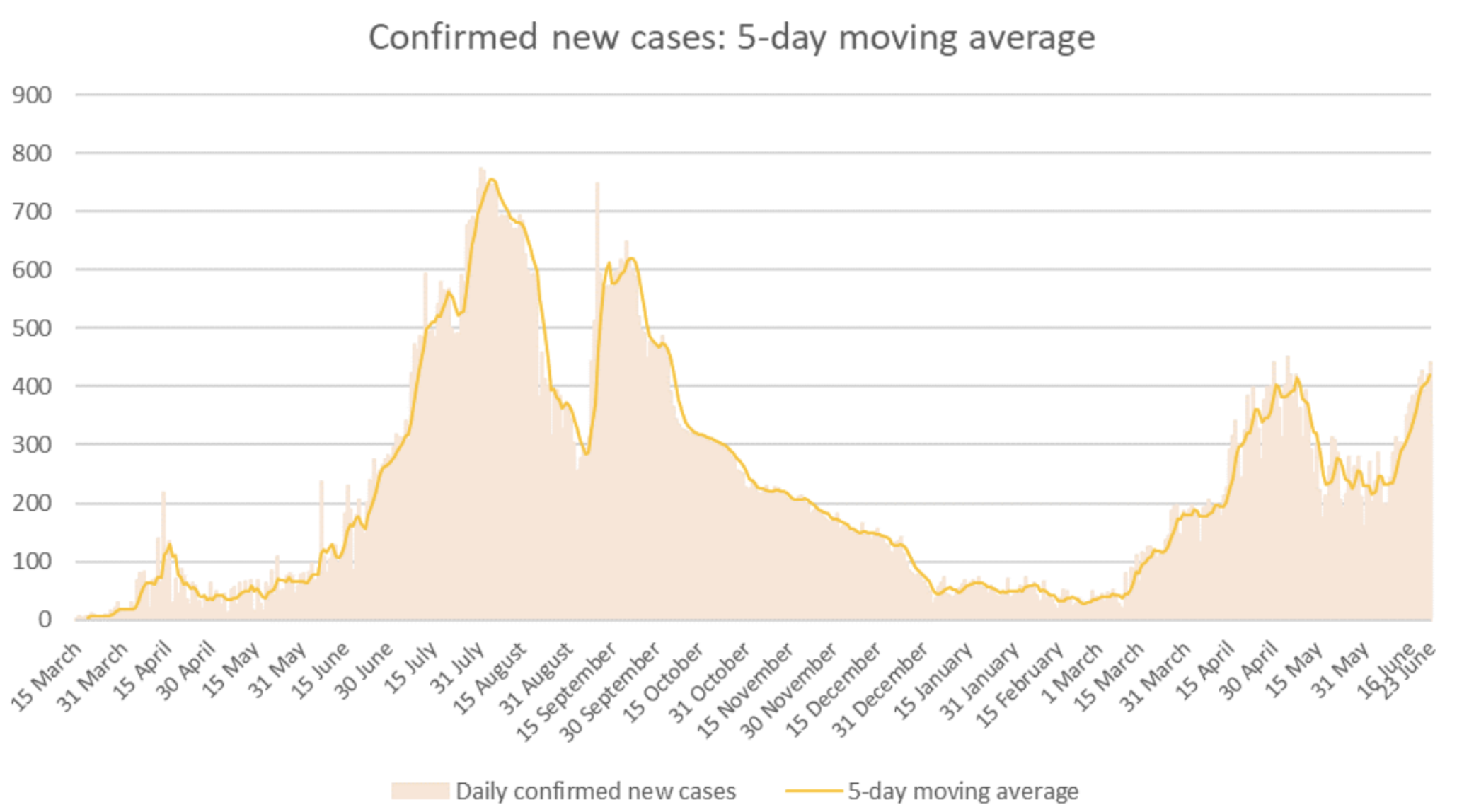
The World Health Organization Uzbekistan office issued its final Situation Report on November 25, 2021. Below is the chart showing the official number of cases reported in Uzbekistan from March 2020 to November 2021. Community transmission remains on a downward trend. They recommend using https://coronavirus.uz/ru to keep up to date on the epidemiological situation in Uzbekistan. 

WHO – Uzbekistan Situation Report (final chart #167 – November 25, 2021)

Latest TIS Data and Thinking on the Pandemic

The video above is a good overview on the latest progress of the global pandemic. I recommend The Economist podcast “The Jab” which reports on COVID-19. The good news is the vaccines are resistant to the many current variants. The bad news is more variants may emerge while the virus spreads through large unvaccinated populations.

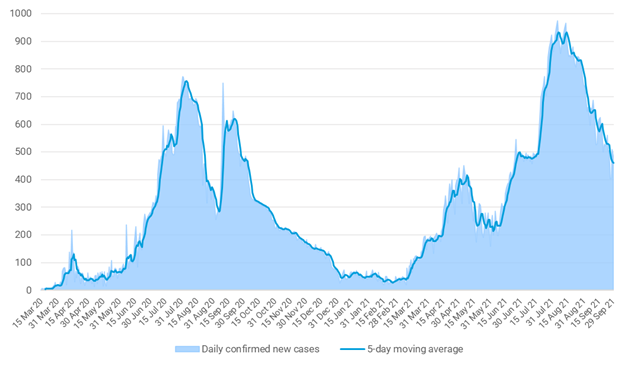
September 30, 2021 – Confirmed Cases 5-day Moving Average

As you can see in the graph above from the September 30 UN Situation Report on Uzbekistan and COVID-19, cases are dropping in the country and Tashkent. This bears out in our school community as we completed the second consecutive week with no student or employee cases reported. Our next community Rapid Antigen Testing will be October 25th where we will get more data.

We continue to gather vaccination data from our community. As you can see in the pie charts below, with 72% of our secondary school (grades 6-12) reporting, 26.3% are vaccinated. In regards to the parents, 88% are fully vaccinated with about half completing the survey. I would think these two numbers are accurate percentages for both populations, with the older students probably having a higher percentage than younger students in the secondary school.

The TIS COVID Response Team is currently planning for loosening restrictions as transmission rates drop in the city. We want to continue to offer the basics of on-campus teaching and learning and our current level of cocurricular activities so we are taking a thoughtful, measured approach. The Team will be prioritizing the following:

  1. Consider dropping the use of masks for our youngest students and masks outdoors.
  2. Mixing of more cohorts in recreation times, cocurricular activities and school-wide assemblies and events.
  3. Develop guidelines for allowing parents to come on campus more often.

Uzbekistan Introduces mandatory Vaccination

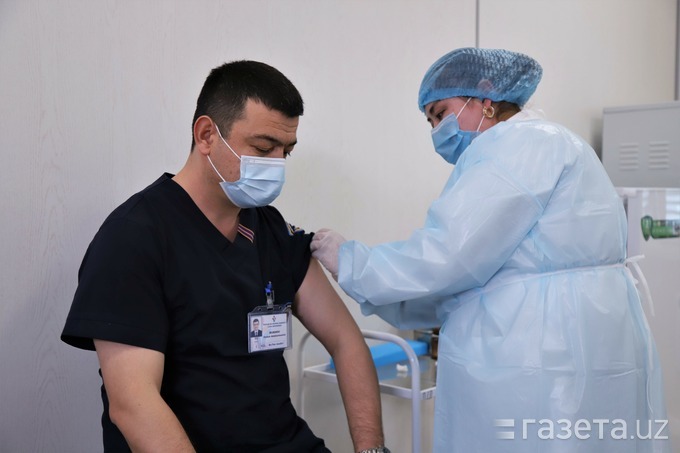
Photo courtesy of Gazeta.Uz

I am happy to hear that the Ministry of Health is mandating vaccination against COVID-19 for all Uzbek citizens age 18 and above. The announcement came out last night. We are going see how we can help our employees receive the vaccines safely. I think that the Special Commission to Combat COVID-19 is acting strongly because of the current spike in cases in Tashkent. Below is the latest data of cases from the WHO Uzbekistan office.

WHO Uzbekistan COVID-19 Update: July 15, 2021

It is fortunate that the risk of death and hospitalization from COVID-19 for K-12 students is “incredibly rare” according to a study in the UK. From March 2020 to February 2021, a death rate is around 2 for every million people under 18 from complications from COVID-19. “None had asthma or type-1 diabetes and half had conditions that put them at higher risk than health children from dying of any cause.” Doctors running the study advised schools to promote immunization and mask use, despite students’ resilience to COVID.

The co-founder and CEO of BioNTech Ugur Sahin insisted booster shots are going to be necessary to get the pandemic under control during the 2021 STAT Breakthrough Science Summit. Pfizer also indicated that they are applying their mRNA technology to developing flu vaccines.

My Latest Thinking About the Pandemic: July 15, 2021

I am following closely a National Institute of Health trial of fully vaccinated adults receiving a booster doses of different COVID vaccines. My wife, adult-age son and I are fully vaccinated with the Astra-Zeneca vaccine and I am considering getting a Pfizer booster before returning to Uzbekistan. Immunity may wane after some time and with possible new variants developing throughout the world, it might become recommended by public health agencies. I predict that both the CDC and WHO will be recommending booster vaccines as we go into the cold and flu season this winter. In this trial conducted by Baylor College of Medicine in Houston and the University of Maryland, 50 adults will get a booster 12-20 weeks after being fully vaccinated versus a control group that will not get a booster, but will be fully vaccinated. The challenge for my wife and me is that we received our second dose on June 5. If we get a booster next week before we head back to Tashkent, it will only be a 6-7 week gap between the second dose and the booster. However, this may be our only chance to get it as vaccines are still not widespread in Uzbekistan.

The trial results also hint that people who have already received two doses of AstraZeneca vaccine could have a stronger immune response if they were given a different jab as a booster if recommended in the autumn.

“Mixing Covid jabs has good immune response, study finds” BBC Roberts, Michelle 28 June, 2021

The BBC article quoted above describes the results of a study by Oxford University researcher that shows mixing vaccines improves the immune response, especially viral vector vaccines with mRNA developed vaccines. It is calming to know that 2-dose Astra-Zeneca vaccine regimen reduces our chances of hospitalization from COVID by 90%, so no matter if I get a booster of Pfizer before I leave, I’ll be protected. I encourage everyone to read the article by BBC Medical Editor Fergus Walsh.

Some officials in the Uzbek government are asking organizations to make vaccination mandatory for their employees. This is good news in my opinion as the only way schools will be able to offer the full co-curricular slate of programs is through vaccination. Other countries are moving towards mandatory vaccinations for certain groups. Health workers in the USA and in France and Greece are some examples of mandatory vaccination policies becoming a reality.

An employer can make the vaccination mandatory for his employees,” – Alisher Kadyrov

Alisher Kadyrov said that in accordance with Article 212 of the Labor Code, the employer, in agreement with the members of the trade union, can assign duties to the employee arising from the interests of the labor collective. In particular, the organization can make the coronavirus vaccine mandatory for its employees to ensure a healthy work environment.The deputy also stressed that we have the right to demand guarantees that the personnel serving us – a bank employee, a seller, a driver, a law enforcement officer, a doctor, a teacher, is not a carrier of infection.According to the deputy, citizens are not obliged to receive a vaccine, but in the name of stabilizing the situation in the country, it is necessary to restrict the freedom of non-vaccinated citizens.

Latest Pandemic Thinking: July 1, 2021

I would like to thank the Association for the Advancement of International Education’s (AAIE) for continuing to provide resources to assist international school leaders in planning for the 2021-2022 school year. Every other day they publish a COVID-19 Briefing. AAIE COVID-19 Briefing Archive.

This Scientific American article points out the contradictory recommendations between the WHO and CDC. The TIS COVID Response Team is considering dropping the requirement for people to wear masks outdoors while on campus. The World Health Organization (WHO) is still recommending fully vaccinated people to wear masks and physically distance. This is because concerns of new variants and continued community transmission of the virus. WHO Press Conference June 25, 2021.The US Centers for Disease Control and Prevention (CDC) differs from the WHO. They are saying vaccinated people do not need to wear masks outdoors and in many indoor settings. CDC June 17, 2021 Vaccinated People Recommendations.This Science Alert article points out studies showing possible changes in blood cells which may explain why some people have long-term problems from COVID. The pandemic continues to rage in unvaccinated countries. A third-wave peak in many African countries (Namibia, Uganda, Zambia) is pushing health systems to the brink. Russia had over 20,000 cases and is introducing regional lockdowns.

Children over age 12 can be easily vaccinated in the USA this summer

On a personal note, I’ve decided to get a Pfizer booster shot while I am in the USA this summer. My wife, adult son and I are fully vaccinated with the AstraZeneca vaccine which currently offers us strong protection against all variants of the coronavirus. Research is showing that a booster vaccine of the mRNA (Pfizer/Moderna) variety offers more immunity for people who previously received one or two doses of a viral vector (AstraZeneca/Johnson & Johnson) type vaccine. I sense that global health agencies will be recommending a booster shot in the autumn or winter. Our two children (photo above) are getting fully vaccinated with the Pfizer vaccine. We walked into the local CVS pharmacy got them vaccinated. I wish that more countries would be able to vaccinate to the rate the USA has implemented.

My Pandemic Reading: June 25, 2021

Dr. Zeynep Tufekci in the New York Times questions whether the pandemic was caused by scientific research “Where did the Coronavirus Come From? What we Already Know is Troubling?” She cites historical lab leaks of SARS (Severe Acute Respiratory Syndrome), small pox and hoof and mouth disease. From what I’ve been reading, the source of this coronavirus is pointing to the Wuhan Institute of Virology and a strain isolated from a cave in 2012. The scientific community will probably never find out because of the lack of transparency. Dr. Tufekci goes on to say that this is a global problem and research on bats and viruses around the world needs to be looked at more closely.

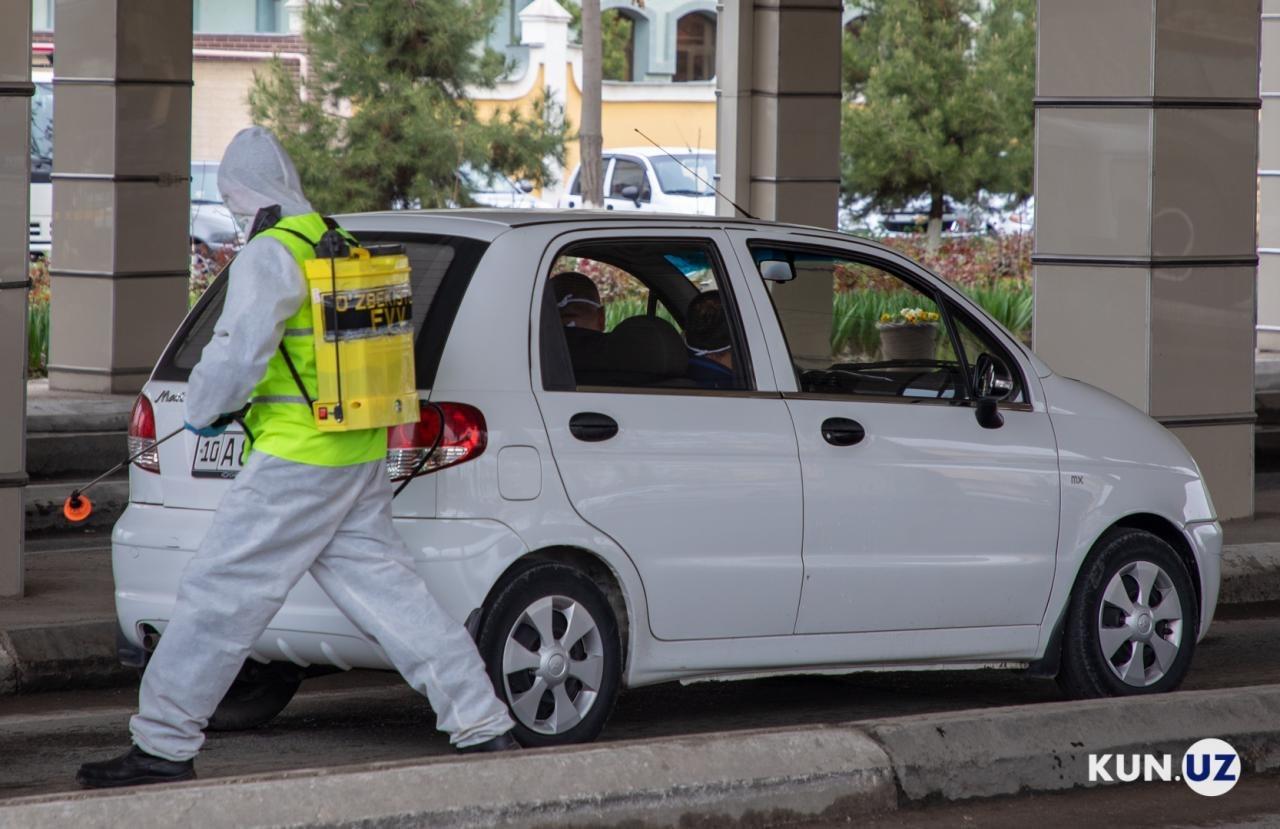
Courtesy of Kun.uz

The Delta variant of the coronavirus is causing spikes in cases around the world, including this week, Uzbekistan. “Delta Variant Triggers New Phase in the Pandemic” from the June 25 issue of Science gives some a good overview of its impact. I feel reassured that two-dose AstraZeneca people are protected against hospitalization with the Delta variant. Public health officials in Uzbekistan implemented stricter controls of movement in the city due to an increase in cases. International travel is not impacted but I expect to see more use of masks. The government is also trying to increase vaccination rates by offering vaccines to people 50 and over and university professors.

WHO Uzbekistan Situation Report – June 24, 2021

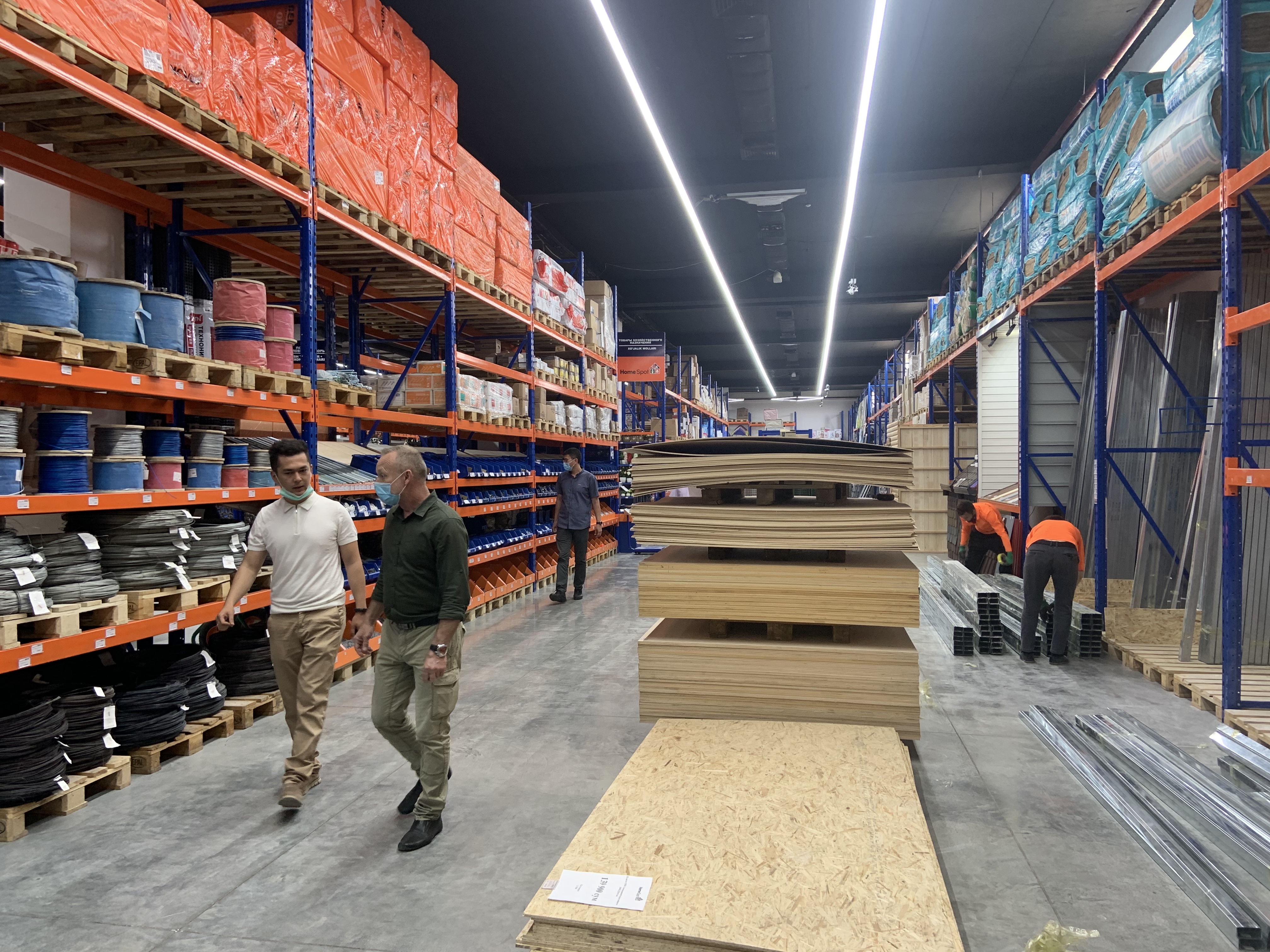
TIS Operations Team Visits HomeSpot

TIS Operations Team

Last week the TIS Operations Team visited a new superstore in Tashkent called HomeSpot. We are always looking for high quality products and with a large store like HomeSpot, it will make us more efficient in procuring equipment and supplies. We hope to start a corporate account with them for lower prices and delivery to the school.

Tashkent is developing rapidly and it seems like everyday there are new stores, restaurants, cafes, factories, etc. HomeSpot is owned by the Kolberg Group and they are expanding the store we visited into the second floor. It is modeled after Home Depot and sells a wide range of goods, from home furnishings, to dry wall, tools, paint, flooring, appliances, etc. Most of it came from China but they have lots of brands including Bosch and Archer reasonably priced. I think it will be a successful business.

I was particularly interested in the paint section. There is a Finnish company called Tikkurila that uses color codes to mix paints to produce the exact color a customer needs. This is new to Tashkent and just in time. Our re-branding this year specifies six colors with Pantone codes. We were worried about not finding the exact colors. You can find it easily on Google Maps and it is not too far from our school.

Pandemic Reading: TIS Starts Vaccination of faculty!

My wife Nadia and I in the lobby of TIC relieved to be vaccinated with our first dose of Covishield!

This week we were able to secure through the World Health Organization (WHO) COVAX program, COVID vaccinations for all 170 of our employees. 95% of the expatriate faculty took advantage of the opportunity but 5% of the Uzbek faculty/staff did. There was a lot of skepticism about the Oxford – AstraZeneca vaccine here in Uzbekistan because of the reports of very rare blood clots and lots of informal information going through social media channels here. Many locals are taking a wait-and-see approach or waiting for the more trusted (in this region) Sputnik V. I was disappointed as the only way I see TIS getting back to offering our full range of educational opportunities is through 100% vaccination of employees, parents and eventually students. Our sister organization the Tashkent International Clinic really came through for the school and supported procuring the vaccines and making sure it was done safely. Thank you TIC!!!

Despite the locals at this time not wanting the vaccine, we will eventually reach the situation where the adults in our society are vaccinated but children are not vaccinated. In my family, my wife and I were vaccinated as well as our 18-year-old son. My 16-year-old son and 13-year-old daughter are not vaccinated. 16-year old people and above are eligible right now for the Pfizer vaccine and in several weeks, 12-year-olds to 15-year-olds will be eligible. It will take a long time for everyone age 12 and above to be vaccinated and we’ll be in this stage of children unprotected. This will be the next unprecedented situation that we’ll have to deal with. What happens when adults are vaccinated and children are not vaccinated?

It makes sense to start vaccinated the elderly. Children are 8,700 times less at risk to die from COVID than people over 85 years old. And when the number of COVID cases is low in the community, the risk of dying from COVID is comparable to the risk of dying from influenza for children.

All of these concerns could come to a head in schools, which are one of the main places where unvaccinated people—e.g., kids—will congregate. As the U.S. is already seeing, school outbreaks do happen, but they can be contained with precautions in place. This means younger kids, who likely won’t get vaccinated before the fall, may have to continue to wear masks indoors. But the benefits of in-person schooling are significant enough, experts told me, that schools should open even if kids can’t get shots yet.

Zhang, Sarah “We Are Turning COVID-19 into a Young Person’s Disease” The Atlantic April 21, 2021

What makes next school year even more uncertain is how much the virus will be circulating in the community. If there is a high percentage of the people vaccinated combined with many former cases with immunity, how much will COVID be able to be transmitted? The situation here in Tashkent will depend on how much Uzbeks buy into the idea of vaccination. I sense they fear side effects from the vaccine more than contracting COVID-19. How to convince large numbers of people to take the vaccine? The other factor to reach herd immunity is how many people here have already had COVID? I’ve heard up to 30% of Uzbekistan has been infected, but difficult to prove without good data. And how long will their immunity last?

The pandemic has taught me that people have a wide range of risk tolerance. I naturally side on being risk tolerant because I look at the statistics. We were lucky that this particular virus was not like previous viruses (MERS, SARS) and had a very low mortality rate. Howver, other cultures and individuals look at it differently and can be extremely risk-adverse. In our TIS community, this broad spectrum of risk tolerance plays itself out all the time. I receive pleas from families from both sides, urging me to close school and move to virtual and others preferring us to stay face-to-face no matter the number of cases. The New York Times has an online Risk Calculator to help people think about what activities they are comfortable doing.

The most thought-provoking article from my weekend reading is David Leonhart’s opinion piece in the New York Times. He challenges parents to weigh the risks of keeping children isolated versus sending them to school. Their mental/emotional/physical health is greatly improved by attending school daily versus keeping them from catching the coronavirus. The risk from COVID is much less in a world where the adults are mostly vaccinated. There is no doubt that the pandemic has been bad for people over 50 years old and especially for those over age 65. However, COVID kills fewer children than seasonal influenza. Bigger risks to children are vehicle accidents (5x) and drowning (2x). Water and cars are more dangerous to children than COVID. The share of 3 million COVID deaths worldwide of among people under 25 is 0.1%. This tells me that keeping children at home in a mostly vaccinated community doesn’t make sense. In looking at the rates of risk, I think schools should keep the morning temperature checks and screen for flu-like symptoms, especially during the cold and flu season. The statistics also tell me that learning how to swim and drive safely are important for young people.

But Covid’s effect on children has been fundamentally different from its effect on adults. For children, Covid looks much more like the kind of risk that society has long tolerated, without upending daily life. “For the average kid, Covid is a negligible risk,” Dr. Aaron Richterman, an infectious disease specialist at the University of Pennsylvania, told me. Dr. Richterman added that he would not upend his family’s life to avoid every possible exposure to children

Leonhardt, David “What to do When the Kids are Still Unvaccinated?” New York Times April 22, 2021

Regarding the local pandemic situation, as you can see below, cases are climbing in Uzbekistan. Six of the past seven days in Tashkent over 200 cases were officially registered. Numbers are nearing what we had when we first re-opened the campus in early October. I am concerned that we’ll reach the spikes we had in September and July 2020.

Uzbekistan Situation Report – April 22, 2021 World Health Organization

To end this post, I see universities in America are requiring all employees and teachers to be vaccinated. This makes sense when they are living together in close proximity. I can see K-12 schools, especially international schools moving to this policy. As I wrote earlier, the only way for schools to get back to normal is for full vaccination coverage. The path out of this pandemic is quite clear.