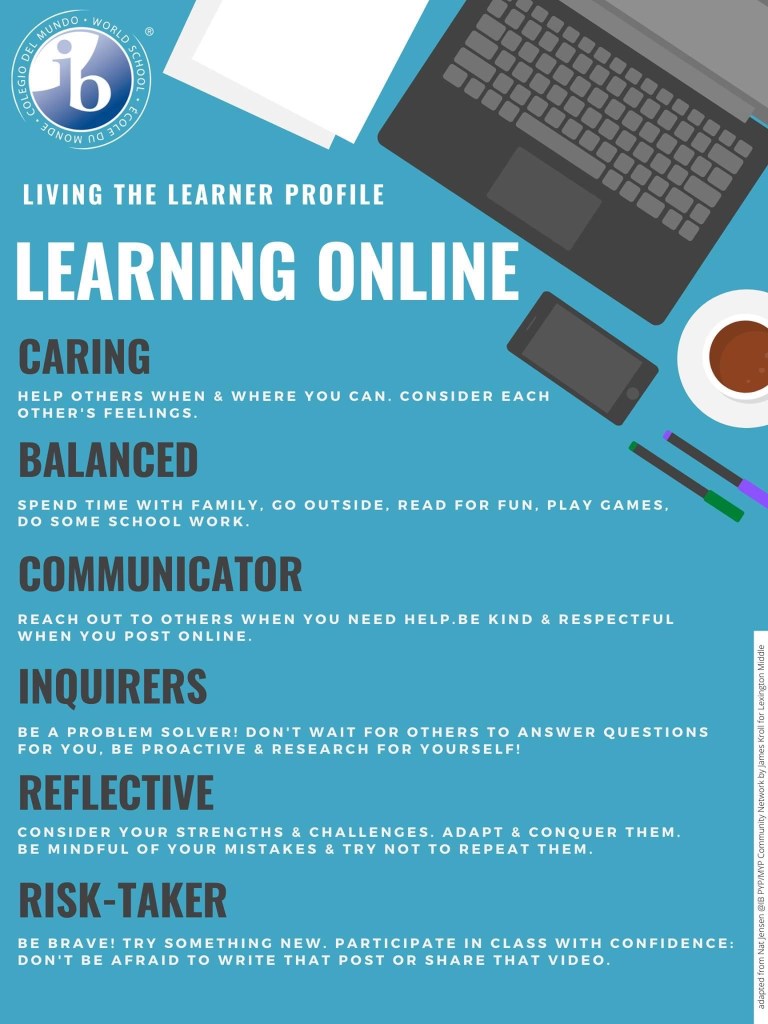
Finding balance (second trait below) with teenagers in the house is a challenge. Their instincts are the game or watch videos, not to be off their devices.

Finding balance (second trait below) with teenagers in the house is a challenge. Their instincts are the game or watch videos, not to be off their devices.


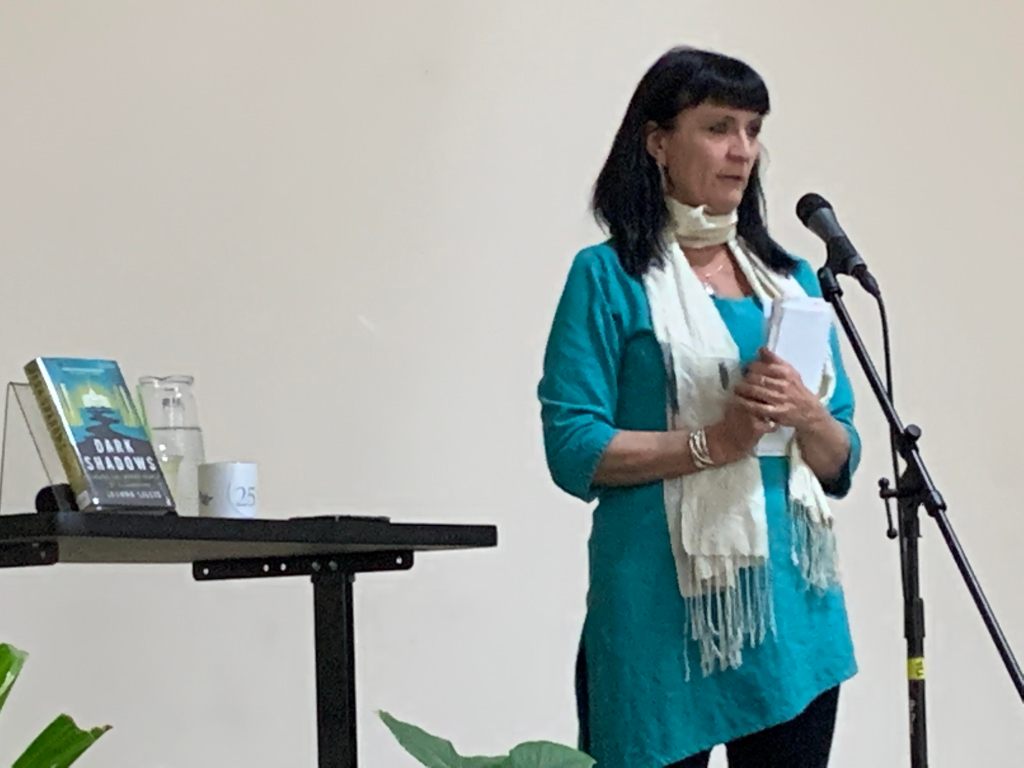
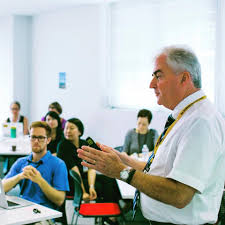
I believe international schools should be a center of exchanging ideas, deep conversations and intellectual study. I loved last night’s talk by The Economist Central Asian correspondent Joanne Lillis hosted by the TIS librarian Susan Waterworth. She talked about political change in Central Asia. She recently got permission to report from Uzbekistan and it was interesting to hear her opinions of the opening up of the country.
The event was well attended with a variety of parents, students, faculty and friends of TIS. There were plenty of questions. It was good for our students to hear the route she took to becoming an international journalist and author. I read her book on Kazakhstan (Dark Shadows) and highly recommend it to anyone wanting to know more about the country. I would like to thank Joanna for finding time in her busy schedule to come to our school and to Susan for organizing and promoting the event.

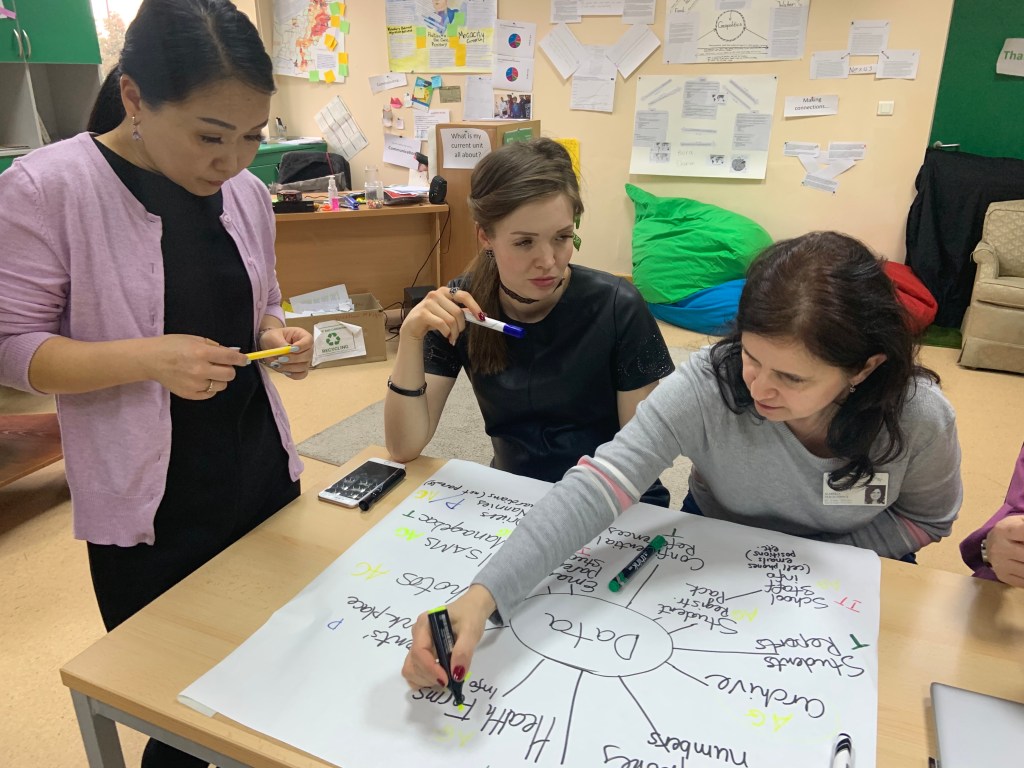
Since returning to the Central & Eastern European Schools Association (CEESA) region, the concept of GDPR (General Data Protection Regulation) has been on my radar. This idea comes out of the European Union and it focuses on protecting personal data. Schools handle much information about students, parents and employees. This includes school reports, photographs, videos, health records, etc. GDPR asks us to think critically about what information we collect, why we collect and how we store and use data.
The TIS Technology Director and TIS technology integration specialist led the administrative staff (business office, secretaries, etc) in raising awareness about the data we have. I realized that as the director, I have a huge amount of information, some of it sensitive. The workshop got me thinking about how I protect school data and data that I might not think as sensitive or confidential, actually is to someone.
I will do the following:
My question I am still struggling with is the handling of videos and photos of students and parents.

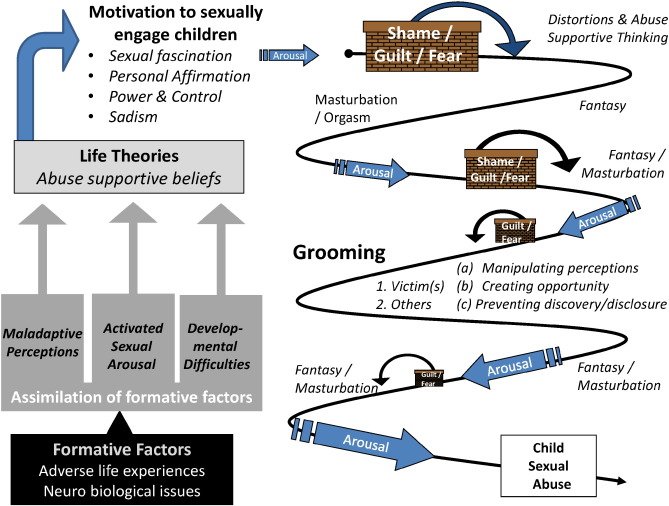
I am attending four days of child protection conferences with the Council of International Schools at the International School of The Hague in the Netherlands. It is a sad topic to be thinking about for the week, but vital for schools to be knowledgable in this area.The workshops raised my awareness of the role and responsibility of schools in safeguarding children. I also am developing a forensic lens when evaluating employees and potential employees to work at the schools I lead. Dr. Sullivan estimates that 3-5% of international school teachers are attracted to children in an inappropriate way with a certain higher percentage that crosses appropriate boundaries in their interactions with students.
Dr. Joe Sullivan is a forensic psychologist who specializes in understanding the motives and methods of child sex abusers. He is a profiler that is called to crime scenes when the police have a suspect in mind. He has interviewed and studied, both in clinical and criminal contexts, hundreds of child abusers. It was a riveting and sad/sickening presentation. He featured interview clips of child abusers to get his main points across. Dr. Sullivan is now a consultant for international schools with his firm, Forensic Solutions.

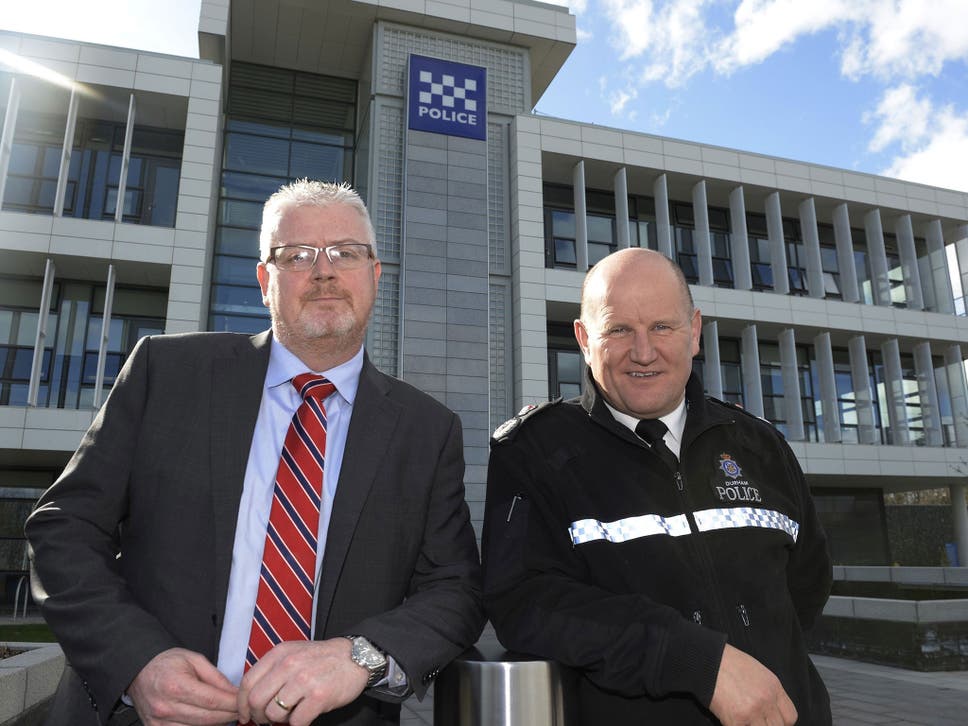
The introductory workshop was followed by a “deep dive” with Dr. Sullivan who was joined by Tim Gerrish, former Scotland Yard detective and member of the CEOP (Child Exploitation Online Protection Center) and Serious Sex Offender unit. He is now an independent consultant that works with international schools on child protection issues. Jane Group Consultant Jim Hulbert also aided Sullivan as we went through several case studies of Managing Allegations of Sexual Misconduct. These were both current and historical, sex abuse cases.

I really think if the subject matter was not so horrible, they would make a great Netflix series. The forensic psychologist (CSI), Scotland Yard detective (Sherlock Holmes) and Chicago lawyer (LA Law) makes a dynamic mix of genres. We had some gripping discussions. Here is a list of takeaways from the two days.
We are trying to find ways to support our faculty and staff well-being. To welcome TIS faculty and staff back from the New Year’s holiday, we have an optional workshop by health & wellness coach, Alejandra Chavez.

TIS University Admissions Counselor and I attended Grand Opening of Webster University’s Tashkent campus program. It is remarkable at the speed that they started with 500 students enrolled in this first semester. Webster University’s main campus is in St. Louis, Missouri, USA was founded in 1915 as a Catholic women’s college. They were one of the first universities to take advantage of the transnational education trend and now have campuses seven different countries and several cities in the USA. They have an NCAA Division I championship chess team and an unusual nickname, The Gorloks, an portmanteau of two streets on their suburban St. Louis campus.

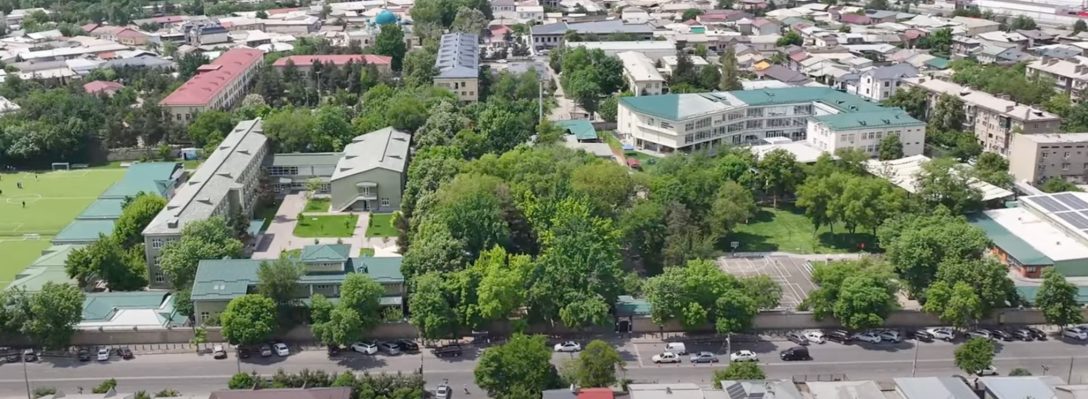
A $3,000 annual tuition is quite an incentive for students to attend. Webster is the first American university to open in Uzbekistan. The students were enthusiastic hosts to Mr. Ross and I and we received a nice tour of the campus. The rooms are modern and we met an American film professor on the faculty. The campus is in a great location, near the canal. Current classrooms are in the former Architecture Institute Building and they have expansion plans. I think it will be a successful venture and Webster is bold to take a chance in an emerging market. Uzbekistan is a young country demographically and there is a lot of bright, young people thirsting for education. My only concern would be if there is enough money here to keep up student numbers as the university matures.
A TIS alumna is the Public Relations Officer for the university. It is great for our students that another option for English language university education is opening in Tashkent. I would like to thank Webster for their hospitality, congratulate them on their success and send them best wishes for continued growth! Go Gorlocks!

The British Council invited me to participate in a roundtable as part of their Study UK Fair 2019. The discussion took place in the beautiful Youth Creativity Palace in the center of Tashkent. “Transnational education” means an educational program that is delivered in a country other than the awarding institution is based. Transnational education is a growing trend in higher education with universities setting up schools in a range of countries. For example, Westminster University (UK) and Webster University (USA) have programs here in Tashkent.
The roundtable started with a presentation by an education minister. He talked about the education reforms taking place in Uzbekistan. The big issue here is a demographic one, with 37% of the population under that age of 19. There are a lot of young people coming up through the school system requiring higher education and jobs. For example, last year over 1 million students applied for only 100,000 places in local universities. The demand here is overwhelming the supply. The British Council is promoting UK higher education and it is the second most popular destination for university study after the USA. Some of the educational reforms taking place here in improving vocational education, creating Presidential Schools that teach STEAM through the medium of English, raising scores into the Top 30 of PISA and revising the university credit system to match international standards. With an economy growing at over 5% per year, it is an exciting time to be here.

There were probably 50 people around the table and most being in education, they love talking. It was difficult to get a word in, but I did get a chance to make one comment that gave the perspective of foreign families living in Tashkent and university admission trends for our school. More of our families are choosing to study in the Netherlands because of the high quality of education, low cost and ease of visa and living in the country. The Netherlands is smart to try to attract foreign students to their country in a time of Brexit and anti-immigration sentiment in the USA, more students are looking elsewhere for higher education in English.

This weekend the directors of member schools of the Central and Eastern Europe Schools Association (CEESA) met in Istanbul for their annual meeting. The goals of the meetings were for the directors to connect with each other, benchmarking our schools and sharing ideas and advice in an open and supportive environment. CEESA is one of eight regional associations supported by the US State Department’s Office of Overseas Schools. The regional associations combat isolation of international schools. CEESA covers mostly the post-Soviet countries and is celebrating 30 years. The major topics were as follows:
Recruiting: We mostly ask teachers to provide their own police clearances and in the case of sexual predators with a record, they would probably forge a document. Some schools are using companies to search social media, financial and legal records and credential checks. These can be expensive. A good idea is to offer “letter of intents” to hire “pending background checks” instead of offering a contract immediately if one is rushed for time at a job fair.
Academic Continuity Plan (ACP): We did a tabletop exercise of a threat to foreigners causing a temporary school closure. The ACP allows for school to continue online. The Tech Director and I drafted a plan that we need to add to our emergency procedures manual.
Advanced Statistics for Education: “Big Data” and analytics is becoming important in many fields such as crime prevention and professional sports. There are CEESA schools experimenting with advanced statistics that I found interesting. One school is looking at the impact of the cohort on student performance. Others are gathering all the learning data of students together and most importantly, trying to get the statistics into the hands of the students.
Learning Spaces: Two directors talked about building projects they recently oversaw. The idea of “learning-focused” school is to move away from boxes (rooms) that belong to teachers and go towards “neighborhoods” students live.
Managing Complex Interactions: The CEESA director, Kathy Stetson gave a workshop on difficult conversations, something that often comes up with leadership. The idea of separating the data or problem from the people involved is useful advice. She also broke interactions into result, of course the best outcome is collaboration, but it also depends on the situation.