Join us for the Russian Cultural Event
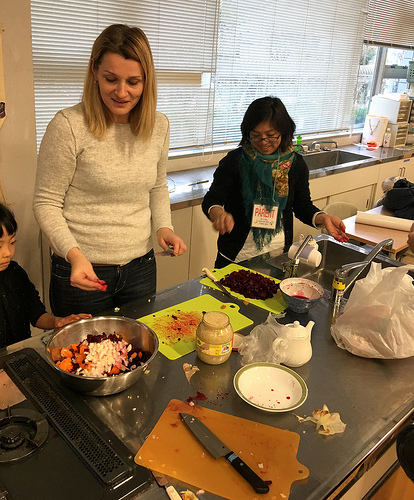
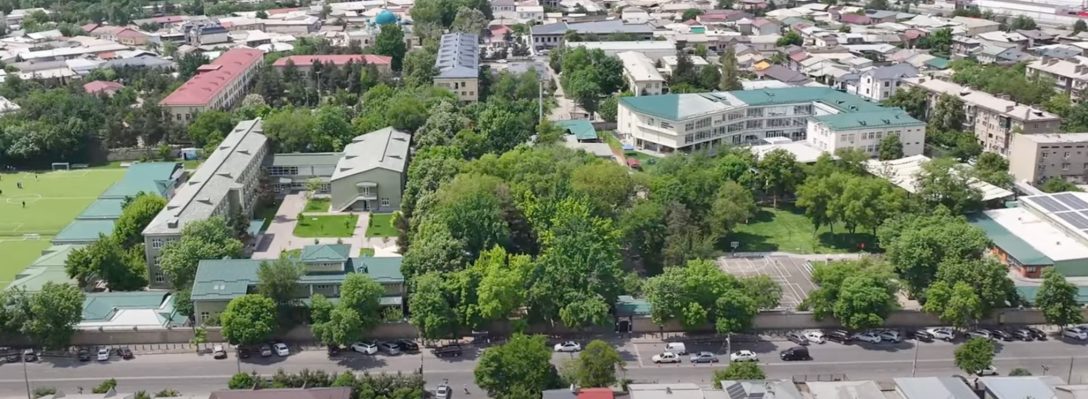
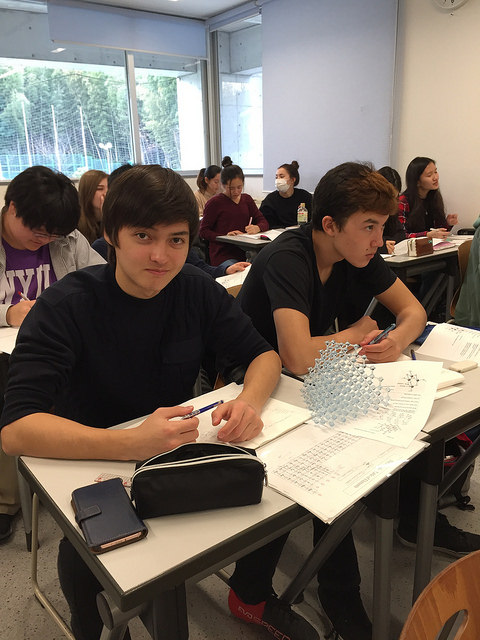
All Senri & Osaka International School parents are invited to attend this Friday January 27 from 4:00 – 7:00 PM in the Home & Family Life room. There will be Russian food, language lessons and discussions of life in Russia. Please RSVP caotani@senri.ed.jp
January 2017 edition of Educator
Read this month’s edition of Educator, a publication from the Osaka International School of Kwansei Gakuin.
Osaka Makes NY Times “Places to Go in 2017” list

Great to see our amazing city of Osaka making the NY Times list again this year!
If Kyoto represents Japan’s spirit, and Tokyo its heart, Osaka is the country’s insatiable appetite. The city’s culinary legacy is alive and at work in the neighborhoods of Tsuruhashi and Fukushima, and in the 91 Michelin-starred restaurants spread throughout the city — like Ajikitcho, specializing in traditional Japanese cooking, and Taian, with a chargrilled focus. On April 28, it will all come together at the International Festival Utage (“feast”), a 10-day food festival, celebrating flavors from Japan’s 47 prefectures.
Read SOIS Tango online!
OIS Career Exploration

High school students got the opportunity to interact with professionals from our community in our inaugural Career Exploration event on December 12, 2016. Seven presenters representing a wide range of occupations, gave talks about what they do and how they got there. The students then had the opportunity to ask questions.
The big takeaway for me was the importance of developing a network of people that can help you. Whether is be knocking on doors in US Congress to find a job, to moving between companies, having the courage to reach out and meet potential mentors or partners is crucial for success in the global economy. Everett Shiina, in sales and marketing for Google, mentioned that our students have a big advantage with a bilingual education and one that foments creativity and critical thinking. Art Tsubaki, CEO of Ipsen, challenged the students to start networking now, and reaching out to the parents of their classmates and develop their Linked In profiles as much as their Facebook profile. Kozo Kimura of I Ware Scanning, has a small company here in Minoh that now works with shoe companies all over the world, from Asics to Nike. He and his team developed the best foot scanning software and equipment. His database of close to 1 million human feet is such an incredible resource. Another takeaway was the frequency people move positions. The days of “lifetime” employment are over and successful people look to move to new challenges many times in their careers.

I would like to the parents and friends who met with the students. I believe that schools should have close relationship with business and professionals. It helps them make better decisions for their own path, as if they don’t choose it, their path will get chosen for them.

OIS Emergency Preparedness

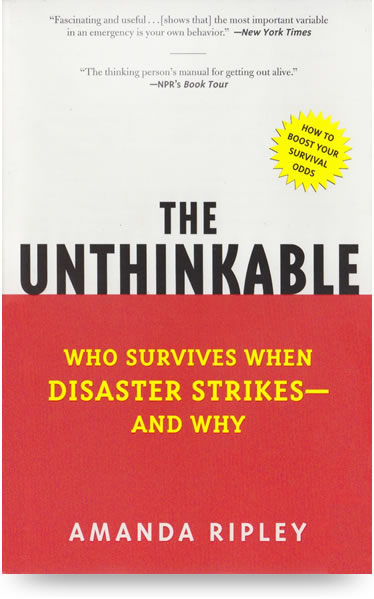
In preparation for our latest earthquake/fire drill at school, I read Amanda Ripley’s “The Unthinkable: Who Survives When Disaster Strikes – And Why“. I highly recommend it as it goes through human reactions during a crisis. From fire to airplane crashes to accidental explosions to floods to the story of the people in the World Trade Center on 9/11, Ripley goes through human psychology during emergencies.
My big takeaway from the book is to make sure the school and my family have practiced what to do so many times, that our actions will be automatic in the event of a real emergency. It is a natural reaction to panic, but if one has practiced the drill so many times, they will usually do what they have been trained to do. This also means having as much information as possible about a building’s safety features, like where the exits are located, location of fire extinguishers, etc. The biggest risk for us in Japan is an earthquake. The basics of taking cover, knowing where to turn off gas/water and moving safely to the nearest emergency shelter, should all be automatic for us. After an earthquake, there is a high chance of fire because of downed wires, so evacuating safely is important. I made a note to install a fire alarm in our house because we have portable gas/electric heaters and to be aware of emergency exits in airplanes and hotels upon entering.
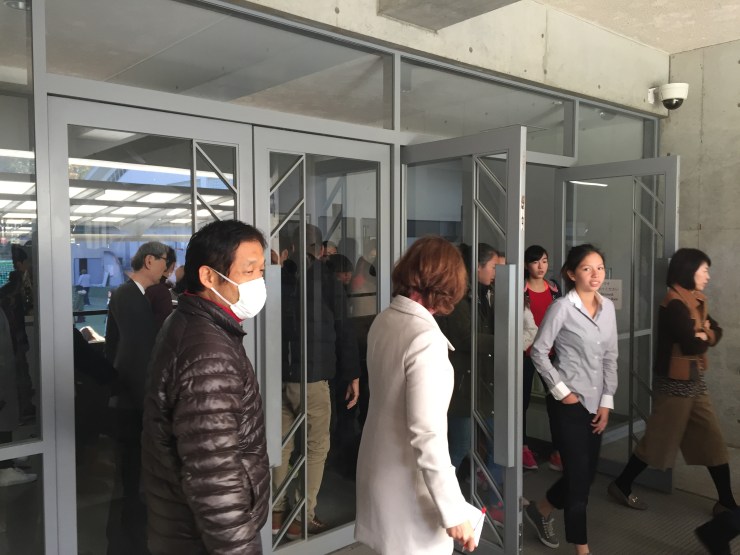
We always have a debriefing after every drill, and with this recent one, we realized that we need to teach people upon reaching a door, how to unlatch the locks on top and bottom to avoid delays of groups. (see photo below) We also need to have everyone quiet on the soccer field so we can take attendance efficiently.

In thinking about risk/safety however, depending on your age and location, the biggest risk we face is heart disease and cancer, the two biggest reasons people die, so a healthy lifestyle and regular wellness visits to medical professionals is the best thing we can do. It It is human nature to focus on rare, dramatic events, but the chances of these happening to a person are very slim. We should treat more common causes of death, like car accidents, with the same attention we do terrorist attacks, because it is a much higher risk to die in a car accident that just about any type of traumatic event.
We are already planning our next drill for the winter trimester which will take place in February 2017. We are also convening a two-school task force to work on improving our emergency preparedness documentation. Note that our wonderful SOIS library also has a copy of Ripley’s book.
OIS Educator: December 2016
Read the December 2016 issue of Educator, the monthly newsletter of the Osaka International School of Kwansei Gakuin.
OIS Community Bulletin December 5, 2016
Read the bulletin online!
OIS Students Perform with Kansai Philharmonic Orchestra & Yamamoto Noh
On Monday evening, Osaka International School elementary and middle school students performed with the Yamamoto Noh Theatre troupe and the Kansai Philharmonic Orchestra in the NHK Hall in Osaka. The performance was part of the East Meets West series which is testing out international groups for a festival in 2020 on the grounds of the Osaka Castle in conjunction with the Tokyo Summer Olympics.
The theme of the concert was “East Meets West”. The idea was for the noh play to be backed by a full symphony orchestra. It was combining major art forms from the 1300s (noh – Japan) with the 1700/1800s (classical music – Europe). The mix was absorbing: the sparse sounds of the drums and flute of noh with the sumptuous full orchestra. The play is about conservation of the rivers and bay of Osaka, was backed by pieces dealing with water, culminating in Strauss’s Blue Danube.
The audience of 1,400 ate up the children’s role in the play, as they brought a light touch to seriousness of noh and the sophistication of the orchestra. It was an amazing evening for our students. The opportunity to perform in such a stunning setting with professional actors and musicians is an experience the children will never forget. A special thanks to the parents who helped prepare the children and Yamamoto noh theatre troupe and the Kansai Philharmonic Orchestra.
<a data-flickr-embed=”true” href=”https://www.flickr.com/photos/billkralovec/31055598541/in/photostream/” title=”kansai philharmonic”><img src=”https://c6.staticflickr.com/6/5794/31055598541_f337dd3c09.jpg” width=”500″ height=”375″ alt=”kansai philharmonic”></a>//embedr.flickr.com/assets/client-code.js
Yamamoto Noh Theatre is working to make noh more accessible to a modern audience. After the performance I spoke with Petko Slavov, a Bulgarian PhD in ancient Japanese theatre, and his company, Okina makes digital content, like apps and games that teach ancient Japanese culture. They also help Yamamoto make school visits and noh workshops. We hope to have them come visit in the spring.