
Afghan Cooking & Culture

27046268642_c0fc77d5ff_z

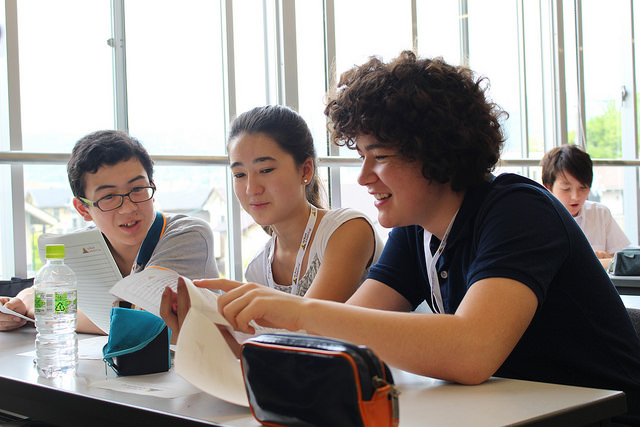
Over 20 people attended the session hosted by Abdul Shukoor Popal. He is a graduate student at Osaka University and has been a substitute teacher at OIS and worked in the Saturday School. He is a professor of mining economics in his home country. We learned how to prepare and make dishes from both eastern and northern Afghanistan. The raisins and carrots mixed with chicken in jasmine rice was my favorite. Besides learning some interesting recipes, we all had a good social time after a busy week.

27046263142_99b1ff7e38_z
Abdul (left) with MS/HS principal Kurt Mecklem

Abdul’s presentation really brought home to almost 40 years of war the country has endured. He showed a more human side of daily life in the country, things you don’t often hear in the news. It was so sad to hear that he lost four uncles and his father in the 1980s wars. I can’t fathom the amount of damage done to the country after so much violence and unrest. He left us on a hopeful note pointing out the energy and enthusiasm of the youth of Afghanistan. Abdul is working on constructing a private, international elementary school based on what he has seen at SOIS. He said schools are respected by all groups in the country as they recognize the need for educating the populace. He is also supporting the many NGOs working in the country and showed us the example of how much a cow can do for a family.

We raised 42,000 Yen with donations from the evening. Thank you to the people who came and attended and to Abdul for sharing his experiences and expertise with us!

Less Children in Japan

Update: May 9, 2016 – I saw this in this morning’s paper:

The number of people skiing or snowboarding in Japan peaked at 18 million in 1998. The figure fell to less than a half of that number, 7.7 million, in 2013 due to the declining birth rate and the graying of Japanese society.

A survey by the tourism agency in fiscal 2010 found that people in China, South Korea and Australia prefer skiing and other winter sports rather than golf, mountain climbing and marine sports when they travel to Japan.

I read this news item in the Japan Times today, “Number of Children in Japan Declines for 35th straight year to hit record low”. There are 8.22 million boys and 7.82 million girls under the age of 14 which is only 12.6% of Japan’s total population, which is also an historic low. 150,000 less babies were born this past year than young people turned 15 which caused the decline. In looking at the 12-14 year old numbers versus 0-2 year old numbers, there are about 360,000 less in the younger group, which signals a further decline. The only prefecture (of 47 total) that recorded an increase in births from the previous year was Tokyo and that indicates young workers are moving there for jobs.

Seeing this population trend as an educator in Japan, this does not bode well for schools here. Less students means overall declining enrollment and schools need to consider either downsizing or trying to lure international students, which many universities are now doing. Our school is seeing an increase in enrollment but we are not dependent on the local population as Article I and public schools are. I see increased competition for students and schools closing in the near future.

In looking at the country as a whole, the 126 million today will be reduced to 116 million in 15 years and looking longer term, down to 87 million by 2060, if the rate of decline continues. That is still super crowded compared to California, which is roughly the same size as Japan, but has only 40 million people. The less people are good in one way, but with a high percentage of who is remaining elderly, it will cause a lot of problems in caring for them. Many villages and rural towns and cities will depopulate or even disappear. The government needs to put in measures to encourage families to have more children, increase immigration (without disrupting the unique culture of the country) and find opportunities for the elderly to contribute to society.

World Scholar’s Cup Kansai Round 2016

26181727604_69a16b33f5_z
OIS students confer on the team test event of WSC

We are hosted the Kansai round of the World Scholar’s Cup 2016 yesterday. The top students in this round will go on to global round next month in Bangkok. I was an adjudicator for the debates which I really enjoyed. Debating is so good for students. They are given a resolution and then have to research and put together a logical argument in short amount of time. Teams need to work together and think on their feet to rebut the opponent.Probably the best aspect is practicing presenting oneself and public speaking. Each debate team member makes a 4-minute speech outlining their position and rebutting the previous speaker from the opposite team.

26198141253_cb4467dcc2_z
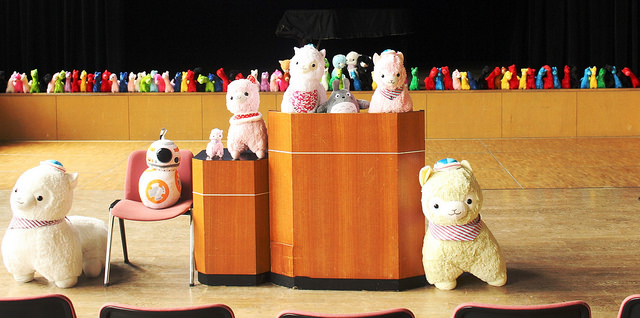
An alpaca is the symbol of WSC

The students also enjoy the humor the organizers use in the knowledge bowl portion of the event. The mascot of the event is an alpaca and they really play this up, to the delight of the students. They also use many pop culture references in teaching points. WSC also works on integrating students from different schools, so unlike sporting events, OIS students form close relationships with students from other schools which is really good.

Thank you World Scholar’s Cup for providing this experience for our students and we are looking forward to participating in the global round in Bangkok.


Testing Culture in East Asian Education

gettyimages-507161068_wide-026aec2cb0316b83d2c4f6a3a7abec4ea74557fa-s800-c85

This news story from National Public Radio captures accurately the testing culture in schools and Korea and Japan. The idea of a test to screen applicants to a business seems unusual, but I think it fits well with the Confucian-values that underlie culture in East Asia. In Japan, junior high schools (grades 7-9), high schools (grades 10-12) and universities use school-specific entrance exams to determine who gets to enroll in their institution. The pressure on young people is tremendous and a “cram school” industry has grown to soothe the anxieties of parents wanting the best for their children. Classes in the evenings and weekends are tailored for each school the students want to enter and studying for the entrance exams begins up to 2 years in advance of the test. Some of our students with ties to Japan balance this with their IB programme. I admire the value Japanese families put on education and the respect educators receive is one of the nice things about working in a school in Japan.

I see the appeal of working at Samsung regarding salary and prestige, but the extremely long working hours and rigid hierarchy  of the working environment would burn me out quite quickly.

Elementary School Celebrates Earth Week

The elementary students in all grades were very busy this past week with events promoting conservation of the earth and reducing human impact on the environment. This included performing a play about saving a rainforest tree, not using electricity for an hour, encouraging people to reduce their use of plastic bottles and bags, celebrating trees, etc. The grade 1 students did a school community service announcement on SOIS News Station to encourage students to recycle their PET bottles and caps.


I really sense that the ideas of sustainability and becoming more earth friendly in our lifestyles resonated with both students and teachers. We plan to do more in these areas at SOIS.

One note, the video ends with a Japanese version of “rock, scissors, paper” which is a tradition with SNS and a positive way to start the school day.