Grade 8 Algebra?

This has been a hot topic in US schools for year. I really noticed this when I took a summer course through Independent School Management about 5 years ago. All of the administrators were talking about the implications of offering algebra in 8th grade. This article from Education Week   discusses two studies in California and North Carolina. In the US, the percentage of students taking algebra in grade 8 rose from 16 percent in 1990 to 31 percent in 2007. The studies are questioning the value of offering algebra at such a young age. An excerpt from the California study:

They found that, for the nearly 2,400 students who performed in the lowest 10 percent on state math tests at the end of 7th grade, taking algebra in 8th grade had no significant effect on their state math-test performance at the end of 8th grade. And it caused their average GPAs to drop 7 percent, about the difference between a C and a C-minus.

“What we can see is there’s a potential harm to a low-performing student on the GPA,” said Mr. Taylor, the lead author of the study. “It’s pretty important. The grade point average [is what] parents pay attention to, teachers pay attention to—it’s actually more salient to the kids than math [state tests]. So there’s clearly academic harm in the short term.”

An an excerpt from the North Carolina study:

the Duke researchers found that even moderately math-proficient students in Charlotte-Mecklenburg who were put into early-algebra classes performed significantly worse on state end-of-year math tests. Moreover, initially low-performing students who took Algebra 1 in 8th grade were significantly less likely to take more-advanced math courses, such as Algebra 2 or geometry, later.

My take-away from the articles is that students can succeed in algebra in grade 8 if they have the proper preparation leading up to the class. A policy of everyone takes algebra in grade 8 is not good for those students who are not ready. It is important for school districts to integrate algebra concepts earlier than grade 8 for their students. At ISB, we don’t use the US-based “pancake stack” approach of mathematics, where a student will study in sequence, a year of algebra, then geometry, then algebra II/trigonometry, and finally if they are ready, calculus. The IB math curriculum integrates all the disciplines every year in a spiral approach, each year introducing the concepts from all math areas in increasing depth.

In grade 8 we differentiate in mathematics by offering a standard and extended program. I think this approach agrees with the studies in the article. For the students that are ready and able, the algebra is presented and for those students that are not ready, then the skills and knowledge gaps are covered in the standard.


Examples of Good Teaching

In my classroom observations, I like to highlight good teaching techniques and ideas. In my observation this morning of a grade 9 Humanities class, Ms. Shannon Moore demonstrated excellent organization. This is a good model for all teachers and the purpose of this post is to demonstrate this.

I would like to have this be a standard practice in the classroom. Perhaps I can work for next year to have this be put in the 2012-2013 in the expectations section. Here is what I liked about her structure.

1) Daily Agenda – A plan for the class period was on the screen. I copied it from her Moodle page.

Apr 16, 2012 10:52 PM 

1)  Listen: Pink Floyd’s Another Brick in the Wall
2) A Declaration of Independence     – brainstorm & quick write     – watch: John Adams Liberty Will Reign and Declaration of Independence     – surveying and making predictions about the text     – key vocabulary     – assign reading parts     – watch model of choral reading: Declaration of Independence
3) Hand-in Jefferson summary next class!

2) I liked that she had a homework/reminder section on her white board. She also put up the date and day number in our cycle.

And finally, she also posted the Unit Title, the Area of Interaction address, the main unit objective, and other objectives for the unit as well. She had these for all three units she is currently working on.


Visual Arts Exhibition

Anđela and Ms. Stafford Enjoy the Exhibition

Last night I had the honor of introducing the artists at our annual Diploma Programme Visual Arts Exhibition. Eight seniors exhibited their work at the Center of Cultural Decontamination Exhibition Hall in anticipation of the IBO Examiners’ visit this weekend. They need to explain and defend each piece of art.

My big take-away from the event was the personality of each student clearly shows through their artwork. Below were my impressions from each student-artist that I used in my speech.

  • Siir – impressive notebook, scientist/artist
  • Marina – loud, daring, sports
  • Nevena – introspective, quiet but surprising
  • Anđela – feminine, flowers
  • Aleksandra – well-researched, strong identity
  • Rakel – empathetic, social justice issues
  • Petar – fun and engaging
  • Kristina – opinionated
Student-Artist Siir


Another point I would like to make is the fact that an expert comes from outside the community to assess each student’s work, is so important. The students put much more energy and time into their artwork knowing they will not only be assessed by the IBO, but also they will display their work in a downtown gallery.

A few points to improve next time are as follows:

  • Make and enforce a dress code for the student-artists.
  • Get more people to the exhibition, whether with an ISB bus or have a mini-exhibition on school grounds. Perhaps some of the work can be displayed at the graduation Commencement in May.
Petar's Green

Labyrinth

Latest Reading: Columbine

I just finished Dave Cullen’s book on the shooting at Columbine High School in his book, Columbine. I saw it in the discount bin in Barnes and Noble and bought it for the plane. Cullen is a reporter for the New York Times and put years in researching the investigation and interviewing people involved. If you recall, in April of 1999, two students murdered 13 of their classmates at Columbine High School in Colorado, USA.

A few take-aways from the book.

  • It is very easy to buy guns, bullets, and other weapons in the USA. The two boys bought guns at these trade shows in Denver and found 18 year old friends to get weapons.
  • I also of course, sympathized with the principals of the school. The lasting impact of something like that happening at a school are devastating. Not only in the immediate afterwards, but in years following.
  • There were so many missed opportunities to intervene and stop the boys from doing this. From the gun shop calling the parents’ home with “your bullets are in” to a violent, creative writing piece one of them turned in for an assignment. That is the way it always is in these tragedies, but it takes someone going the extra step.
  • The media coverage and myths arising from the event were grossly wrong and misleading. Cullen really did his homework to give a true portrayal of what happened and why.
  • The police SWAT teams changed their strategy after this event, moving from a wait-and-see secure the perimeter, to actively search for the perpetrators and subdue them.

Overall an interesting read with relevance to every administrator. I recommend the book, especially for Cullen’s writing on the family background of the two boys and their rationale.


We Did It!

The 2012 Boys' High School Basketball Central & Eastern European Schools Association Champions - Riga, Latvia

It was a wonderful three days of basketball and our team took back the title this year. The kids came up big when they needed it most, defeating the American School of Vilnius, Lithuania, 60-55 in the finals.

CEESA Boys’ High School Basketball Championship

I am blogging from Riga, Latvia at the CEESA (Central and Eastern Europe Schools Association) Basketball Championships hosted by the International School of Latvia. I am coaching our team. I like to “keep it real” by working with the students as the teachers do, “down in the trenches.” I think administrators sometimes get out of touch with the daily concerns of teaching and learning. It makes me a better principal. I also strongly feel the benefits of extra curricular activities. All of them, not just sports, are so good for kids. At our school, with its transient population, the teams and clubs get kids to buy in to the school and feel closer to the community. It is especially important for teenagers, as it is difficult to move schools and make friends. A student that loves acting or is a good athlete, can really cement their positive feelings about a school, which will result in more engagement in the classroom. It also sets us apart from other international schools in Belgrade.

International School of Belgrade versus the Pechersk International School of Kiev.

Below are the scores from the week so far. I’ll post more when the tourney is over.

Belgrade 36 – Vilnius 42

Pechersk 21 – Belgrade 45

Helsinki 40 – Belgrade 41

Belgrade 39 – Latvia 34

Records after Day 2 – Vilnius 3-1 / Belgrade 3-1 / Latvia 3-1 / Pechersk 2-2 / Helsinki 1-3 / Sofia 0-4

Alliance For International Education

During the Council of International School Recruitment Conference in London, I attended a workshop put on by the Alliance for International Education (AIE). AIE is non-profit organization whose purpose since it was founded in 2002 is to bring educators together to discuss and promote international education. They are most well known for their biennial conferences, the next one in November 2012 in Doha, Quatar.

The workshop yesterday was entitled, “Positioning Schools for the Future” and the key question was how can we position our schools so that they are prepared for the next decade. Below are my notes from the presentation and our group discussion.

Learning – This is our “customer service” component, it is what the kids come to our schools to get. The three bases of learning are knowledge, skills, and understanding. He made the provocative idea that the most important of the three are skills. Skills are the most stable and the attributes of our students are developed through skills. Because our knowledge base is expanding with modern communication, students can learn it themselves and we need to prioritize what is important, and sometimes that is hard for teachers who are so passionate about their subject. He said understanding is the least important because we can control how students’ brains comprehend and it is very fluid, with everyone having a different understanding.

Dispositions – What are the dispositions we want to nurture in our students? The group concluded that a variety of experiences to develop adaptability and resilience in our students is the most important. The students we have in school today will be retiring in 2065. What will the world be like then?

Resources – He gave the anecdote of Dr. Ed Ladd of the American School of Doha, giving a speech in front of his faculty. They were celebrating the completion of a new state of the art auditorium. The Persian Gulf region schools are very resource rich. Dr. Ladd said, “So?” He was referring to the point that glamorous resources don’t mean the students will automatically learn. It comes down to the human element, the teachers.  Another resource I never thought of is time! One group discussed shortening the day so more could be done with community service and adventure/team building activities with students. Looking at it in a sustainable society, what is the least we need to get the most learning? 

Leadership and Management – Leadership styles change with the context of the school culture and leaders must change their style to what works best for a particular school. A good quote, “It struck me I was most effective when I knew what I wanted.”

Curriculum – I’ve heard a lot of definitions of curriculum and his was a “contract with the teachers’ brain.” It is a challenge to get a coherent curriculum, especially with teacher transiency, but it is important for adolescents’ brains.

It was great to have a time to think of the big ideas with out the rush of daily administrative duties. Thanks to CIS and AIE for organizing this workshop.


Photographs of Middle School and Gymnasium Construction

View of Gymnasium from the Gallery

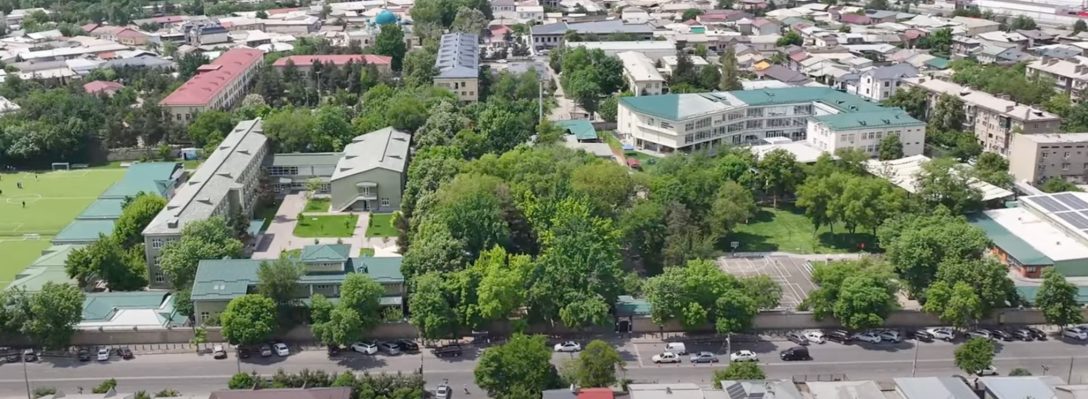
My first day back on the job earlier this week I took a tour of the construction. I snapped a few photos for everyone to see how the construction is proceeding. I was very impressed with the progress made throughout the summer. The view from the gym roof (tennis/basketball courts) is amazing with a 270 degree view of New Belgrade to Kosutnjak Park. The expansion of Pushkinova Street next to the school has also greatly changed the nature of the neighborhood. Below are a couple of more photos and you can see more on the ISB 2011-2012 Flickr Set which can be seen on the bottom of the Secondary School web page on the school web site.

View of MS Building from Gymnasium Roof


Science Laboratory


John Dewey: The Father of Progressive Education

John Dewey's Epitaph - Burlington, Vermont

While studying at the University of Vermont this summer, I went and visited the grave of John Dewey (1859-1952). He was an influential leader of American education and his philosophy of education is still relevant today. He graduated from the University of Vermont and his grave is in the courtyard of the Ira Allen Chapel on campus.

Dewey was one of the first to propose “progressive” education. This means to educate young people to be change agents in a democracy.

From their inception in the 1830s, state systems of common or public schooling have primarily attempted to achieve cultural uniformity, not diversity, and to educate dutiful, not critical citizens.”

Progressive education promotes a respect for diversity and the development of critical, socially engaged citizens. Dewey in his lifetime saw the decline of small enterprise and community life. This is still true today.

Today, scholars, educators and activists are rediscovering Dewey’s work and exploring its relevance to a “postmodern” age, an age of global capitalism and breathtaking cultural change, and an age in which the ecological health of the planet itself is seriously threatened. We are finding that although Dewey wrote a century ago, his insights into democratic culture and meaningful education suggest hopeful alternatives to the regime of standardization and mechanization that more than ever dominate our schools.

The excerpts above are from the University of Vermont’s page on progressive education. Below is the chapel on the campus.

For Students, Unconventional Ways to Earn Course Credit – NYTimes.com

For Students, Unconventional Ways to Earn Course Credit – NYTimes.com.

There is a NY Times article about how NY schools are getting creative in times of budget cuts in awarding of graduation credits for alternative forms of classes. These include experiential classes offered by non profit organizations, for example a sailing class by the Hudson River Community Sailing Group. The article points out that individual principals at schools can determine what type of course constitutes a credit.

But exactly what qualifies for credit depends on the principals of the city’s 400-plus high schools, though they must follow certain state requirements, like the number of hours logged in class and evidence of student work and progress. And in an era of budget cuts in which both space and staffing are scarce, more and more students are earning some credits in unconventional ways: on Saturdays, in online courses, through independent study and in things like sailing that used to be considered extracurricular.

It is also interesting to see the graduation requirements of NY Schools. Ours are slightly less inclusive, most likely because of the international nature of our school and our transient student population. We have students come to us during their high school years from a variety of school systems, languages, and countries.

By the end of this week, some 51,000 seniors will have graduated from New York’s public high schools, each with a minimum of 44 credits broken down in a formula guidance counselors know like a mantra: eight each in English and social studies; six each in science and math; two each in art and foreign language; four in gym; one in health; seven for electives.

At ISB we are just starting to look into alternative means of earning credits. For students that fail courses or miss due to absences, we offer the University of Missouri Independent Study  courses. We also offered on line Spanish last year, produced by Pamoja Education, which is officially certified by the IBO. We are expanding this by adding Business and Management for 2011-2012.