Covid-19 Reading: A Corona Corps and more interesting ideas

I am reading, listening and watching as much as I can information about the coronavirus and its spread. Elemental by Medium, a science-backed health and well-being online publication in an article titled, “If the Coronavirus is Airborne, what does it mean for us?” refers to early studies possibly showing that crowded indoor environments like restaurants, homes and public transport readily transmit the virus and there have not been any confirmed outdoor spreading of the virus. However, everything with this virus has been complicated. My takeaway from the article is to make sure we are physically distancing and keeping our distance from each other.

While the images from spring break in Florida were used to tarnish Generation Z as irresponsible and selfish, the truth is that most young people did exactly what was asked of them—despite the fact that they are at relatively low risk of a serious case, let alone a fatal one. Leaders called on citizens to self-isolate to flatten the curve. And the class of 2020 listened. Generation Z is doing its part, for everyone, simply by staying home.

“The Next Great Generation” The Atlantic, May 7, 2020 Julian Zelizer

The excerpt above is from Princeton University Professor’s article in The Atlantic. He highlights the sacrifices the Class of 2020 is making, even though their age cohort is not really affected by this coronavirus.

One of my favorite authors and podcasters, Scott Galloway, a marketing professor from New York University suggests forming a Corona Corps, similar to the Peace Corp. These young people would be put into service, helping with contact tracing, food and medical deliveries, administering testing, etc. He thinks that taking a Gap Year would be beneficial as they would serve something bigger than themselves instead of most likely, attending online university classes in the fall. The Corps would be an army of young people, unaffected by the virus that could help society get through this pandemic.

Dr. Galloway is a big proponent of a Gap Year, especially for young men who mature slower than women. He reaffirmed what I already knew, that for many young people, an emotional, life-changing experience focuses what you and what you really want to do with your life. The key is to find that experience for the gap year. For me, it was going abroad for the first time at age 25 to teach in Colombia that helped me find my true vocation. I would have preferred to do this at an earlier stage.

“The welfare of your School Community: An aaie Webinar

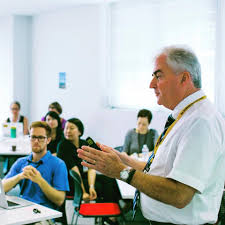
Dr. Robert Evans addresses our AAIE Zoom Cohort yesterday

Having lived through a major earthquake during my time as a school director in Japan, I always see a silver lining in disasters. One of the positives to come out of this global pandemic is the Association for the Advancement of International Education’s helpful and insightful webinars. They are connecting international school leaders from all over the world to share ideas, discuss common challenges and help each other. Yesterday’s webinar featured one of my education gurus, Dr. Robert Evans. He was giving his advice with his work partner, Dr. Michael Thompson on how to deal with tragedies in schools. The Boston-area educational psychologists have worked with many schools after 9/11, a sex scandal, deaths of students, etc.

Their main message was the 4 Cs and 1 E of leadership in the time of crisis.

  • Courage – The community wants to see their leaders during times of crisis act with calmness, focus and facing the problems head on.
  • Connection – The head of school is the architect and overseer of connecting within a community.
  • Candor – Always give people the truth and people prefer blunt honesty, even if they disagree with it, rather than someone they think they agree with, but in the end, cannot trust.
  • Clarity – A leader needs to decide what is negotiable, what people can give feedback and what is the decision of the leader alone.
  • Empathy – It lowers the anxiety level of people when leaders listen to their colleagues. Dr. Evans is a master of this.

Economist JOurnalist Speaks at TIS

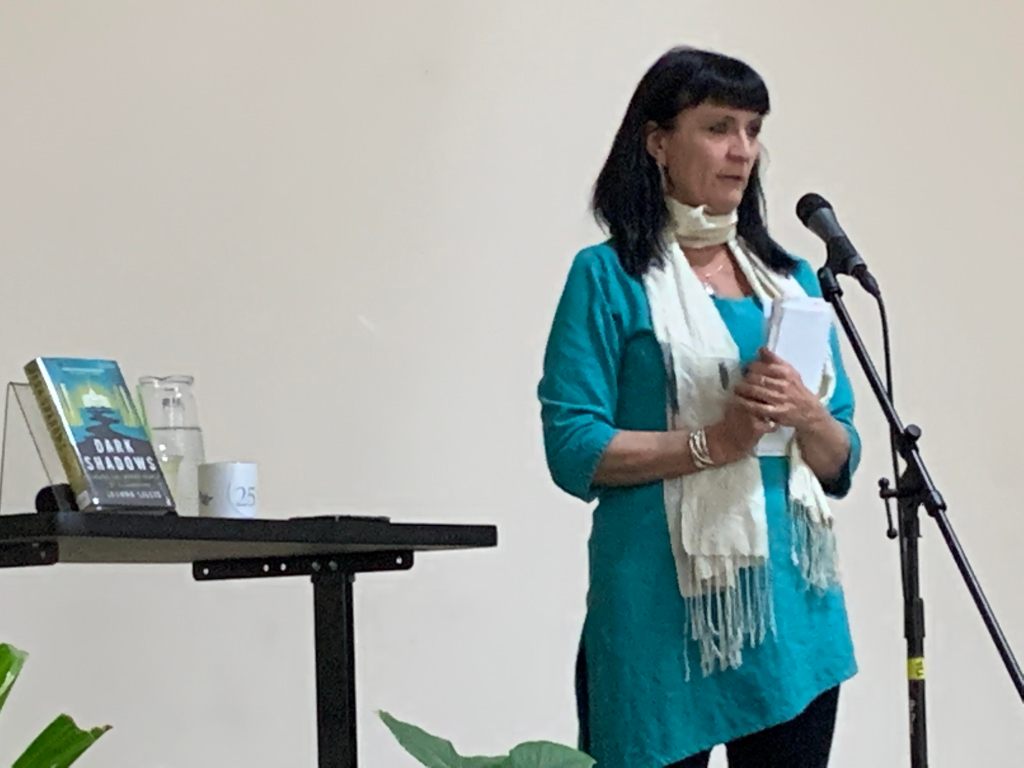
Author and journalist Joanne Lillis

I believe international schools should be a center of exchanging ideas, deep conversations and intellectual study. I loved last night’s talk by The Economist Central Asian correspondent Joanne Lillis hosted by the TIS librarian Susan Waterworth. She talked about political change in Central Asia. She recently got permission to report from Uzbekistan and it was interesting to hear her opinions of the opening up of the country.

The event was well attended with a variety of parents, students, faculty and friends of TIS. There were plenty of questions. It was good for our students to hear the route she took to becoming an international journalist and author. I read her book on Kazakhstan (Dark Shadows) and highly recommend it to anyone wanting to know more about the country. I would like to thank Joanna for finding time in her busy schedule to come to our school and to Susan for organizing and promoting the event.

Annual GDPR Training

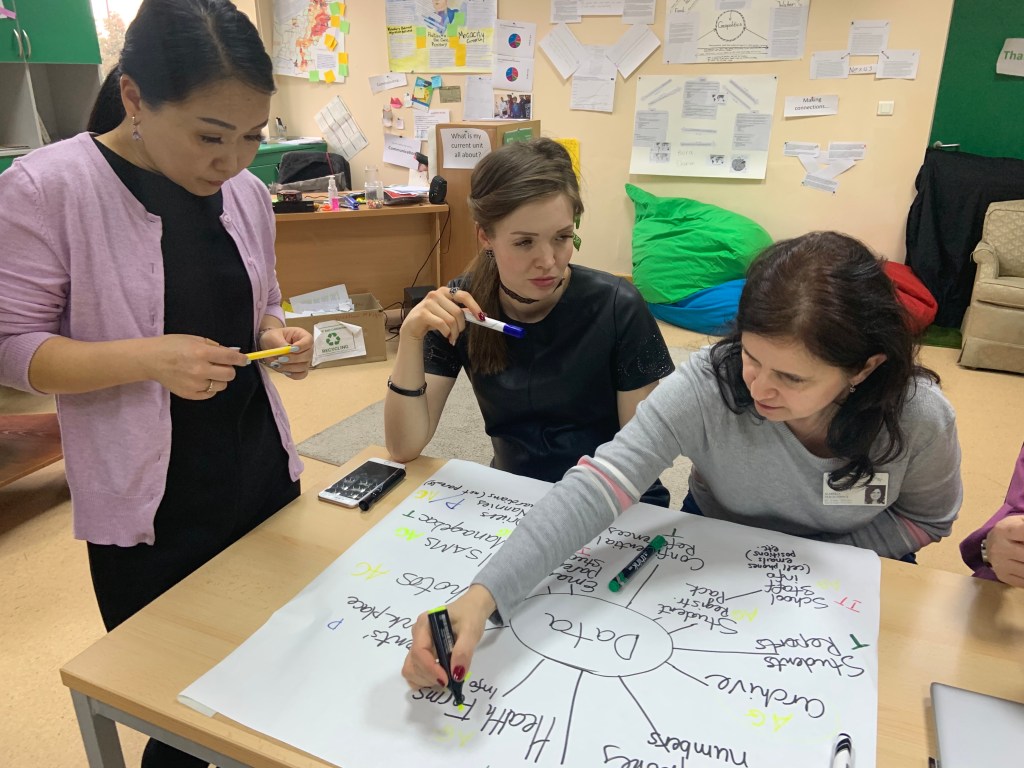
Office Staff GDPR Training

Since returning to the Central & Eastern European Schools Association (CEESA) region, the concept of GDPR (General Data Protection Regulation) has been on my radar. This idea comes out of the European Union and it focuses on protecting personal data. Schools handle much information about students, parents and employees. This includes school reports, photographs, videos, health records, etc. GDPR asks us to think critically about what information we collect, why we collect and how we store and use data.

The TIS Technology Director and TIS technology integration specialist led the administrative staff (business office, secretaries, etc) in raising awareness about the data we have. I realized that as the director, I have a huge amount of information, some of it sensitive. The workshop got me thinking about how I protect school data and data that I might not think as sensitive or confidential, actually is to someone.

I will do the following:

  • set my sleep password on my computer to 1 minute from 5 minutes
  • reconsider what we collect in teachers’ personnel files and where that information is kept
  • I will go back to my iPad instead of a regular notebook. I take a lot of notes during my meetings, conversations, work and if I ever lost this notebook, it might be harmful.

My question I am still struggling with is the handling of videos and photos of students and parents.

Understanding Child SEx Abusers & Managing Allegations of Abuse

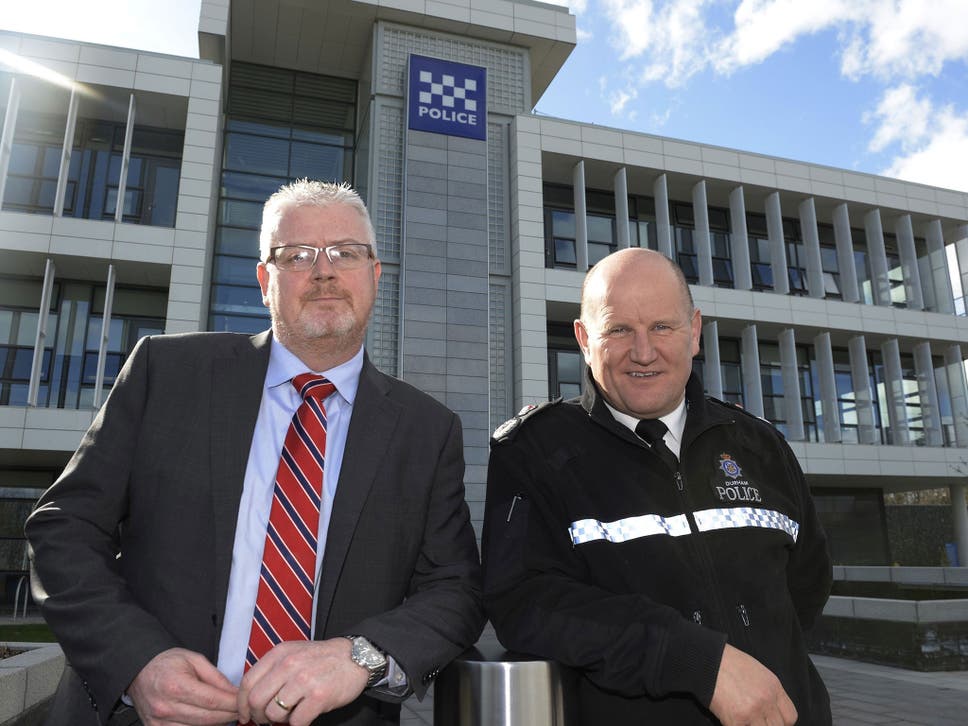
Dr. Joe Sullivan (left) trains police, educators, businesses, etc. (photo courtesy of The Independent)

I am attending four days of child protection conferences with the Council of International Schools at the International School of The Hague in the Netherlands. It is a sad topic to be thinking about for the week, but vital for schools to be knowledgable in this area.The workshops raised my awareness of the role and responsibility of schools in safeguarding children. I also am developing a forensic lens when evaluating employees and potential employees to work at the schools I lead. Dr. Sullivan estimates that 3-5% of international school teachers are attracted to children in an inappropriate way with a certain higher percentage that crosses appropriate boundaries in their interactions with students.

Dr. Joe Sullivan is a forensic psychologist who specializes in understanding the motives and methods of child sex abusers. He is a profiler that is called to crime scenes when the police have a suspect in mind. He has interviewed and studied, both in clinical and criminal contexts, hundreds of child abusers. It was a riveting and sad/sickening presentation. He featured interview clips of child abusers to get his main points across. Dr. Sullivan is now a consultant for international schools with his firm, Forensic Solutions.

  • Many abusers get caught through downloading child pornography. Dr. Sullivan stated that 80% of these abusers have committed a sexual contact offense before being caught.
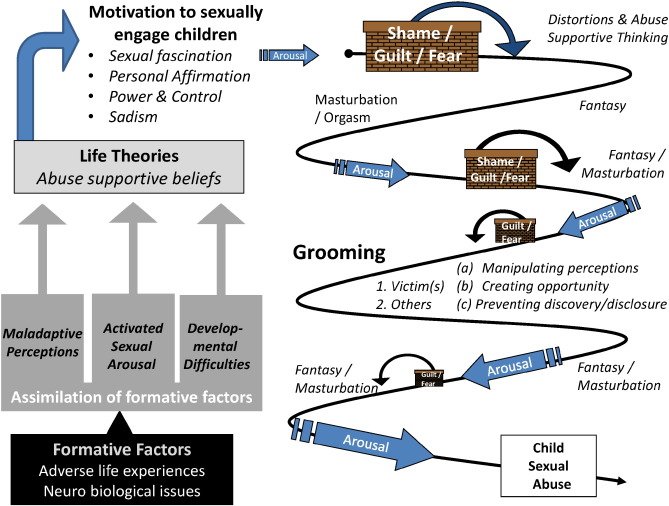
  • A sexual interest in pre-pubescent children emerges around 12-13 years old. Dr. Sullivan presented his “spiral theory” on why some people develop an attraction for children. He thinks that it is not a genetic component, but how certain people make sense of childhood experiences.
  • The vast, vast majority of child abuse is never reported and most abusers never get identified or convicted. Therefore, police background checks will only catch a small percentage of abusers (5% of 7%). Dr. Sullivan suggests schools do “integrity screening” and ask prospective employees child safeguarding questions with a lie detector test.
  • It is good for school personnel to “think like an abuser” to look for signs of child abuse. In one case, a custodian set peepholes in bathrooms, playgrounds, changing areas to video children and later share in the dark web of child pornography.
  • Child abusers groom children to coerce them not to disclose to other adults.
  • 48% of child abuse is perpetrated by children.
Sullivan’s Spiral Theory

The introductory workshop was followed by a “deep dive” with Dr. Sullivan who was joined by Tim Gerrish, former Scotland Yard detective and member of the CEOP (Child Exploitation Online Protection Center) and Serious Sex Offender unit. He is now an independent consultant that works with international schools on child protection issues. Jane Group Consultant Jim Hulbert also aided Sullivan as we went through several case studies of Managing Allegations of Sexual Misconduct. These were both current and historical, sex abuse cases.

Tim Gerrish works with schools on their child protection policies and procedures

I really think if the subject matter was not so horrible, they would make a great Netflix series. The forensic psychologist (CSI), Scotland Yard detective (Sherlock Holmes) and Chicago lawyer (LA Law) makes a dynamic mix of genres. We had some gripping discussions. Here is a list of takeaways from the two days.

  • There are five mandates in a sexual misconduct case for a school 1) protect victim 2) find other victims 3) notify law enforcement 4) fair process for the alleged perpetrator
  • When receiving allegations, try to get a first-person account in writing and signed, if not, then a third-person account.
  • Have a paper trail with the investigation, put on paper and store in the head’s office safe. Also include an event log with the rationale of why or why not the school acted in a certain way.
  • Communication is the key, clear letter with enough details, no interviews with media, give talking points to employees, “as said in the letter”. We will share what we can, when we can, when the inquiry/investigation is finished. There are four lenses to think about optics, the Moral (#1), Legal (#2), Reputation (#3) and Media (#4).
  • Warren Buffet says that it takes six years for a business/school to get back its reputation if it mishandles a child abuse case.
  • A challenge for international schools is mobility. Teachers and students move frequently all over the globe.
  • Dr. Sullivan recommends new directors to make “Significant Tool Timelines” for all teachers. This is a 1-page timeline of an employee’s work history, including date of birth, graduation from university, teaching qualifications, previous schools/jobs, etc. I should be looking for unusual dates, gaps, etc.
  • Be careful and really plan well the interview with the alleged perpetrator. Some points included, “tell me about” not “do you remember”; allow silence, people will say things they normally would not; keep a neutral face, not too friendly, but not too judgmental.
  • Dr. Sullivan pulls stories apart and looks at it from different angles to evaluate the validity of the account; this is called a Statement Validation
  • he is also a big proponent of “integrity screening” which is a 20-minute automated test that measures blood flow and pressure that indicates lies, and he claims it is 85% accurate; he thinks it will eventually be standard practice for school teachers to undergo this screening
  • For school leaders, when an allegation is made, we should take the stance we are evaluating a teacher’s “suitability to work with children” not if they are guilty or innocent.
  • schools need to be aware of civil liability, this could include negligence, the statute of limitations, defamation, wrongful termination, insurance, etc. In the biggest case, a school paid close to $2 million dollars to victims; a couple of hundred thousand dollars to do right by the victims and protect the reputation of the school is worth it according to Jim.
  • In the case of a current abuse allegation, the crisis response team will cover safeguarding (students), employment (teacher), communication (community/media).
  • Parents are looking for transparency, fairness and strong actions to protect students from the school.
  • The “deep dive” portion of the child protection workshop gave me plenty of repetitions looking at different case studies and it helped me feel comfortable dealing with allegations.

Webster University Grand Opening

We tour the Webster Book Store with students

TIS University Admissions Counselor and I attended Grand Opening of Webster University’s Tashkent campus program. It is remarkable at the speed that they started with 500 students enrolled in this first semester. Webster University’s main campus is in St. Louis, Missouri, USA was founded in 1915 as a Catholic women’s college. They were one of the first universities to take advantage of the transnational education trend and now have campuses seven different countries and several cities in the USA. They have an NCAA Division I championship chess team and an unusual nickname, The Gorloks, an portmanteau of two streets on their suburban St. Louis campus.

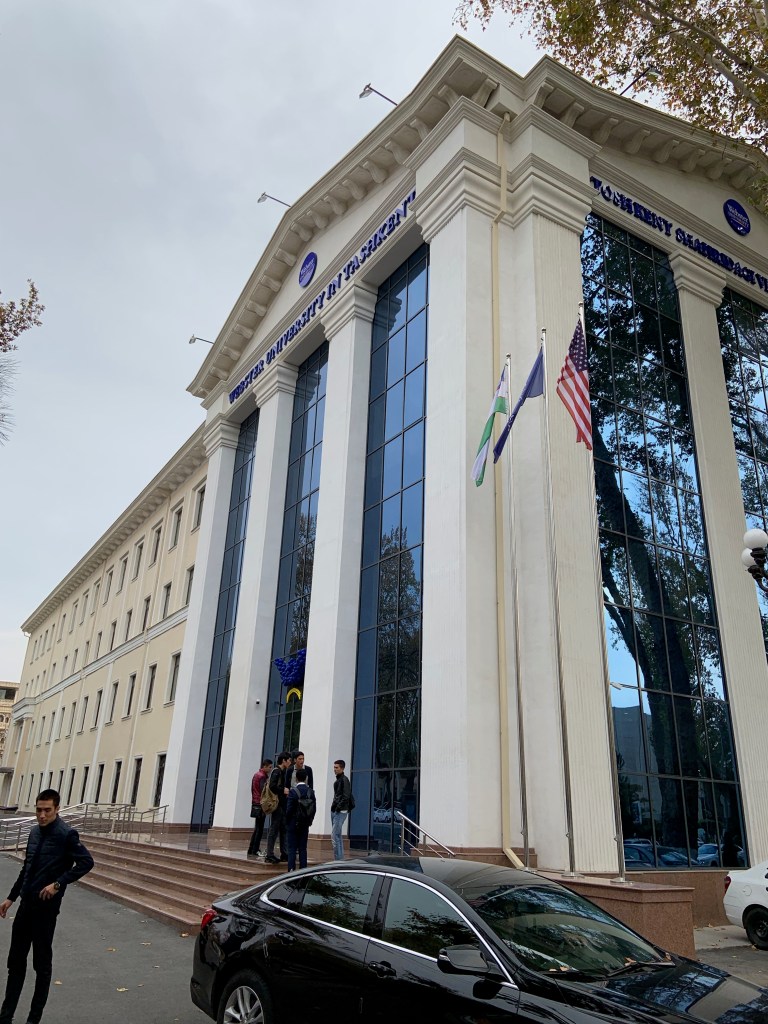
The palatial entrance of the former Architecture School

A $3,000 annual tuition is quite an incentive for students to attend. Webster is the first American university to open in Uzbekistan. The students were enthusiastic hosts to Mr. Ross and I and we received a nice tour of the campus. The rooms are modern and we met an American film professor on the faculty. The campus is in a great location, near the canal. Current classrooms are in the former Architecture Institute Building and they have expansion plans. I think it will be a successful venture and Webster is bold to take a chance in an emerging market. Uzbekistan is a young country demographically and there is a lot of bright, young people thirsting for education. My only concern would be if there is enough money here to keep up student numbers as the university matures.

A TIS alumna is the Public Relations Officer for the university. It is great for our students that another option for English language university education is opening in Tashkent. I would like to thank Webster for their hospitality, congratulate them on their success and send them best wishes for continued growth! Go Gorlocks!