EARCOS Promotional Video

The Osaka International School of Kwansei Gakuin belongs to the East Asian Regional Council of Schools. We are happy to be part of the organization and will be supporting the conferences this school year by sending delegates to the following conferences in the 2015-2016 school year.

* EARCOS/CIS University Institute October 2/3 –  Bangkok, Thailand

* ELC 2015 October 29-31 – Bangkok, Thailand
* ETC 2016 March 31 to April 2, International School Manila, Philippines
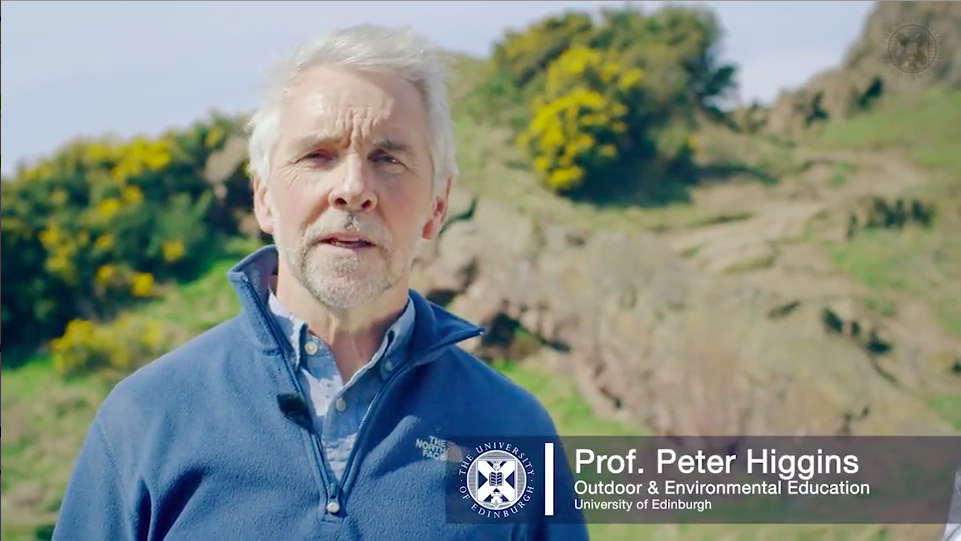
The video above is a great introduction to the organization and the work that they do in improving learning in all of the 149 member schools. The EARCOS representative for our school this year is SOIS music teacher, Mr. Mark Elshout.

Learning For Sustainability: Developing a Personal Ethic

LfS-logo-big-hands-flat

During my time off from my doctoral studies, I am taking my first MOOC (Massive Open Online Course) through Coursera. The University of Edinburg (Scotland) is offering “Learning for Sustainability: Developing a Personal Ethic”. My purpose of taking the course is to allow me to reflect on my doctoral topic of sustainability in education and leadership. The course is being offered by the Outdoor Education department of the university.

My impressions of on line learning:

  • The ability to watch lectures again and pause and replay important parts is so valuable. It helped me with recording my reflections and it is something you can’t do in a regular classroom.
  • Just being able to take a class at Edinburgh University and not have to travel there, find lodging, etc. is incredible.
  • I was exposed to many different ideas and resources, which I linked to below. I will be able to re-visit these and use these in my professional and personal life.
  • What was missing was the personal interaction with the professors and the other students. There were many forums and I participated in some of them and read what the other students wrote, but it wasn’t the same as a discussion. I didn’t have the time or inclination to fully participate in the course and do this, but I guess with a live video feed, this could be overcome. I did like the pacing of the course and as a busy professional and parent, I could access learning when it was convenient for me, which is many times, very early in the morning or very late at night.
  • I will definitely take another course! I would like to thank Coursera and Edinburgh University for putting this course online!

Week 1 – Disruption: Reorienting Our Thoughts The highlight of the first week was the lecture on the geological timeline by Dr. Peter Higgins, an Edinburg U professor of Environmental & Outdoor Education. The video took place at Arthur’s Seat, an extinct volcano outside of the city of Edinburg. Scotland is one of the top oil producing countries so the place has lots of relevance with sustainability. I didn’t know that Scottish scientist James Hutton was one of the first people to propose an old earth. In 1788 his “Theory of the Earth” ended with the famous words, “no vestige of a beginning…no traces of an end.”

Geology_Timeline

Dr. Higgins gave an effective demonstration of the age of the earth. He walked the length of a 45 meter rope, each centimeter representing 1,000,000 years. It was enlightening to see that the fossil fuels created 360 to 300 million years ago, are being used up during the industrial revolution. This last 250 years are represented by the thickness of a human hair. Most of the oil, coal and gas reserves have been depleted during this time. Scotland is also famous for starting the first environmental society by Sir Patrick Geddes in 1884, while he was a professor at Edinburg U. He wrote the line, “By Leaves We Live” to emphasize our complete dependence on plants and he also was the first use the concept of think globally, act locally.

Assignment 1 “What Did You Have for Breakfast?

Our first assignment was to look at what we had for breakfast and ask where did it come from and is it sustainable.I am on holiday in the eastern Bolivian city of Santa Cruz. It is one of the fastest growing cities in the world with a population of over 2 million people. It is located in the lowlands and is quite different from the Andean cities of Bolivia. It has a strong agriculture production due to its tropical climate and rich soils.

This morning I had a cup of Bolivian coffee. There is a small coffee production industry in the country. Bolivia has a great climate and altitude for growing coffee, but it is not very developed. The region is called Las Yungas, located in the foothills of the Andes just north of the capital La Paz. Immigrants from the barren altiplano were given small plots by the government and some of the land is devoted to coffee. I am happy to support the local industry and reduce the regular transportation costs I incur with my daily coffee habit. Coffee is grown in the tropics and when one lives outside of the tropics, it must be transported. There is not much information about the farming practices, but the Travel Channel television series, Dangerous Grounds, filmed an episode in las Yungas.

I also had a fruit salad, with fruits purchased from one of the local markets. I am not sure where the fruits were grown however. Most markets and supermarkets do not put the origin of the produce or if they are organic and sustainable agriculture. That was one of my big learning points in this exercise. To find the origins and information about how our food is produced takes a lot of time and effort. It would be convenient and logical to have this information easily available, via the web or via the product itself.

I used water with the coffee, and again, I didn’t know where the city’s water supply comes from. In speaking with my father-in-law who is Bolivian and doing some research, I found that the source is groundwater, from wells approximately 400 meters deep. I am not sure if the water table is falling or being depleted.

Is my breakfast sustainable? I do not know and I would have to put some time and effort into finding out. Some would be simple – asking the fruit vendor where the fruits come from. Others would be more difficult in finding out if the coffee or fruit grower is practicing sustainable agriculture.

In summary, all food/water production should include information on how and where it was produced to make it practical for consumers to make sustainable choices.

Week 2 – Thinking Deeply: Local Issues and Personal Reflections

The top resource this week was the video from the Center for a New American Dream, an organization that publicizes the negative effects of a hyper-consumer culture. I discovered these concepts several years ago after we purchased a 3,500 square foot home in the USA. I wish I would have had the center to support me in getting out of it. I found much of our time was devoted to the upkeep of our dream home and not to just enjoying each others’ company. A simpler lifestyle offer more happiness and flexibility and as a by product, it is better for the earth and promotes social justice. I read the book Happy Money which also formed much of my ideas on materialism. The web site for the center has a lot of great resources.

There was also an interview with environmental philosophy professor, Dr. Robbie Nicol from the university. He highlighted the work of Dr. Peter Reason. Dr. Nicol outlined an epistemology (philosophy of ways of knowing) that showed we can know by direct experience, hearing from others, researching more about an experience, but it all means nothing if we do not act upon it.  Without action, all is fluff. How does one go from a deep understanding of an issue, to caring about it, to actually doing something about it. The big idea is the move from caring to action.

The lead professor on the course, Dr. Beth Christie, discussed a local environmental issue, air pollution in Scotland. The city of Edinburg measures chemicals and particulate matter in the air around the city and has defined where there are areas of high pollution. The main cause of high pollution levels is traffic. Reducing car exhaust will reduce pollution. I was surprised at the big effect air pollution had on heart disease and premature deaths of people. The Friends of the Earth stated over 2000 people die in Scotland due to air pollution causing earlier heart disease. Scotland to me seems like a very clean country, and I imagine the amount of air pollution in the cities I have lived (Belgrade, Osaka).

My personal response to air pollution is to always live close to where we work, even if we could find a nicer home further away. The time saved was my priority, but as a side benefit, we don’t own a car and bike to/from school and when we do errands around the neighborhood. Osaka has a lot of traffic and would have more like LA, but it is a bike friendly city and the trains are excellent. I always judge a city on its “bike-ability”.

The course asks us to look into a local issue and write about it. I am currently on holiday in Santa Cruz, Bolivia and the immediate issue that comes to my mind is waste management. There is garbage all over the city and not much recycling. It is one of the first things one notices when arriving here. Below is a photo of our street in Santa Cruz, just down the block from our house. This is typical and instead of being taken to a landfill, it is spread throughout the city. I really need to find out more about the issue.

Week 3 – Understanding broadly: Global issues and wider positioning

This week featured a video about the simple act of washing one’s clothes. The amount of energy that is expended on washing clothes today is much more than in the past. People have more clothes, wash them more often, etc. The four areas that determine how much we do this are social norms, technology, materials and social change.

Week 4 How Do We Take Action 

This week featured videos by Cycle Hack.

Week 5 How Can We Inform and Educate Others? 

They interviewed Scottish teacher, Rosa Murray who talked about her work on the head council for writing teaching standards in Scotland. Due to a 2-week outdoor education course, she came back inspired to put the learning for sustainability ideas into every one of the teacher standards. She formed an advisory council of experts, which included Edinburgh professors, local council members and NGOs like WWF to advise all the groups writing the standards. Rosa also discussed her work with the One Planet Schools and the Scottish council of teachers. She emphasized their issue with language and why they went with Learning for Sustainability over global citizenship. She argued that global citizenship is human-centered and LfS takes a broader perspective, taking in the environment and climate. This is quite ground-breaking and envied throughout the world. The job now is keep this alive in the practice of schools. I liked the video from the Story of Stuff Project called Story of Solutions. In summary, society needs to change the GOAL

G – gives people power against corporations/government that control our lives (ex- excess plastic packaging)

O – Opens people’s eyes to the truth of happiness – more stuff doesn’t mean more happiness!

A – Accounts for all costs (makes environmental costs internal instead of external like most businesses do)

L – Lessens the wealth gap

I liked the idea of collaborative consumption (sharing) which can be done on a larger level with web sites like AirB&B/uber and bike share programs. Why does every house needs power tool, bike pump, etc when we can share? Claims too much brain power going towards increasing iPhone battery life instead of increasing human life. I really want to learn more about their project, which became famous in 2007 with the online video “The Story of Stuff” by Annie Leonard about our consumerist society.

There were also a couple of videos by the Natural Change Project which takes professionals out to a beautiful place like a national park. They are sent out in the morning with journal and a flask of tea and asked to stay outside alone for the entire day. It seems to be a life-changing event for the participants. This is a great idea. Most of the participants enjoyed the luxury of time to reflect and then share ideas with others.

The final video I thought was compelling was by Oberlin College / Vermont University professor and important environmentalist, Dr. David Orr. He said in the lecture below, that we do not teach place-specific environmentalism, how does one live well in the place we live? He defines ecoliteracy by reading nature and understanding how nature works. For example, agricultural is the largest destructive force on the environment and trying to feed 10 billion sustainability is not happening right now. Understanding the larger system and the effects of one practice or product on the whole system. He considers today the age of ecological enlightenment, which will be larger than than the first enlightement because it is global and spreads through the internet. We are in a race against time. He is also on the board of one of my favorite environmentalist writers, the Aldo Leopold Foundation.  The next time I am in Wisconsin, I must have a visit.

Criminal Teacher Background Checks

All international schools are dealing with implementing criminal background checks on employees. This stems from the relatively recent cases of teachers involved with child abuse in international schools. This article from Slate “I Know How explains why the amendment requiring schools to do periodical criminal background checks on all faculty is not in the new version of No Child Left Behind Act, recently passed by the US congress.

Obviously, no one want wants child predators in the classroom, and all 50 states currently have teacher background check laws on the books. Forty-three states require background checks for nonteaching employees like bus drivers and cafeteria workers. But big loopholes exist. Not all background checks are nearly as thorough as the insane, multiday ceremony I had to navigate here in the District of Columbia. Many only apply to new hires and are never updated, which Toomey says helps to explain why “459 teachers and other school employees nationwide were arrested for sexual misconduct with children” last year.

Toomey is the US Senator that authored the Protecting Students from Sexual and Violent Predators Act amendment to the original No Child Left Behind.

The article is written by Laura Moser, who had to go through an extensive background check to volunteer at her child’s preschool.

I glommed onto the background-check provision for the simple reason that I myself have just barely survived the onerous process of getting approved to volunteer in my daughter’s preschool class for three hours a month next year. It was, to put it mildly, a huge pain in the ass. I had to fill out a Child Protection Registry request, on which I listed all my addresses for the past 18 years. After getting that form notarized, I had to schlep downtown to the police headquarters and fill out more paperwork for a criminal background check, and after that I had to get fingerprinted by an FBI mobile unit—all this, just to provide a monthly snack to a handful of 3-year-olds.

I was loudly annoyed by the hassle, but I understood its underlying purpose; I suppose anyone with unsupervised access to my children should submit to the same. But Toomey’s proposal—and the widespread resistance that it met—shows how complex background checks are.

Background checks get even more complex for international schools. Teachers move about between countries which complicates matters. For me example, I have worked in 7 countries during my career. Countries also have different laws regarding checks. Schools are getting around this by hiring agencies to do this for schools. It is an extra expense for schools.

This school year the JCIS (Japan Council of International Schools) will be looking at how we will handle this issue. We will be meeting in September to come up with policies. I am reading as much as I can to assist our school in setting a new policy.

Meet Dorm Teacher Sagara Sensei

Senri & Osaka International Schools physical education teacher, Mr. Munetaka Sagara is the faculty member in charge of the dormitory. He lives in the dormitory with his wife, Saori, who is the dorm mother on Fridays and Saturdays. Sagara Sensei is a native of east Osaka and graduated from the National Institute of Fitness and Sports in Kanoya, a city on the Japanese southern island of Kyushu. After university he worked at International Pacific College, a university in Palmerston, New Zealand in the role of student support officer. His job was to assist Japanese students feeling at home in New Zealand. Mr. Sagara is fluent in English and Japanese. After over 3 years in the position, he came to SOIS in 2001 and is teaching PE. He loves sports and was a basketball and rugby player when younger. He coaches many Saber sports. I’ve watched him teach the Japanese martial art of Kendo to his classes and can attest to his athleticism. He is also an OIS parent with his beautiful daughter in grade 1 for the 2015-2016 school year.

We are fortunate to Sagara sensei and his family as part of the SOIS family. The dormitory students from both schools are in good hands with Sagara sensei and Saori.

High School Spring Concert

Last week we held our premier music performance of the year at beautiful Maple Hall. The great hall seats over 500 and is owned by the city of Minoh. It is rented out to city organizations and groups. The first part of the concert featured our 58-student choir. It was a special performance as it was the last for choir director Ms. Sarah Bonner and choir assistant Jadwiga Sakakibara. The many soloists, the male section and the choir as a whole sounded wonderful and my favorite piece was Ode to Joy. 

OIS student Yuki is performing a beautiful solo piece above. Next came the wind ensemble. The first piece, “Winter” from Vivaldi’s “The Four Seasons” featured OIS student Leila as concert master and Kenji Sano, a professional archlute player. Conductor Vernon Villapando was masterful in bringing the talented individual musicians into a cohesive orchestra.

The concert ended with the wind ensemble. If you ever heard a wind ensemble, the volume and fury of so many horns and percussion really blows the audience away. Below they perform Gershwin’s “You Got Rhythm”.


OIS Featured in Japan Times

Last week the Osaka International School of Kwansei Gakuin was featured in the Japan Times. The Japan Times is the oldest English newspaper in Japan. They recently formed a relationship with the New York Times and publish their newspapers together.

The article entitled, “In international education in Japan, there’s diversity between as well as within schools
Four school profiles show the range of philosophies families can choose from” featured the following curriculum choices:

  • USA curriculum – American School in Japan
  • English national curriculum – British School of Tokyo
  • Indian curriculum – India International School of Japan
  • International Baccalaureate curriculum – Osaka International School of Kwansei Gakuin

To read the full article, please follow the link below. The photo above shows OIS biology teacher Paul Stone teacher  working with our elementary students in the science lab.

http://www.japantimes.co.jp/community/2015/05/27/issues/international-education-japan-theres-diversity-well-within-schools/#.VXN8HUJ0Ckj

Classroom Observations: Impact of Technology

I did a round of class observations last week and my big takeaway was seeing how technology has changed education. Every class I sat in on, technology was very apparent. In the photo above, a high school student is reading aloud to the English teacher, Mr. Algie. She is recording her voice on her iPhone and is working on reading aloud fluency.

The grade 11 class above is discussing their progress on the extended essay. The coordinator, Ms. Tara Cheney, can keep track of all the students with the help of Google Docs. She can literally see and comment on all of their works from the comfort of her desk. Students can no longer hide their lack of progress from the teacher and it facilitates quicker feedback more often.

The grade 7 students were taking an online quiz while reviewing for a test. The humanities teacher, Ms. Marcella Cooper would ask the question and every student could click on one of the four choices. Every student’s score was instantly available including the percentage of students that were correct and incorrect. It also is good data for the teacher to see what parts of the unit the students understood well or need more attention.

The elementary students were using a program called “Reading Eggs”. Ms. Paula Dezem, the grade 1 teacher, likes it because the stories are at each student’s reading level and it is easy for her to watch their progress.

Finally as I left the library, I noticed they are getting rid of print magazines. Gone are the days of looking in the Readers’ Guide to Periodical Literature. Most articles can be found online.

OIS Parent Bulletin: May 29, 2015

Dear OIS parents,

2015 – 2016 Faculty: I am happy to announce that the recruiting season is over and the major teaching positions for 2015-2016 have been filled. You can find short profiles of the seven new faculty members and the new principal/PYP coordinator here. There are two faculty who were reassigned different positions for next year. Paula Dezem will move along with her students from grade 1 to grade 2. Dawn Inada will move from Kindergarten A to Grade 1. Below is a the list of elementary school homeroom teachers next year.

  • ES Principal/PYP Coordinator – Carolyne Marshall
  • Kindergarten A – Nadia Kralovec
  • Kindergarten B – Wakaba Mori
  • Grade 1 – Dawn Inada
  • Grade 2 – Paula Dezem
  • Grade 3 – Jennifer Egan
  • Grade 4 – Lora Vimont
  • Grade 5 – Trevor Jones
  • ES Music – Daniel Ligon
  • K-12 Librarian – Sarah Wakefield

Replacing Angela Hancock will be Jeremy Welburn. Replacing Richard Fitzpatrick will be David Haske.  I would also like to give a special welcome to our new Elementary School Principal and PYP Coordinator, Carolyne Marshall.

IB MEXT Higher Education Seminar: Our DP Coordinator Miyuki Endo and OIS Counselor, Melissa Lamug will be attending a seminar in Tokyo hosted by the International Baccalaureate and MEXT (Japanese Ministry of Education) next Tuesday June 3. Keio, Tohuko, Sophia, Osaka, Tsukuba and Okayama universities will be discussing entry for IB diploma programme graduates. The event is part of a movement to increase the number of Japanese universities that will accept DP students.

Fundraising for Nepal: The OIS grade 11 students are selling wristbands, stickers and badges showing our support for Nepal. The funds will be sent to the Lincoln International School in Kathmandu. They will use them for their community efforts.

OIS PTA meeting: The last PTA meeting of the year will take place Wednesday June 3, 2015 at 8:45 AM in the third floor conference room. Following the meeting OIS Technology Director Stephen Frater will be discussing with parents our iPad program and other technology plans from 10:30 AM – 12:00 PM. There will be evening meeting at 5:30 PM – 7:00 PM in the third floor conference room for parents that cannot make it to the morning meeting.

Music Concerts: The middle school and high school bands concert will take place Wednesday June 3 at 4:00 PM in the theatre. The Middle School and High School strings and choir concert will also be taking place on Thursday June 4 at 4:00 PM in the theatre. These concerts give the opportunity for some of our other groups to perform in public.

SOIS K-12 Art Show: The visual arts department will be hosting an exhibition of student work next Thursday and Friday to coincide with some other events that bring many parents to campus. The title of the exhibition is “Rainbow Dreams” and will feature work from all students displayed in the hallways of the school. The opening of the exhibition will take place from 3:00 – 5:00 PM on Thursday June 4. so it can be a “doubleheader” of the fine arts. Please see Jennifer Henbest if you would like to help with the setting up of the exhibition next week.

Upcoming Events

  • Friday June 5 Elementary School no classes – Student-Led Conferences
  • Friday June 5 4:00 PM @ theatre/cafeteria High School Athletic Awards
  • Monday June 8 9:00 AM @  third floor conference room
  • 2015-2016 Kindergarten A Parent Orientation (only next year’s kinder A parents)
  • Tuesday June 9  6:30 PM @ Mino City Maple Hall SOIS High School Spring Concert
  • Friday June 12 1:00 PM @ pool OIS Elementary School Super Swim Carnival
  • Friday June 12 7:00 PM  @ theatre OIS High School Graduation Ceremony
  • Wednesday June 17 5:00 PM @ third floor conference room
  • Grade 5 to Grade 6 Parent Orientation (only grade 5 parents)
  • Friday June 19 4:00 PM – 5:00 PM @courtyard Courtyard Music Concert
  • Monday June 22 ES Picnic Day
  • Tuesday June 23 12:00 noon @ third floor conference room Grade 5 Parent Celebration (only grade 5 parents)
  • Tuesday June 23 3:30 PM – 7:30 PM @ courtyard OIS PTA Farewell Party & Movie Night
  • Wednesday June 24 Last day of classes for elementary school (half day)
  • Wednesday June 24 9:00 AM @ theatre Elementary School End-of-Year Assembly
  • Friday June 26 Last day of classes for middle school & high school (half day)
  • Friday June 26 8:45 AM @ theatre OIS Middle School / High School Awards Ceremony

Tokyo Press Conference

(photo above – SIS Head Masago sensei and the rest of the KG team from my view)

I am on the shinkansen (bullet train) back to Osaka as I write this. The Kwansei Gakuin foundation called a press conference today in their Tokyo offices to promote the super global high school and super global university prizes. KG High School, SIS, and KG University were all recipients of government funding. MEXT, the Japanese education ministry is supporting schools looking to become more international and they designated schools as “Super Global”. The program aims to “foster global leaders who will play an active role in the world through education at high schools and other institutions that contributes to that mission. Students are equipped with an awareness and deep knowledge of social issues, communication and problem-solving skills, and other globally competitive skills.” (courtesy of Super Global High School).

(Magazine writers review the school information)
There were 19 different newspapers and magazines and we held two press conferences. It was my role to discuss the International Baccalaureate curriculum and our relationship with the Senri International School. At both press conferences, I was asked about where our students attend university. Everyone in the press corps received our SOIS brochure so I could show them the list of universities our students have matriculated. The head education writer for the national daily Yomiuri spoke English and we had a nice chat afterwards.
KG Tokyo’s office is literally above Tokyo Station in the center of Tokyo. It is located on the 10th floor of the Sapia Tower. It was a beautiful day so the head of SIS, Masago sensei and I, attended an education IT conference on the island of Daibo in the morning. The Tokyo Center is an architecturally stunning convention center on an artificial island in Tokyo Bay.

(An interesting art piece at the Tokyo Big Sight Convention Center)

Overall it was a pleasant day. I hope my efforts to promote the IB and our schools result in something good for our students.

BBC World Service Forum Podcast “Cloud Education”

I listened to a great podcast this morning from the BBC program, Forum. Each week presenter Bridget Kendall talks with experts and they discuss big ideas like magnetism, trade, dependency, etc. The May 11th episode’s idea was cloud education. Probably the most famous educational expert in the world, Sir Ken Robinson (of Ted Talks fame), Indian professor Sugata Mitra, and computer professor Scott Klemmer take on the subject.

There were many great ideas brought up on the podcast. My big takeaway (love that word, if it is a word…) was that  it is inevitable that more individualized schedules through on line learning will become the norm, and the 20th century model of age groups in the traditional 50-minute, or 85 minute block schedules will fade away. So much more is possible with the internet.

You can listen to the podcast here.